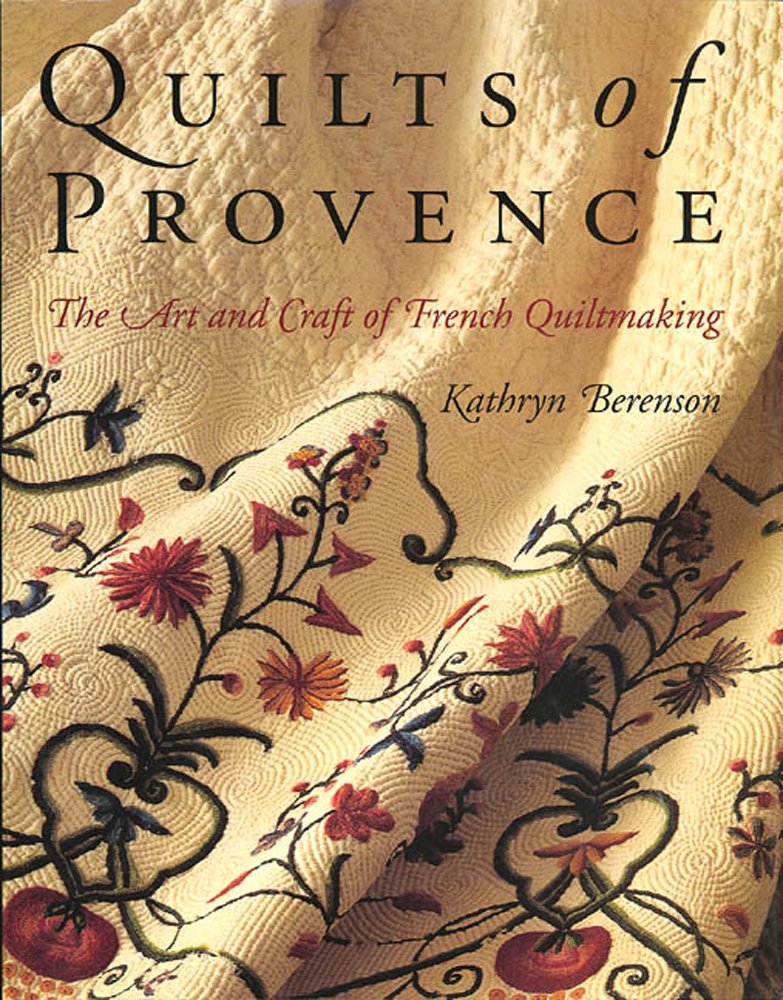



Vistas of olive trees and grapevines, fields of lavender, a profusion of pomegranates and sunflowers, all washed in strong, golden sunlight - the charms of Provence are fabled throughout the world. Less well known is the exquisite quilted needlework that flourished for hundreds of years in this part of southern France. Long ago skilled needlewomen in Marseilles and other towns took common needles and thread and created quilted objects that were extraordinarily beautiful as well as warm. Provencal women brought their gardens into their homes and wardrobes by stitching bedcovers, clothing, and decorative accessories in intricate floral patterns - garlands, swags, flowers, herbs, and fruit. Quilts of Provence reveals the intimate relationship of women to these decorative textiles, from the patient needlewomen who created them to the queens and duchesses who regarded these luxurious articles as necessities. Exported to French and British colonies in the Americas, these wonderful works have almost certainly influenced the quilted needlework traditions in other parts of Europe and North America. A detailed resource section includes instructions for making three traditional French quilted articles, directions for caring for and displaying quilts, and a list of museums and shops in Provence and Paris where quilt enthusiasts can see and buy French quilts like many highlighted in Quilts of Provence. The needlework technique of quilting is an ancient art. Born thousands of years ago in Asia, it migrated over the centuries across Europe to the New World, where it blossomed into a uniquely American folk tradition. Yet quilting also flourished in southern France, and by the 18th century Provencal women were creating "confections"-quilted bedcovers, petticoats, and decorative accessories-of such exquisite beauty and elegance that these items were exported throughout Europe and to the North American colonies. (Especially dazzling were the white wedding bedcovers.) In this lavishly illustrated volume, Berenson, a researcher and dealer in antique French and American textiles, traces the evolution of this highly sculptural corded and stuffed needlework (what the French call "embroidery from within") from its 17th-century origins in the ateliers of Marseilles to its decline at the end of the 19th century. Berenson writes with a clarity and passion for her subject that will be understandable to all general readers who appreciate beautiful handicrafts. She includes instructions for making three quilt designs, directions for caring for and displaying quilts, and a directory of French quilting museums and shops. A fine sourcebook for quilters, collectors, and textile designers. Wilda Williams, "Library Journal" Copyright 1996 Reed Business Information, Inc. Used Book in Good Condition