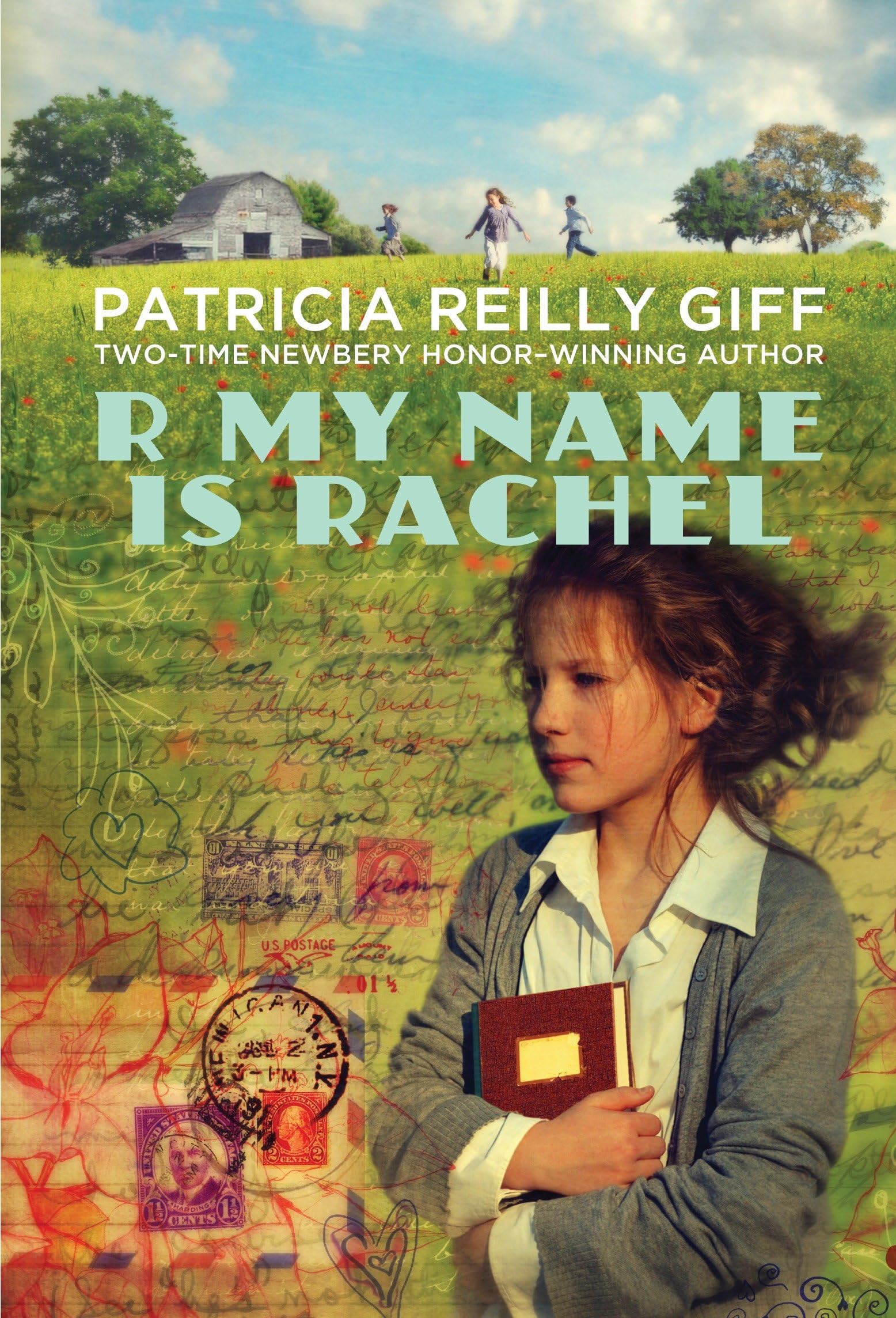



Rachel, Cassie, and Joey live in the city with their Pop, until Pop's search for work lands the family on a run down farm. Dreamy Rachel loves to read, and doesn't know much about the country. Times are hard there, too—the school and library are closed. When Pop gets work near Canada, he has to leave the children on the farm alone. For two months! But Rachel's the oldest, and she'll make sure they're all right. Somehow. PATRICIA REILLY GIFF is the author of many beloved books for children, including the Kids of the Polk Street School books, the Friends and Amigos books, and the Polka Dot Private Eye books. Several of her novels for older readers have been chosen as ALA-ALSC Notable Books and ALA-YALSA Best Books for Young Adults. They include The Gift of the Pirate Queen; All the Way Home; Water Street; Nory Ryan's Song, a Society of Children's Book Writers and Illustrators Golden Kite Honor Book for Fiction; and the Newbery Honor Books Lily's Crossing and Pictures of Hollis Woods . Lily's Crossing was also chosen as a Boston Globe-Horn Book Honor Book. Her most recent books are Number One Kid, Big Whopper, Flying Feet, Eleven, Wild Girl, and Storyteller . CHAPTER ONE I know my neighborhood by heart, so it wouldn’t be hard to walk from our apartment to the stores blindfolded. And that’s what I’m doing. Almost. My book is up in front of my nose, hiding my face so no one will see the tears in my eyes. I’m almost at the end of the story and I’m sure Lad, the collie, is going to die. No matter that he’s old, he’s such a good dog. But Lad isn’t the only reason I’m trying not to cry. It’s because of Pop, who right now is sitting in the big green chair in our living room. Pop home, instead of working, on a winter afternoon! Pop without his job at the bank, and all because of the Depression. “What does that mean?” I asked. And he said it’s as if someone opened a plug and everyone’s money went down the drain. I know almost all our money is gone. After lunch, when I was drying the dishes with him, I asked, “Can’t you ask Uncle Elliot for help with money? Just until President Franklin Roosevelt fixes the Depression?” “I’d never ask anyone for help,” Pop says. “Not even my brother. Besides, he doesn’t have any more money than I do.” “I guess I wouldn’t ask for help either,” I say, considering. All the heroes in the books I’ve read do it on their own, too. Now I wipe my eyes with my sleeve and turn the corner to Charlie the Butcher’s store. I press my nose against his window even though it’s dusty and a leftover fly from last summer is spattered against the glass. Charlie sees me and raps on the pane. Dum-de-de-dum-dum-- It means he has bologna, and he’s going to give me a slice right off one end. My mouth waters, but I’m nervous. I want to ask him for two slices. I’ve never done that before. But Pop desperately needs cheering up. So this time it’s crucial. Crucial. That’s one of our words. Miss Mitzi Madden, of Madden’s Blooms, and I are letter writers. We like to use important words on occasion. I love that: on occasion. I’ve thought about asking Charlie for a second slice of bologna all day. “It’s just for this occasion,” I’ll say. And he’ll say-- Who knows what he’ll say? I open the door, listening to the bell tinkle overhead. The sawdust on the floor crunches under my shoes as I go to the counter. “Hello, dahling,” Charlie says. He says that to everyone. “Is it possible on this occasion,” I ask, “to have two slices of bologna?” “Ah, good girl,” he says. “You want to treat your sister, Cassie.” Not in a hundred years, but I don’t say that. Instead, I glance at the pig’s head in the case. Poor pig. His dead eyes stare up at me. The pig is the only thing in the case except for a shiny slab of liver and the bologna. “It’s because of the Depression,” Pop explained to me the other day. Everything has to do with the Depression. Pop, rail-thin, sitting in the sagging living room chair all week, his elbows on the windowsill, calls out once in a while: “There goes the mailman. I’m glad for him. Seven kids, he really needs his job,” or “The milkman’s trying to hold on, but no one can afford milk anymore.” It’s because of the Depression, Pop says, that Mr. Appleby sells apples out of a barrel on Clinton Street; he polishes them with a rag so the buyers won’t notice the brown spots. “Doesn’t that just fit,” my younger sister, Cassie, says. “Appleby selling apples?” And what about me? All I want is a dog, or a cat, or even a fish in a tank that we can’t afford. Ridiculous. How much does one goldfish eat? But Pop shakes his head. “No one has two nickels to rub together anymore.” Charlie slices the bologna paper-thin. “For such a good girl, Rachel, three slices.” He beams at me, his teeth white under his mustache. “I will never forget your generosity,” I say. Then I add, “Don’t forget the cat.” He pushes a fist-sized lump of meat toward me, grinning. I pick up the lump with two fingers and the slices of bologna in their