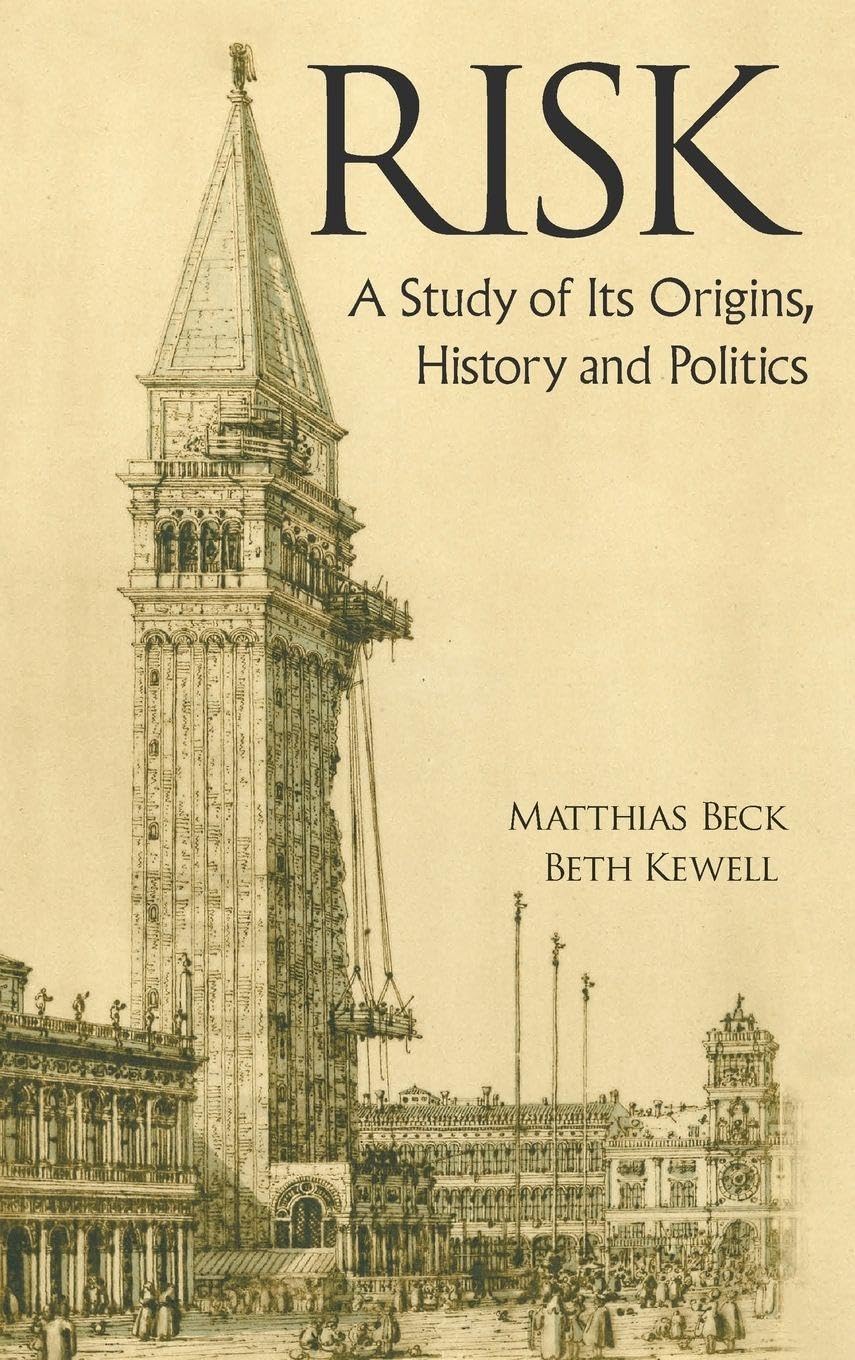



Over a period of several centuries, the academic study of risk has evolved as a distinct body of thought, which continues to influence conceptual developments in fields such as economics, management, politics and sociology. However, few scholarly works have given a chronological account of cultural and intellectual trends relating to the understanding and analysis of risks. Risk: A Study of its Origins, History and Politics aims to fill this gap by providing a detailed study of key turning points in the evolution of society's understanding of risk. Using a wide range of primary and secondary materials, Matthias Beck and Beth Kewell map the political origins and moral reach of some of the most influential ideas associated with risk and uncertainty at specific periods of time. The historical focus of the book makes it an excellent introduction for readers who wish to go beyond specific risk management techniques and their theoretical underpinnings, to gain an understanding of the history and politics of risk. This opportune book provides a comprehensive interpretation of ideas and concepts of risk. While global risks transcend national boundaries and fail to fit neatly within disciplinary confines, most books remain rooted in these frames; giving this work a special place. Risk: A Study of its Origins, History and Politics provides illuminating and inspirational reading which will expand readers' horizons and further their understanding of the theoretical and practical complexities of the pervasive risk phenomenon. Darinka Asenova, Professor of Risk and Governance, Glasgow Caledonian University, UK Over a period of more than a century, the academic study of risk has evolved as a distinct body of thought, which continues to influence conceptual developments in fields such as economics, management, politics and sociology. However, there are, as yet, hardly any scholarly books providing a systematic, historically contextualised exposition of the development of risk as a key category within the social sciences. This book aims to fill this gap by providing an in-depth analysis of key turning points in the evolution of this important, influential and growing genre of modern thought.