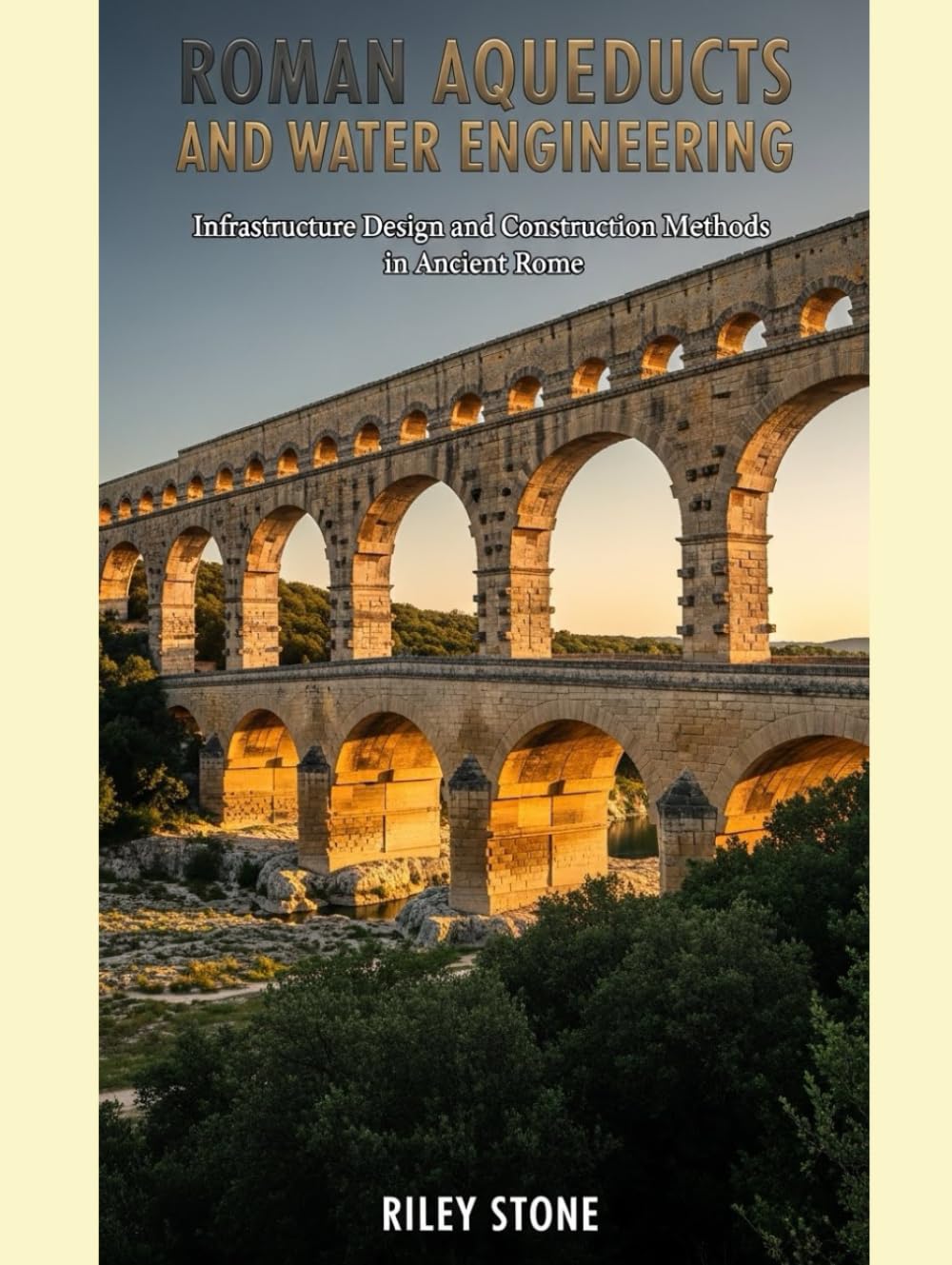
ROMAN AQUEDUCTS AND WATER ENGINEERING: Infrastructure Design and Construction Methods in Ancient Rome
$29.97
by Riley Stone



This illustrated reference examines the engineering principles and construction methods behind the aqueduct systems that supplied water to ancient Roman cities. Inside this volume: Survey of major aqueducts including the Aqua Appia, Aqua Claudia, and Aqua Virgo serving the city of Rome; Provincial aqueduct systems in Gaul, Hispania, North Africa, and Asia Minor; Engineering principles governing gradient calculation, channel construction, and water pressure management; Construction techniques for subterranean channels, elevated arcades, and inverted siphons; Materials analysis covering opus caementicium, lead pipes, and terracotta components; The role of Frontinus and his treatise De Aquaeductu as a primary source; Urban water distribution including public fountains, baths, and private connections; Archaeological evidence from excavated sites and standing remains; Comparison with earlier Greek and Near Eastern hydraulic traditions; Maintenance practices and administrative structures that sustained these systems. Written for history enthusiasts, engineering students, classical studies readers, and anyone curious about how ancient Romans solved complex infrastructure challenges. This reference presents archaeological and textual evidence to illustrate Roman hydraulic engineering achievements.