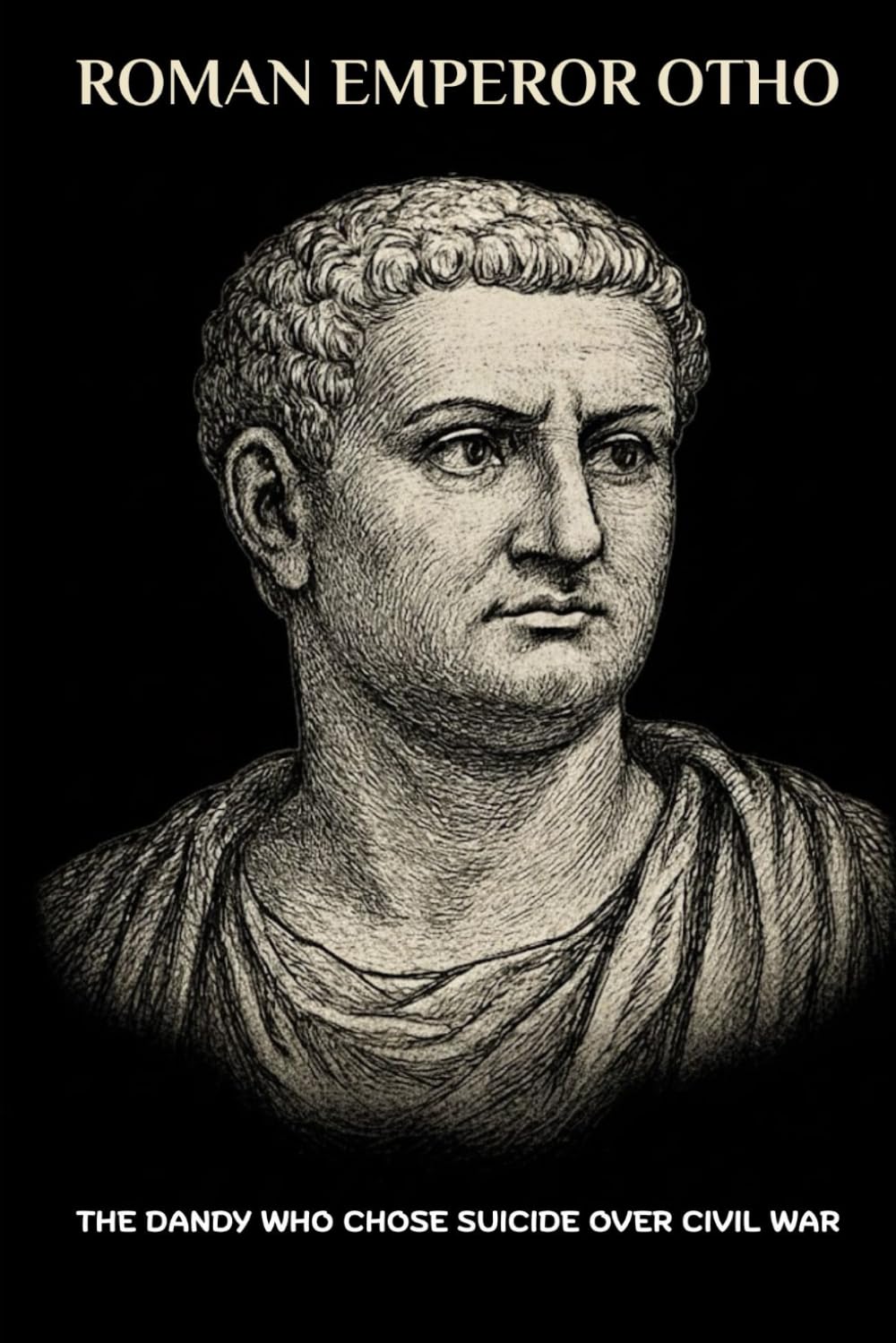



He wore wigs to hide his baldness. He plucked every hair from his body. He was Nero's closest companion in nocturnal debauchery. Yet on April 16, 69 AD, this vain courtier chose death over civil war—and shocked ancient Rome. Marcus Salvius Otho ruled the Roman Empire for exactly ninety-five days. In that brief span between January 15 and April 16, 69 AD, he murdered an emperor, fought a catastrophic battle, and made a choice that ancient historians still struggle to explain: he killed himself rather than let Romans continue dying for his ambition. This is the story the ancient sources preserve but never fully understood. Tacitus called his suicide unexpected. Suetonius admitted it seemed to redeem an otherwise contemptible life. Plutarch saw in it proof that virtue could surface even in the most corrupt souls. From Nero's gilded palace to the bloodstained Forum. From ten years governing Lusitania to three months ruling Rome. From the conspiracy that murdered Galba to the German legions marching south under Vitellius. Drawing on Tacitus's Histories , Suetonius's Twelve Caesars , Plutarch's Lives , and Cassius Dio's Roman History , this rigorously researched biography reconstructs Otho's extraordinary life. You'll witness the love triangle with Poppaea Sabina that destroyed his friendship with Nero. You'll follow him through a decade of competent provincial administration that no one expected from an imperial dandy. You'll stand in the Forum on January 15, 69 AD when praetorian swords murdered Galba and proclaimed Otho Caesar. The Year of the Four Emperors revealed a terrible truth: emperors could be made anywhere, by anyone with sufficient soldiers. Otho exposed this secret through murder—then tried to contain it through suicide. At Bedriacum on April 14, 69 AD, his hastily assembled forces met Vitellius's veteran German legions. The battle was disaster. His generals counseled retreat and reinforcement. His soldiers begged him to continue fighting. Instead, Otho chose a dagger and a principle: he would not purchase his survival with Roman blood. Was his suicide noble self-sacrifice or desperate recognition of inevitable defeat? Ancient historians debated this question. Modern scholars remain divided. The evidence supports both interpretations, because Otho himself was paradox—murderer and peacemaker, sybarite and stoic, the last man anyone expected to die for principle. Perfect for readers of Mary Beard's SPQR , Tom Holland's Dynasty , Anthony Everitt's imperial biographies, and Adrian Goldsworthy's military histories. Essential reading for students of Tacitus, Roman political culture, and the crisis that nearly destroyed the empire in 69 AD. This is not another sanitized account of Roman virtue. This is the story of how a vain, violent, ambitious man faced mortality and chose sacrifice over survival. Whether that choice redeems his crimes or merely demonstrates skilled image management in death remains for you to judge. Ninety-five days. One emperor. A decision that changed how Rome understood power, loyalty, and the cost of civil war.