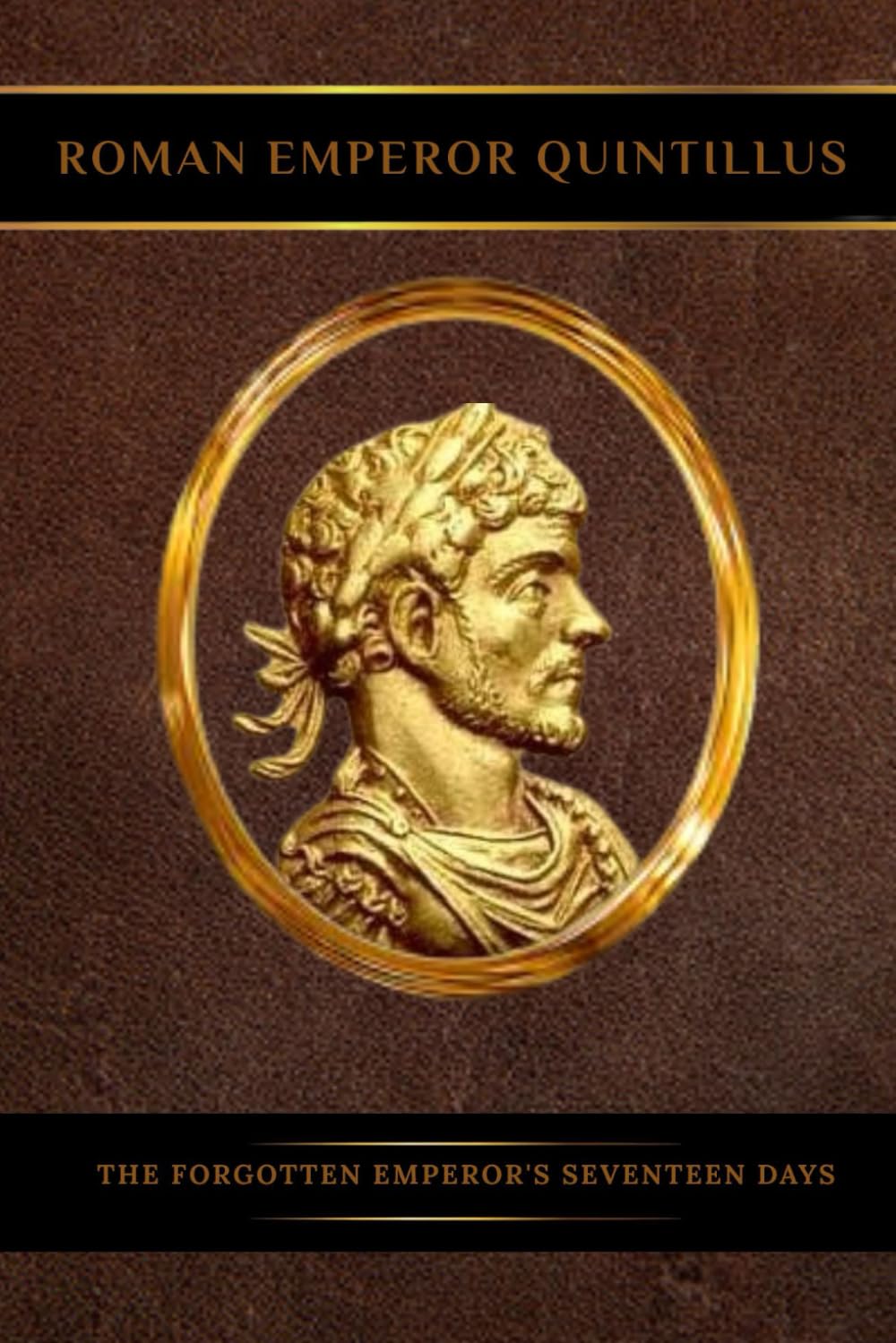



He ruled the Roman Empire for seventeen days. Then he was gone. In August 270 AD, Marcus Aurelius Claudius Quintillus became emperor of Rome with the Senate's full backing. By September, he was dead at Aquileia, erased so completely from history that we barely know how he died. No battle was fought. No dramatic last stand occurred. He simply ceased to exist while a general named Aurelian marched from the Danube with battle-hardened legions. This is the story history forgot to tell. While most books celebrate Rome's legendary rulers—Augustus, Marcus Aurelius, Constantine—this groundbreaking work asks a more revealing question: what happens when someone becomes emperor and discovers that constitutional legitimacy means absolutely nothing? Through meticulous analysis of third-century coinage, fragmentary ancient sources, and the brutal political realities of 270 AD, this book reconstructs how power actually functioned when Rome's imperial system was collapsing. You'll discover why the Senate's proclamation was worthless, why Aurelian never bothered justifying his seizure of power, and why this pattern of military emperors killing their predecessors continued for another century despite everyone understanding it was destroying the empire. What readers get: The complete story of the Crisis of the Third Century (235-285 AD) when fifty emperors rose and fell - Inside the Battle of Naissus (269 AD) where Claudius Gothicus earned his reputation - Analysis of why frontier armies stopped asking permission from Rome - The impossible mathematics of civil war that Quintillus faced - How Aurelian's strategic silence erased his rival from memory - Why Rome failed to fix its catastrophic succession system Perfect for readers who loved Mary Beard's SPQR , Tom Holland's Dynasty , or Adrian Goldsworthy's military histories, this book proves that the margins of history often reveal more than the center. Quintillus mattered precisely because he didn't matter—his failure shows us the raw mechanics of power that successful emperors' achievements tend to hide. Seventeen days. One forgotten emperor. The truth about how empires really work. Based on ancient sources including the Historia Augusta , Aurelius Victor, Eutropius, and Zosimus, combined with modern numismatic evidence and the latest scholarship on third-century Rome, this is the first full-length treatment of an emperor who ruled too briefly to accomplish anything except reveal how broken the system had become. If you've ever wondered how Rome survived its worst crisis, or why some historical figures vanish completely while others become legends, this book provides answers that traditional imperial biographies cannot