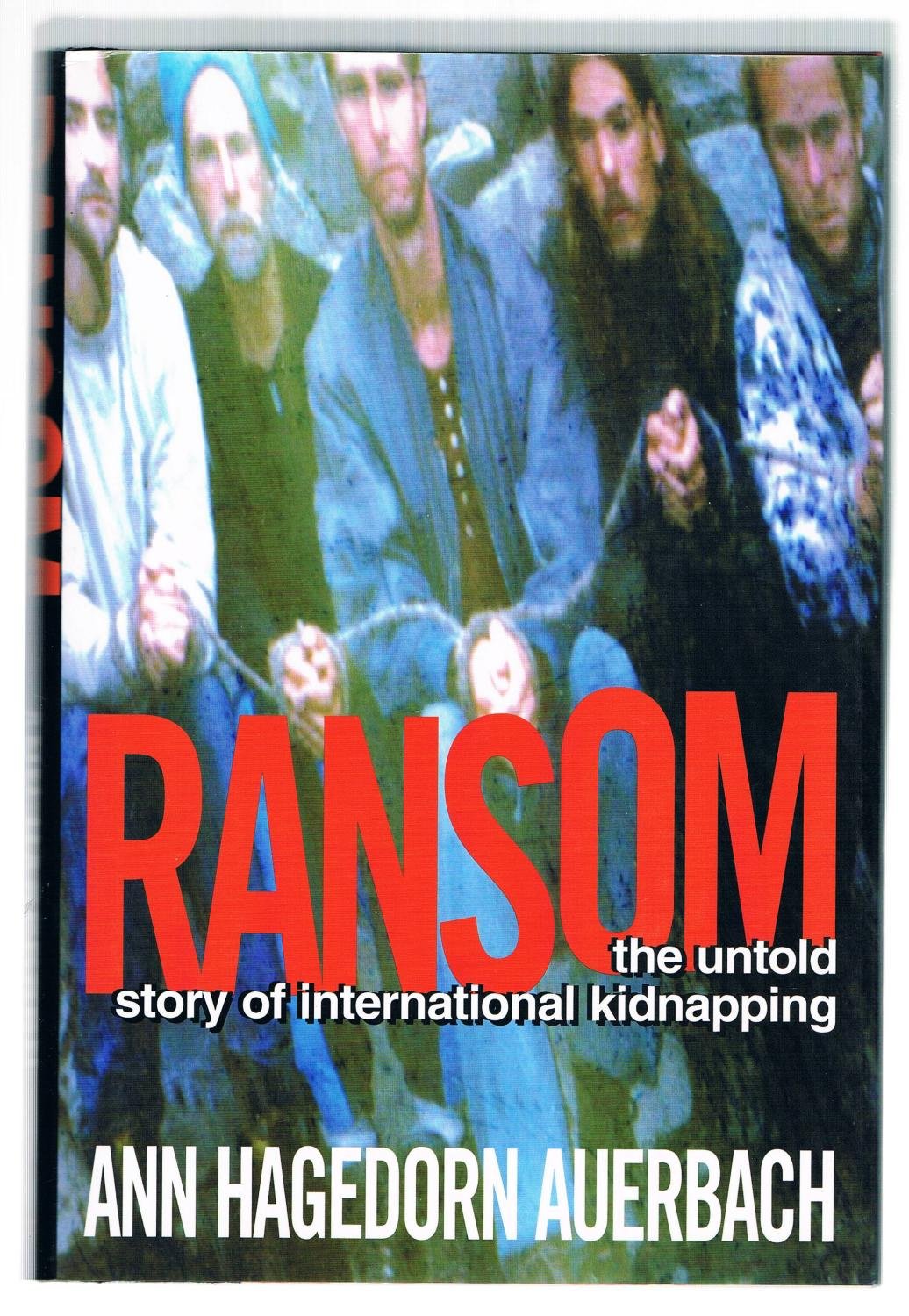



A shocking investigation of the world's fastest growing criminal enterprise, kidnapping for ransom and political advantage, offers the first detailed look at the furtive perpetrators, their victims, and the international role of the FBI. 35,000 first printing. Ransom opens with the story of five men taken hostage in 1995 in Kashmir, the hotly disputed paradise that lies between India and Pakistan. The men--two Britons, an American, a German, and a Norwegian--were tourists hiking their way through the breathtakingly beautiful part of the Himalayan mountains that crosses through Kashmir, when men with weapons appeared and snatched the five hostages from their wives, girlfriends, and fellow tourists. Interweaving the story of the Kashmir abduction with accounts of other kidnappings and interviews with antikidnapping "risk" experts, Ann Hagedorn Auerbach weaves a mesmerizing tale of kidnapping on a massive scale: as many as 20,000 to 30,000 incidents occur annually, she claims, up from about 6,000 per year during the 1980s. Although most modern kidnappings are motivated by profit, she says, many are baffling and senseless. Auerbach ascribes some of the blame for the rise in kidnappings to the end of the cold war, which brought a substantial number of uneducated but highly trained soldiers into the mercenary pool as demilitarization slashed military budgets worldwide. Ransom also details the countermeasures that have been put into effect to combat the kidnapping problem, from the FBI's own recent internal revolution on the issue to the rise of high-tech "risk consultants," freelancers who provide danger assessments for corporations and individuals and who, if necessary, will fly to the scene of a hostage taking to negotiate with the kidnappers. As for the five in Kashmir, one is dead: the Norwegian, his body found dismembered barely a month after the group was taken hostage. Of the remaining four, no word of their situation has come since December 1995, when the four men were allowed to record a message for their families. --Tjames Madison Alarmingly, kidnapping and hostage-taking have reached epidemic levels in the 1990s, with 30,000 cases reported worldwide. Paradoxically accelerated by the end of the Cold War, this trend has been fed by globalization, the growing gap between rich and poor, and an increase in regional and political conflicts, according to the author. Colombia and the Philippines had the worst records in 1997, but the phenomenon is widespread. Former reporter Auerbach (Wild Ride, LJ 5/15/94) chose the abduction of six foreigners, including two Americans, by an Islamic group in Kashmir in 1995 as the main narrative of her book, interwoven with other cases and general information. Of the six, one escaped, one was killed, and the others are presumed dead. One five-year study showed that 66 percent of abductees were released following negotiation and/or ransom, 20 percent were rescued, nine percent died, and five percent escaped. Combining sobering facts with human drama, this well-researched account should especially interest anyone planning travel abroad. Recommended.?Gregor A. Preston, formerly with Univ. of California Lib., Davis Copyright 1998 Reed Business Information, Inc. With the growth, since the end of the Cold War, of international travel by business executives, eager ecotourists, and just plain tourists, there has been a serious increase in the miserable trade of kidnaping crimes committed for political reasons or simply for cash. Former Wall Street Journal reporter Auerbach (Wild Ride, 1994) has drawn on interviews with victims and their families, government officials, professional hostage negotiators as well as public and private records (including negotiation transcripts) to produce a wide-ranging study of the modern traffic in stolen lives. Thousands of kidnapings, most unreported, take place every year on virtually every continent. Certainly the nasty business dates from antediluvian times, but Auerbach concentrates largely on events that took place during a two-year span, starting with the taking of a few trekkers in the mountains of Kashmir on July 4, 1995. The brutal execution of one young captive is a heart-wrenching story. The rescue efforts of the wife of another are sympathetically detailed. All the tales read like thrillers. The known etiology and treatment of this scourge is clinically examined. Make concessions or not? Seek publicity or work quietly? Take counsel from authorities or hire private specialists? Negotiate a ransom (as families and employers generally do) or refuse on principle (as governments profess to do)? The use of kidnap and ransom insurance and the operations of specialized crisis-management firms run by former FBI and CIA spooks is reviewed. Some of the information regarding techniques and form of ransom could even be of interest to the bad guys. In one case, ``the FBI was quite aware that the $18.5 million ransom request translated to 600 pound