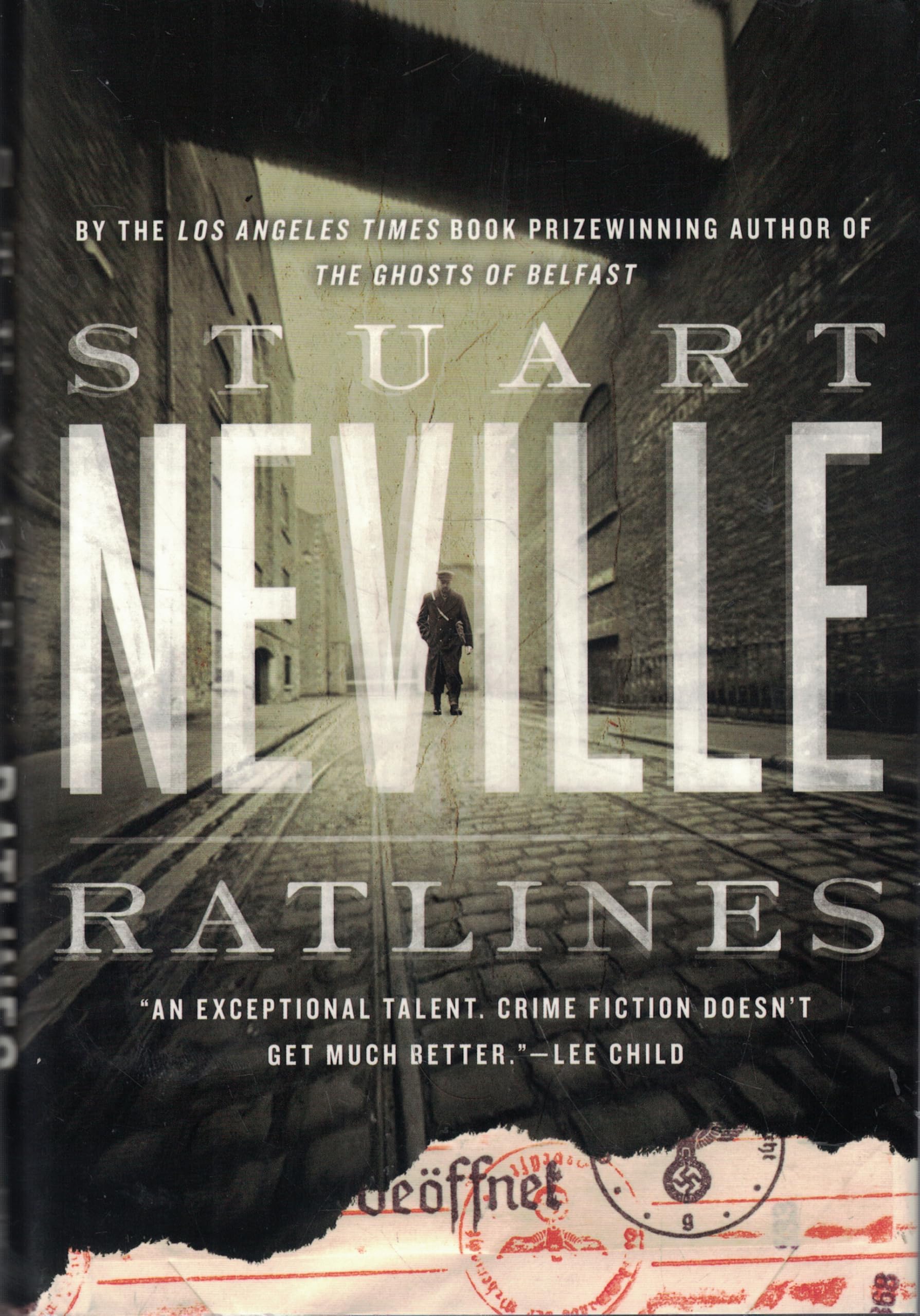



Ireland 1963. As the Irish people prepare to welcome President John F. Kennedy to the land of his ancestors, a German national is murdered in a seaside guesthouse. Lieutenant Albert Ryan, Directorate of Intelligence, is ordered to investigate. The German is the third foreigner to die within a few days, and Minister for Justice Charles Haughey wants the killing to end lest a shameful secret be exposed: the dead men were all Nazis granted asylum by the Irish government in the years following World War II. A note from the killers is found on the dead German's corpse, addressed to Colonel Otto Skorzeny, Hitler's favorite commando, once called the most dangerous man in Europe. The note simply says: "We are coming for you." As Albert Ryan digs deeper into the case he discovers a network of former Nazis and collaborators, all presided over by Skorzeny from his country estate outside Dublin. When Ryan closes in on the killers, his loyalty is torn between country and conscience. Why must he protect the very people he fought against twenty years before? Ryan learns that Skorzeny might be a dangerous ally, but he is a deadly enemy. Q&A with Stuart Neville and James R. Benn Q. In one sentence, tell us what Ratlines is all about. A. Ratlines is about Dublin intelligence officer Albert Ryan, tasked with finding the killers of several Nazis granted sanctuary in Ireland after World War II. Q. Ratlines is your first foray into historical fiction. What was the different about writing a novel so heavily based on historical characters? Did your research or writing process vary from earlier works? A. The research process was entirely different for Ratlines than for any other novel I’ve written. With a present-day thriller, your research focuses on how things work; with a historical thriller, your focus is on how things were. For example, in my previous books, if I wanted to know how many rounds a Glock 17 can hold, I just downloaded the user manual from the manufacturer’s website. Or if I need to get the layout of a part of town right, I can use Google Maps. Not so with Ratlines . Maps are of limited use because the layout of any given street can change, buildings can be renamed, and so on. There are events to get straight – for example, the Irish bus drivers’ strike of 1963 is referenced in the book, as is JFK’s visit to Ireland – but there are also societal issues to think about. For those, it really helped to talk to people who were around Dublin in the early 60s. For example, I described the book’s leading lady as wearing an off-the-shoulder dress in an early draft. Two beta readers pulled me up on that – such a dress would have been scandalous in 60s Ireland. Now she keeps her shoulders covered. Q. Irish Justice Minister Charles Haughey is a real-life character who appears in Ratlines . What should American readers, and others who have not heard of him, know about Charles Haughey? It seems that Irish and English readers have a reaction to the name. Is there a comparable American politician that might help us Yanks put him in context? A. Charles Haughey is probably the most controversial figure in 20th Century Irish politics. He was a charismatic man, loved by many, but also hated. He was Irish prime minister three times, but ended his career in scandal when decades of corruption were exposed. I guess the nearest equivalent in American politics I can think of is a cross between Richard Nixon and Joseph P Kennedy Sr. Haughey was Minister for Justice at the time Ratlines is set, and as such was responsible for asylum seekers, including the Nazis and Axis collaborators who were in Ireland at the time. He’s also known to have had an strange love-hate relationship with the British. He had the hatred of Britain that one would expect from an ardent Irish republican like Haughey, but he also seemed to regard himself as part of some imagined aristocracy, despite his lowly background, and identified himself with the English gentry. Q. Otto Skorzeny—a real-life scar-faced Nazi commando—also has a major role. I wonder if this larger-than-life character ever threatened to take over the story. He's a guy you couldn't make up. A. Otto Skorzeny was a real-life Bond villain, and truly larger than life. He could very easily have been cartoonish, and I couldn’t help but play up some of his more theatrical quirks, including a fencing duel with the novel’s protagonist. He was really a gift of a character. Q. Breton nationalists in Ireland? Who knew? Célestin Lainé is another remarkable, if unbalanced, real-life character. How did you find out about him, and are there still such guys living out their old age in Ireland? A. I learned about Lainé initially through a documentary called Ireland’s Nazis by journalist Cathal O’Shannon. I dug further into him through Daniel Leach’s book, Fugitive Ireland , also about Nazis and Axis collaborators harboured by the Irish state. The Célestin Lainé in Ratlines is only very loosely based on th