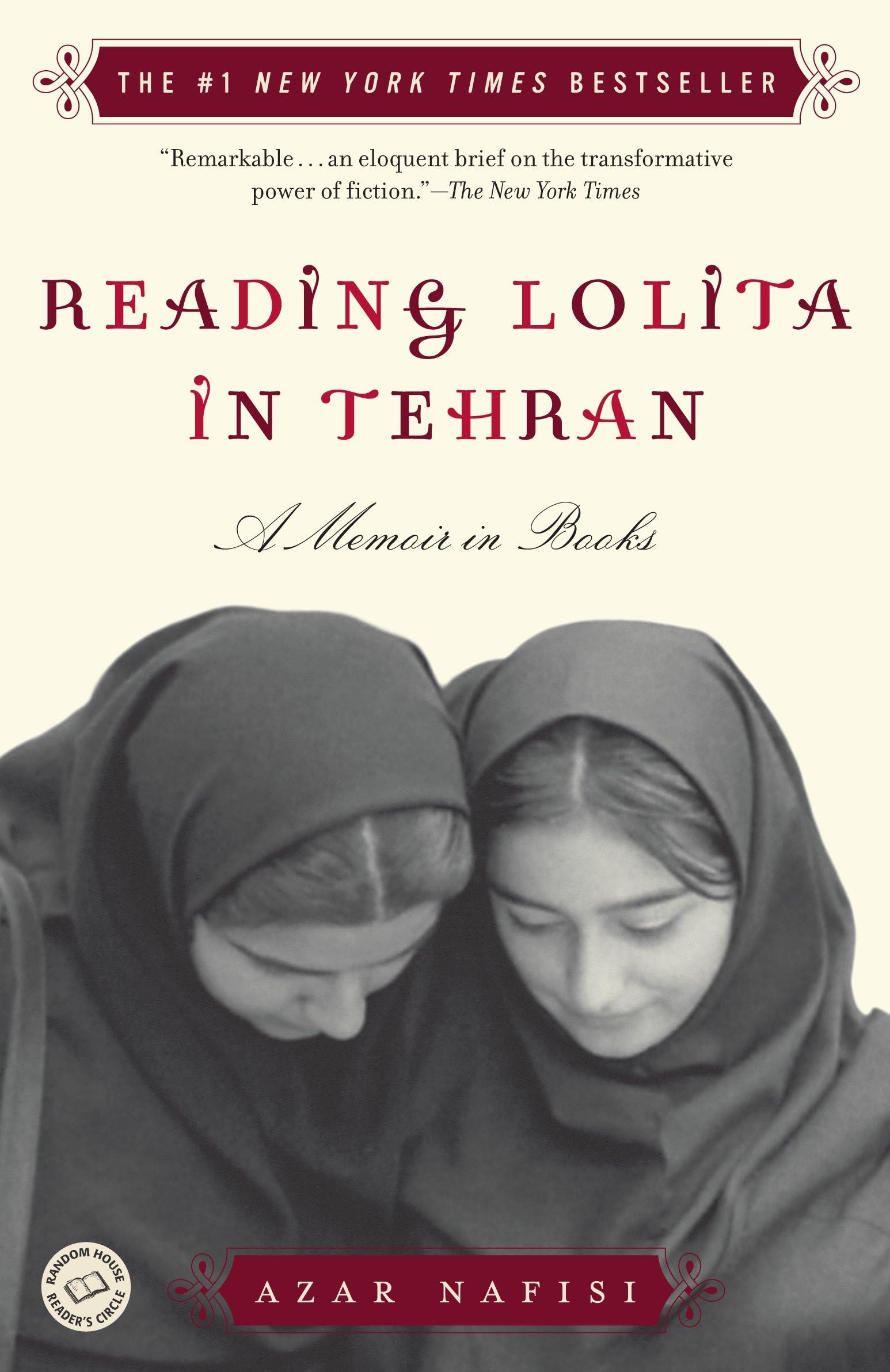



#1 NEW YORK TIMES BESTSELLER • SOON TO BE A MAJOR MOTION PICTURE • A “brilliant” ( The Boston Globe ) memoir of one Iranian teacher’s steadfast pursuit to educate young women under a government that sought to stifle them “An inspiring account of an insatiable desire for intellectual freedom.”— USA Today “A poignant, searing tale about the secret ways Iranian women defy the regime.”— Salon A KIRKUS REVIEWS BEST NONFICTION BOOK OF THE CENTURY Every Thursday morning for two years in the Islamic Republic of Iran, Azar Nafisi, a bold and inspired teacher, secretly gathered seven of her most committed female students to read forbidden Western classics. Some of the women came from conservative and religious families, others were progressive and secular; some had spent time in jail. They were shy and uncomfortable at first, unaccustomed to being asked to speak their minds, but soon they removed their veils and began to speak more freely—their stories intertwining with the novels they were reading by Jane Austen, F. Scott Fitzgerald, Henry James, and Vladimir Nabokov. As Islamic morality squads staged arbitrary raids in Tehran, as fundamentalists seized hold of the universities and a blind censor stifled artistic expression, the women in Nafisi’s living room spoke not only of the books they were reading but also about themselves, their dreams, and disappointments. Azar Nafisi’s luminous masterwork gives us a rare glimpse, from the inside, of women’s lives in revolutionary Iran. Reading Lolita in Tehran is a work of great passion and poetic beauty, a remarkable exploration of resilience in the face of tyranny, and a celebration of the liberating power of literature. “Remarkable . . . an eloquent brief on the transformative power of fiction.” — The New York Times “An inspiring account of an insatiable desire for intellectual freedom.” — USA Today “A poignant, searing tale about the secret ways Iranian women defy the regime. . . . [Nafisi] makes you want to rush back to all these books to experience the hidden aspects she’s elucidated.” — Salon “A quietly magnificent book . . . [Nafisi’s] passion is irresistible.” — LA Weekly “Stunning . . . a literary life raft on Iran’s fundamentalist sea . . . all readers should read it.” —Margaret Atwood “Anyone who has ever belonged to a book group must read this book.” —Geraldine Brooks, author of Horse “[A] vividly braided memoir . . . anguished and glorious.” — The New Republic “Certain books by our most talented essayists. . . carry inside their covers the heat and struggle of a life’s central choice being made and the price being paid, while the writer tells us about other matters, and leaves behind a path of sadness and sparkling loss. R eading Lolita in Tehran is such a book.” — The Atlantic Monthly “Transcends categorization as memoir, literary criticism or social history, though it is superb as all three . . . Nafisi has produced an original work on the relationship between life and literature.” — Publishers Weekly (starred review) “Brilliant . . . So much is right with this book, if not with this world.” — The Boston Globe “An intimate memoir of life under a repressive regime and a celebration of the vitality of literature . . . as rich and profound as the novels Nafisi teaches.” — The Miami Herald “[Nafisi] reminds us why we read in the first place.” — Newsday “I was enthralled and moved by Azar Nafisi’s account of how she defied, and helped others to defy, radical Islam’s war against women. Her memoir contains important and properly complex reflections about the ravages of theocracy, about thoughtfulness, and about the ordeals of freedom—as well as a stirring account of the pleasures and deepening of consciousness that result from an encounter with great literature and with an inspired teacher.” —Susan Sontag Every Thursday morning for two years in the Islamic Republic of Iran, a bold and inspired teacher named Azar Nafisi secretly gathered seven of her most committed female students to read forbidden Western classics. As Islamic morality squads staged arbitrary raids in Tehran, fundamentalists seized hold of the universities, and a blind censor stifled artistic expression, the girls in Azar Nafisi?s living room risked removing their veils and immersed themselves in the worlds of Jane Austen, F. Scott Fitzgerald, Henry James, and Vladimir Nabokov. In this extraordinary memoir, their stories become intertwined with the ones they are reading. Reading Lolita in Tehran is a remarkable exploration of resilience in the face of tyranny and a celebration of the liberating power of literature. Every Thursday morning for two years in the Islamic Republic of Iran, a bold and inspired teacher named Azar Nafisi secretly gathered seven of her most committed female students to read forbidden Western classics. As Islamic morality squads staged arbitrary raids in Tehran, fundamentalists seized hold of the universities, and a blind censo