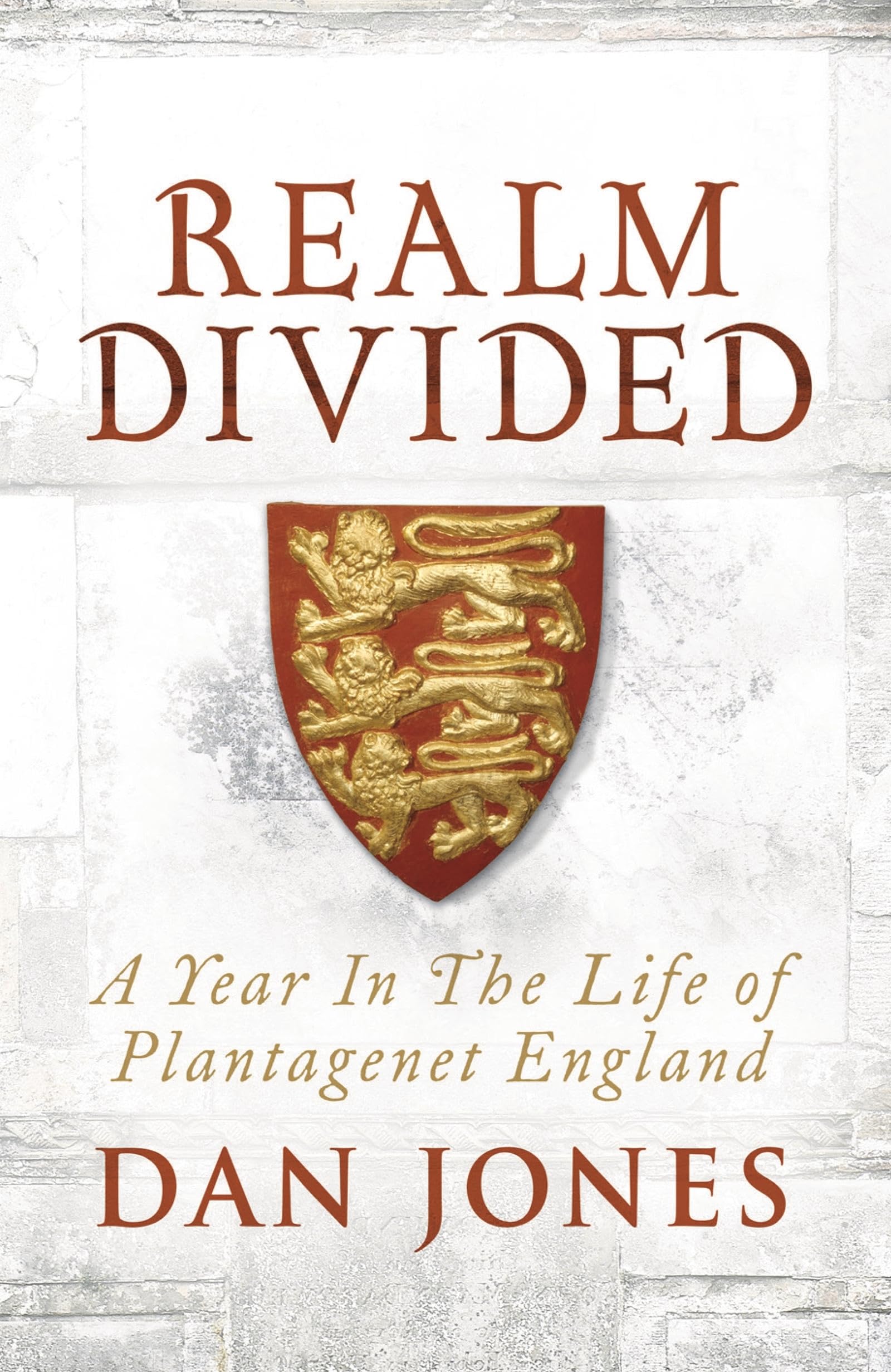



England in 1215. This was not just the year of Magna Carta and King John's war with his barons, but a year of crusading and church reform, of foreign wars and dramatic sieges, of trade and treachery; a year in which London would be stormed by angry barons; England would be invaded by a French army; and a supposedly impregnable castle would be brought down with burning pig fat. But this was also a year in which life, for most people, just went on. Thus 1215 opens a window onto everyday life in the thirteenth century: home and church, love and marriage, education and agriculture, outlawry and adventure. It offers a vivid and authoritative portrait—from royal court to peasant wedding—of medieval life in the round, as well as an exhilarating and revelatory exploration of the big themes of politics, warfare, religion, feudalism, mercantilism, travel, and the law in a transformative year in English history. Dan Jones is an award-winning journalist and a pioneer of the resurgence of interest in medieval history. He is the bestselling author of The Plantagenets: The Warrior Kings And Queens Who Made England . Realm Divided A Year in the Life of Plantagenet England By Dan Jones Head of Zeus Ltd Copyright © 2015 Dan Jones All rights reserved. ISBN: 978-1-78185-882-0 Contents Cover, Welcome Page, Display Options Notice, Dedication, Epigraph, Introduction, A note on dates, Chapter 1: 'Christus vincit!', Chapter 2: Trouble at the Temple, Chapter 3: Taking the Cross, Chapter 4: Lords and Masters, Chapter 5: London, Chapter 6: Runnymede, Chapter 7: England under Siege, Chapter 8: 'There is no God', Afterword, Preview, Plate Section, Appendix 1: The Text of Magna Carta, 1215, Appendix 2: The Charter of the Forest, 1217, Acknowledgements, Bibliography, Notes, List of illustrations, Index, About Realm Divided, Reviews, About Dan Jones, Also by Dan Jones, An Invitation from the Publisher, Copyright, CHAPTER 1 'Christus vincit' On Christmas Day 1214, John, king of England, listened as the clergymen of his private chapel sang ' Christus vincit '. He paid them a handsome fee to do so. When the king came to settle his bills the following month the men who led the plainsong chant, Robert of Saintonge and James the Templar, would receive twenty-five shillings – about a week's wages – for their performance. But the music was worth the expense. The Latin words of the multi-voiced chant swirled together, alternating between the two accomplished soloists and the collective chorus of the congregation, gathering toward a triumphant refrain: ' Christus vincit! Christus regnat! Christus imperat! ' ('Christ conquers! Christ reigns! Christ commands!') Yet the theme of this particular chant was more than simply one of Yuletide celebration. Its associations lay much closer to King John's heart, for when sung before a king, ' Christus vincit ' (a song of the type known as laudes regiae ) was nothing short of a hymn to lordly – and kingly – magnificence. It had been chanted at royal coronations across Europe since the time of Charlemagne, possibly the greatest ruler of the whole middle ages, who had been crowned as Holy Roman Emperor by the Pope on another Christmas Day, in the year 800. The practice had come to England with the Norman invasion, so John had heard ' Christus vincit ' at his own coronation as king of England in May 1199, and at the coronation of his wife, Queen Isabella, in October the following year. Throughout his reign he had paid for it to be sung at Christmas and Easter; now he listened again as monastic singers opened their lungs and called for the blessing of a long list of holy men and women: from St Peter and the Virgin Mary to St Thomas Becket and St Etheldreda, a seventh-century East Anglian nun who had successfully escaped ravishing by a lascivious king and had grown an ash tree from her walking stick. The well-trained male voices prayed together that their king should enjoy prosperous times. They called for piety and joy. They asked for the peace of Christ to descend on the realm. 'To the king of the English, crowned by God, salvation and victory,' they sang. For a king like John, whose life and reign had been anything but peaceful, there could have been no more fitting Christmas wish. John was celebrating Christmas in Worcester. The walled city in England's western borderlands had been a favoured stopping point for kings since the days of the Norman Conquest. John was no stranger to its gates. Worcester was, like Gloucester to the south of it and Hereford to the west, a marcher city, rising out of the fertile lands between England and Wales, where lush green countryside was watered by the rivers Wye and Severn as they ran down from the Cambrian mountains. This was the westernmost point of civilization, for beyond the marches roamed the Welsh, a strange, wild, quarrelsome people, by turns generous and musical, bold and barbarous, witty in their speech b