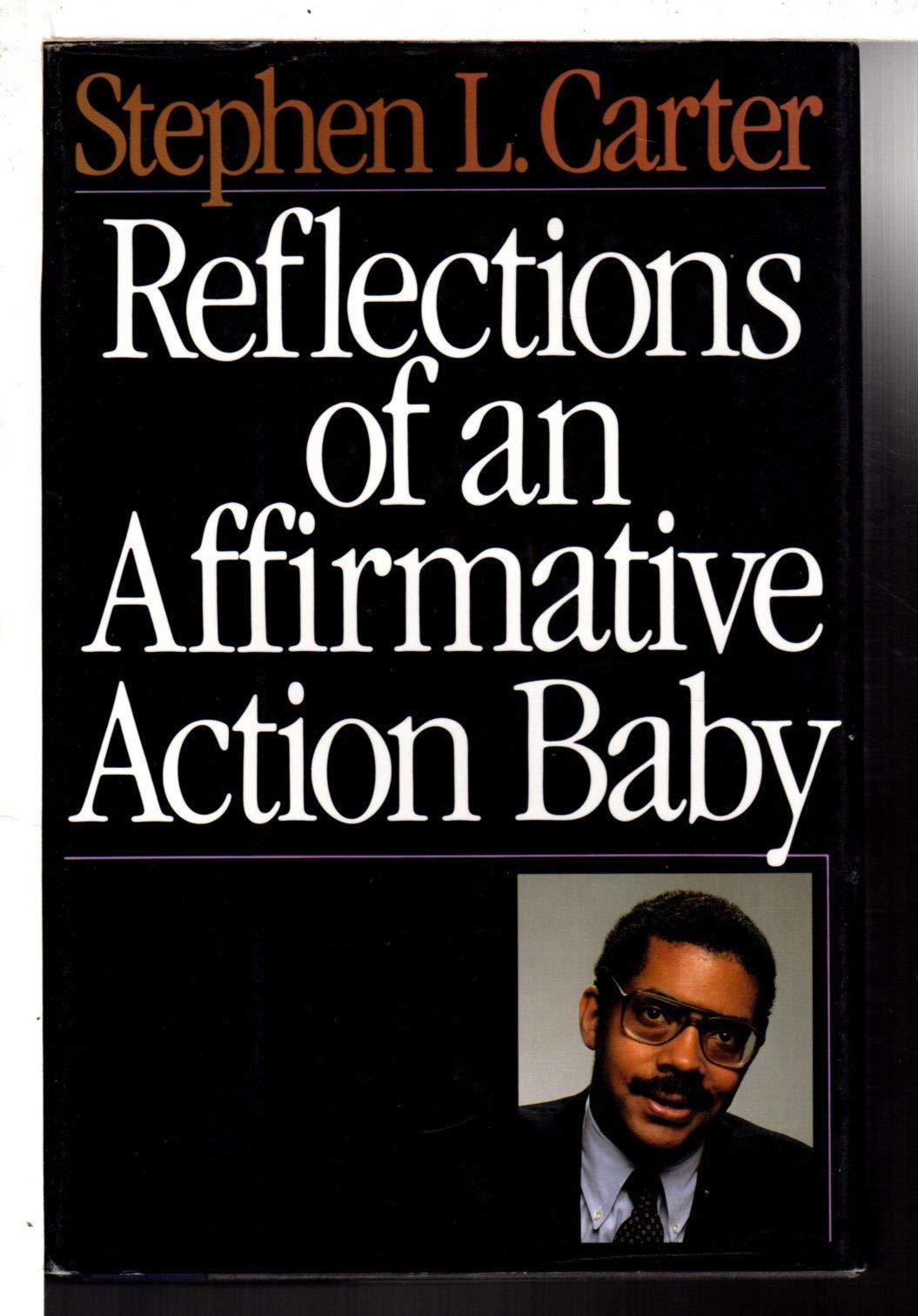



In a climate where whites who criticize affirmative action risk being termed racist and blacks who do the same risk charges of treason and self hatred, a frank and open discussion of racial preference is difficult to achieve. But, in the first book on racial preference written from personal experience, Reflections of an Affirmative Action Baby, Stephen L. Carter, Cromwell Professor of Law at Yale University and self-described beneficiary (and, at times, victim) of affirmative action, does it.Using his own story of success and frustration as an affirmative action baby” as a point of departure, Carter, who has risen to the top of his profession, provides an incisive analysis of one of the most incendiary topics of our dayas well as an honest critique of the pressures on black professionals and intellectuals to conform to the politically correct” way of being black.Affirmative action as it is practiced today not only does little to promote racial equality, Carter argues, but also allows the nation to escape rather cheaply from its moral obligation to undo the legacy of slavery. Affirmative action, particularly in hiring often reinforces racist stereotypes by promoting the idea that the black professional cannot aspire to anything more than being the best black.”Has the time come to abandon these programs? No--but affirmative action must return to its simpler roots, Carter argues: to provide educational opportunities for those who might not otherwise have them. Then the beneficiaries should demand to be held to the same standards as anyone else. The latest book to look at the issues facing African Americans from a point of view different from mainstream civil rights organizations, it begins with Yale law professor Carter discussing the positive and negative effects of affirmative action on his life. He then expands his study to include other topics such as the increase of racial incidents in America, dealing with political correctness and the conflicts between the mainstream liberal black community and the increasingly vocal so-called black conservatives. Like Shelby Steele's The Content of Our Character ( LJ 8/90), Carter's book is well written; unlike Steele, Carter provides lots of detailed documentation to support his ideas. A book that will find lots of readers and stir debate. For all libraries. (Index not seen.)-- Danna C. Bell-Russel, Mary mount Univ. Libs., Arlington, Va. Copyright 1991 Reed Business Information, Inc. Affirmative-action programs have ``run their course'' and, according to this overworked, self-referential diatribe from Carter (Yale/Law), that's all to the good. A Stanford graduate, Carter entered Yale in 1977. ``I got into a top law school,'' he offers, ``because I am black--so what?'' He argues here that all should be based on merit and that affirmative action--what he decries as ``racial preference''- -further ghettoizes blacks by not allowing them to compete against ``the best.'' The ``taint''--the idea that success was achieved solely because of race rather then merit--haunts all black professionals, says Carter, lamenting also the ``biology implies ideology'' presupposition that there is only one correct black viewpoint, that a minority member who expresses a view that a white could hold is ``not a bona fide representative of [his] people.'' Carter empathizes with ``dissenters'' such as author- historian Shelby Steele and controversial sociologist William Julius Wilson, intellectuals who have gone against the grain by not speaking ``for'' the black race and who have been criticized as ``neoconservative'' and branded traitors. Affirmative action, claims Carter, has lowered general standards to meet racial quotas rather than spurred minorities on to being ``too good to ignore.'' It's been ``a convenience,'' a means of avoiding more costly, difficult solutions. He doesn't go into detail, but he offers the Head Start program and refers hazily to the ``policy initiatives'' of the War on Poverty as possible answers. While his analysis has undeniable merit, Carter's call for a reemphasis on ``societal commitment'' and ``a loving solidarity'' as the means to gaining equity and achievement for black Americans seems to overlook the harsh historical reality and pervasive attitudes that made affirmative action a necessity. -- Copyright ©1991, Kirkus Associates, LP. All rights reserved.