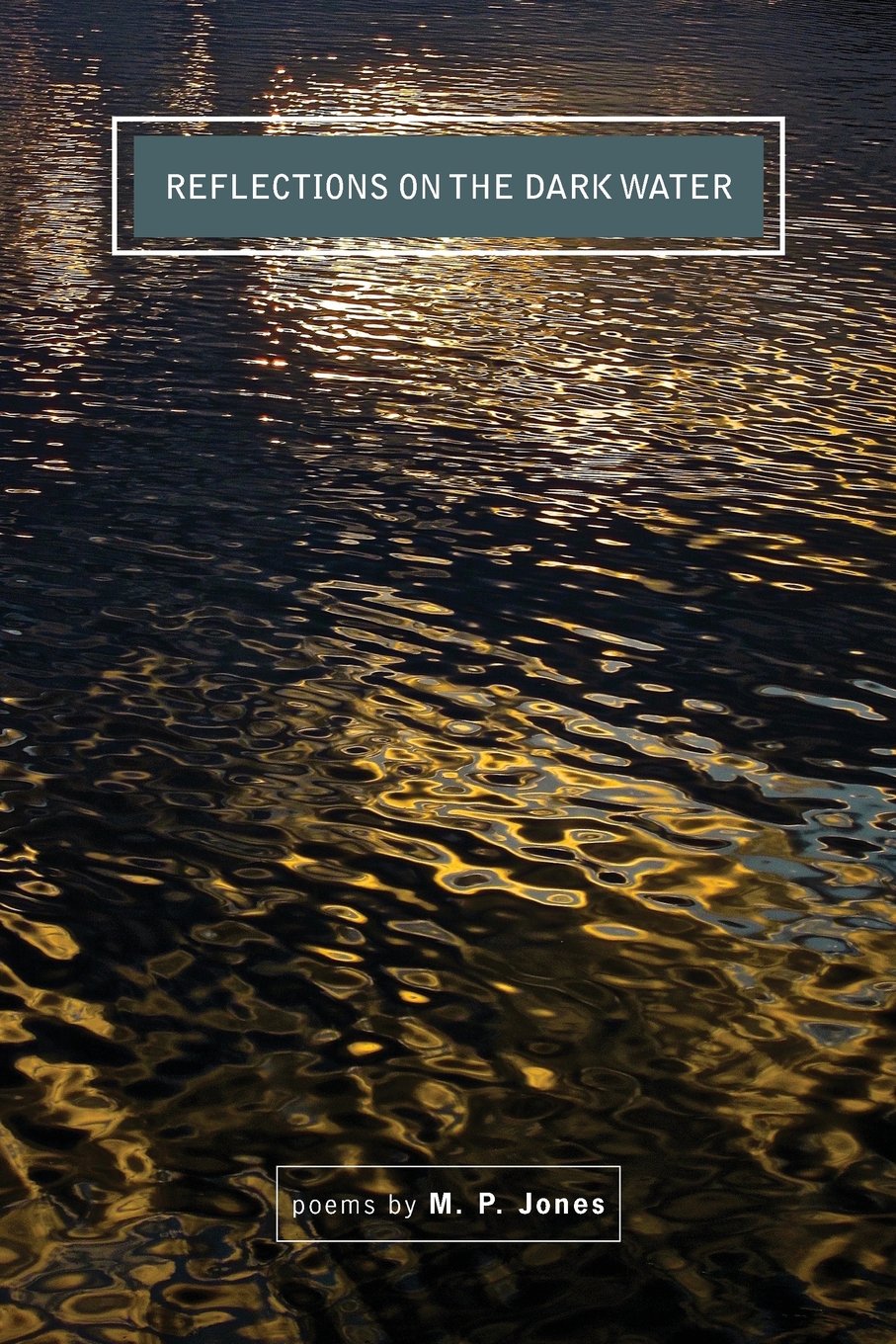



This collection takes as its subjects loss and memory in the landscapes and wild spaces of the American South, connecting and weaving personal losses with the larger threads of ecological disruption and environmental degradation. These poems seek wildness in industrial, pastoral, rural, and urban places--places neither wholly sacred nor fully desecrated. Memories of growing up in Alabama and surviving family tragedy all push the speaker outward, seeking connections with "that other world" outside ourselves. Praise for Reflections on the Dark Water : Reflections on the Dark Water concerns itself with memory and myth, how the bridge between the two--how the line where they intersect--is the irrevocable location of history. M.P. Jones crosses that bridge, that line over and again in poems that view the past in order to make sense of the present. This is a book that wants to separate "truth from chaff." --Jericho Brown, author of The New Testament Reflections on the Dark Water mourns the vanishing or vanished pastoral American South as well as the human and animal lives it sustains. Think of these as eco-elegies, twining the fates of family with those of a carpenter-ant-eaten oak, an abandoned owl's nest, or herons in an industrial park. In a landscape of ever-possible ruin, the poet stakes his claim to sound, whether created through the repetitions of formal verse or through the easy virtuosity of language and line. "For a while, we stand afraid to interrupt / the silence which has swollen until it filled / the lake and the green hill and the dark trees," Madison Jones writes. And then, because poetry rushes into the darknesses and silences of the world, these poems sing. -Cecily Parks, author of O'Nights Reflections on the Dark Water concerns itself with memory and myth, how the bridge between the two-how the line where they intersect-is the irrevocable location of history. M.P. Jones crosses that bridge, that line over and again in poems that view the past in order to make sense of the present. This is a book that wants to separate "truth from chaff." -Jericho Brown, author of The New Testament Jones had me at the table of contents. Hayden Carruth at a liquor store, Emily Dickinson, and Jim Morrison? Yes, please. As I moved through Reflections on the Dark Water, I fell in love with so much more. In the book's first poem, "The Bicycle," Jones tells us there is "nothing to displace the topography of ruin," save for movement or progress of some kind-hurrying feet or a spinning wheel. In his lyrical narratives, everything moves, even in the tiniest of shifts between sound and the absence of sound, the experience of loss and our memories of it, recovery and the realization that we cannot recover. In every poem, Jones deftly controls the movement of his language, often utilizing such haunting repetition you can't help but linger over each image. Reflections on the Dark Water is often dark; but, look carefully at what Jones wants you to see: there is beauty in our hope for ourselves and our world. Sometimes, as Jones describes, "is it hidden in plain sight."-Erica Dawson, author of The Small Blades Hurt Madison Jones is a Graduate Research Fellow at the University of Florida-where he studies ecocomposition and environmental rhetoric and works with the TRACE journal & innovation initiative. He is editor-in-chief of Kudzu House Quarterly, a literary and scholarly journal devoted to ecological thought. Reflections on the Dark Water is his second poetry collection, following Live at Lethe (Sweatshoppe, 2013). He has poems forthcoming in ISLE: Interdisciplinary Studies in Literature and Environment, Birmingham Poetry Review, and The Fourth River. Recent publications include co-editing (with Steven Petersheim) Writing the Environment in Nineteenth-Century American Literature: The Ecological Awareness of Early Scribes of Nature; and his poetry has appeared in Canary, Tampa Review, Painted Bride Quarterly, Greensboro Review, and elsewhere; book reviews in ISLE, Kenyon Review Online, Journal of Ecocriticism, and elsewhere. For more information, visit his website: ecopoiesis.com.