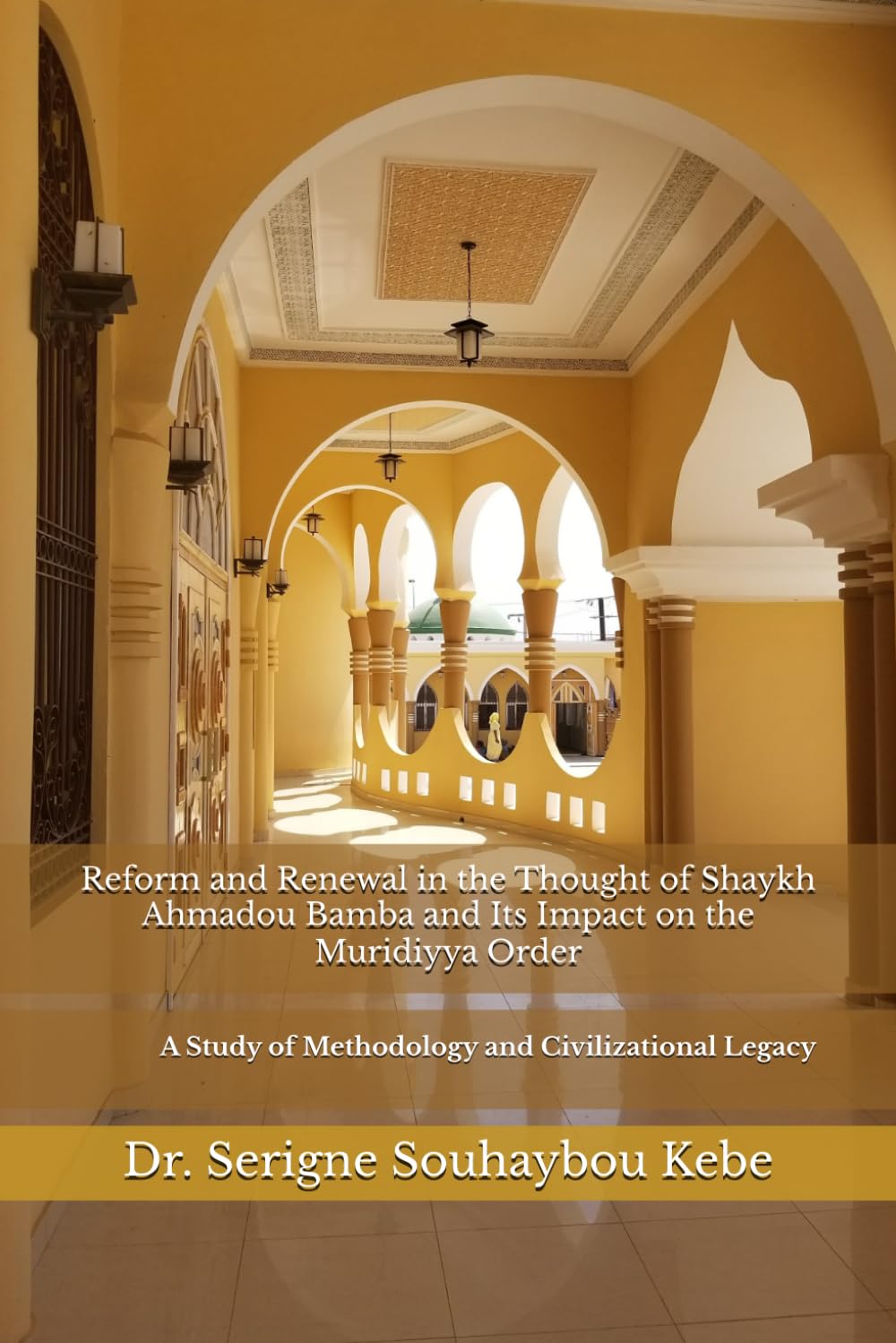
Reform and Renewal in the Thought of Shaykh Ahmadou Bamba and its Impact on the Muridiyya Order: Reform and Renewal in the Thought of Shaykh Ahmadou .
$23.00
by Dr. Serigne Souhaybou Kebe



The central thesis of this book (REFORM AND RENEWAL IN THE THOUGHT OF SHAYKH AHMADOU BAMBA AND ITS IMPACT ON THE MURIDIYYA ORDER) argues that the secret to the success and endurance of the Muridiyya order lies not simply in its embrace of Sufism, but in the nature of the methodology formulated by its founder. This methodology can be described as one of "holistic, integrative renewal" ( al-tajdīd al-shumūlī al-takāmulī ), which refused to separate the three pillars of religion: Imān (faith and theology), Islām (law and jurisprudence), and Iḥsān (Sufism and ethics), viewing them as an indivisible whole. With his spiritual perspicacity and profound insight, Shaykh Ahmadou Bamba (Shaykh al-Khadīm) realized that the crisis of the Ummah was not merely political or military but was, at its core, a crisis in the formation of the Muslim individual. Consequently, he redefined the concept of the "greater jihad" to become a struggle against ignorance, idleness, and poverty, taking "knowledge and piety" ( al-ʿulūm wa-l-tuqā ) as his sword and "work and service" ( al-ʿamal wa-l-khidma ) as his shield.