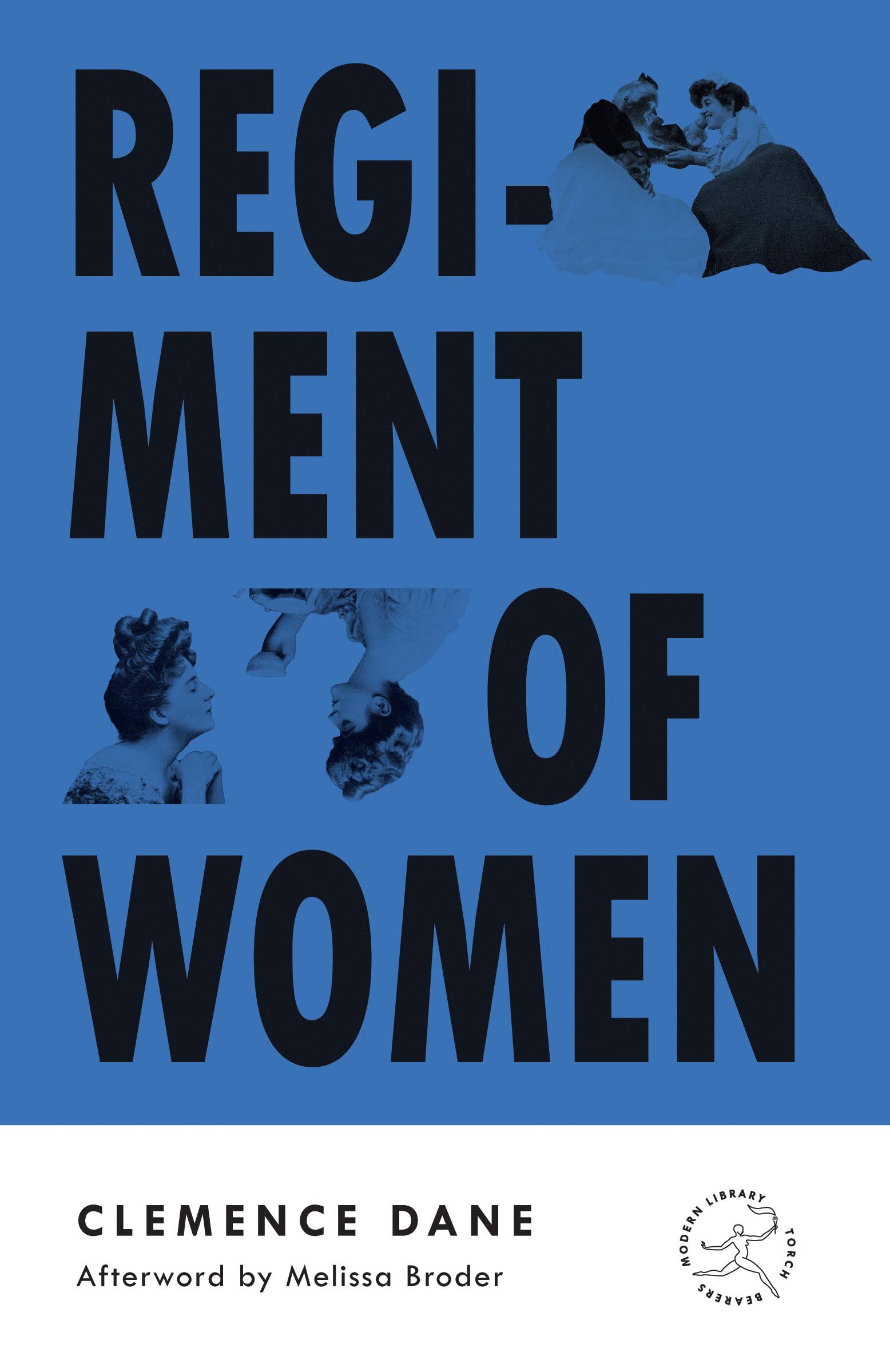



Obsessive friendships lead to tragedy in this early-twentieth-century novel about a charismatic schoolmistress, a naïve new teacher, and an impressionable student —with an afterword by Melissa Broder, author of Milk Fed and The Pisces. Clare Hartill is a brilliant, commanding educator at a private all-girls boarding school: the undisputed queen of her own small kingdom. But her tightly controlled world is disrupted when she meets Alwynne Durand, a nineteen-year-old teacher with no formal training. Alwynne's innocence and openness endear her to the secretive Clare. Alwynne is drawn to Clare's intelligence and sophistication. The two women fall headlong into an all-consuming friendship and begin planning a life together. But their relationship is tested when an exceptionally gifted student named Louise enters their orbit. Louise will do anything to win Clare's approval. Meanwhile, Clare's jealous and manipulative nature slowly pulls Alwynne away from her friends, her students, and her family—anyone, in fact, who is not Clare Hartill. Written in the early twentieth century by Winifred Ashton (under the pseudonym Clemence Dane), Regiment of Women is a complex tale of love and power that asks: How well do we truly see the people we love? And what are we willing to sacrifice for them? The Modern Library Torchbearers series features women who wrote on their own terms, with boldness, creativity, and a spirit of resistance. Clemence Dane was the pseudonym of Winifred Ashton (1888–1965), an English novelist and playwright. She was an artist, teacher, and actress before she turned to writing. A prolific writer, Ashton authored thirty novels and sixteen plays over the course of her lifetime. Ashton also won an Academy Award for the screenplay of the 1945 film Vacation from Marriage . Chapter I The school secretary pattered down the long corridor and turned into a class-room. The room was a big one. There were old-fashioned casement windows and distempered walls; the modern desks, ranged in double rows, were small and shallow, scarred, and incredibly inky. In the window-seats stood an over-populous fish-bowl, two trays of silkworms, and a row of experimental jam-pots. There were pictures on the walls—The Infant Samuel was paired with Cherry Ripe, and Alfred, in the costume of Robin Hood, conscientiously ignored a neat row of halfpenny buns. The form was obviously a low one. Through the opening door came the hive-like hum of a school at work, but the room was empty, save for a mistress sitting at the raised desk, idle, hands folded, ominously patient. A thin woman, undeveloped, sallow-skinned, with a sensitive mouth, and eyes that were bold and shining. They narrowed curiously at sight of the new-comer, but she was greeted with sufficient courtesy. “Yes, Miss Vigers?” Henrietta Vigers was spare, precise, with pale, twitching eyes and a high voice. Her manner was self-sufficient, her speech deliberate and unnecessarily correct: her effect was the colourless obstinacy of an elderly mule. She stared about her inquisitively. “Miss Hartill, I am looking for Milly Fiske. Her mother has telephoned—Where is the class? I can’t be mistaken. It’s a quarter to one. You take the Lower Third from twelve-fifteen, don’t you?” “Yes,” said Clare Hartill. “Well, but—where is it?” The secretary frowned suspiciously. She was instinctively hostile to what she did not understand. “I don’t know,” said Clare sweetly. Henrietta gaped. Clare, justly annoyed as she was, could not but be grateful to the occasion for providing her with amusement. She enjoyed baiting Henrietta. “I should have thought you could tell me. Don’t you control the time-table? I only know”—her anger rose again—“that I have been waiting here since a quarter past twelve. I have waited quite long enough, I think. I am going home. Perhaps you will be good enough to enquire into the matter.” “But haven’t you been to look for them?” began Henrietta perplexedly. “No,” said Clare. “I don’t, you know. I expect people to come to me. And I don’t like wasting my time.” Then, with a change of tone, “Really, Miss Vigers, I don’t know whose fault it is, but it has no business to happen. The class knows perfectly well that it is due here. You must see that I can’t run about looking for it.” “Of course, of course!” Henrietta was taken aback. “But I assure you that it’s nothing to do with me. I have rearranged nothing. Let me see—who takes them before you?” Clare shrugged her shoulders. “How should I know? I hardly have time for my own classes—” Henrietta broke in excitedly. “It’s Miss Durand! I might have known. Miss Durand, naturally. Miss Hartill, I will see to the matter at once. It shall not happen again. I will speak to Miss Marsham. I might have known.” “Miss Durand?” Clare’s annoyance vanished. She looked interested and a trifle amused. “That tall girl with the yellow hair? I’ve heard about her. I haven’t spoken to her yet, but the children approve, do