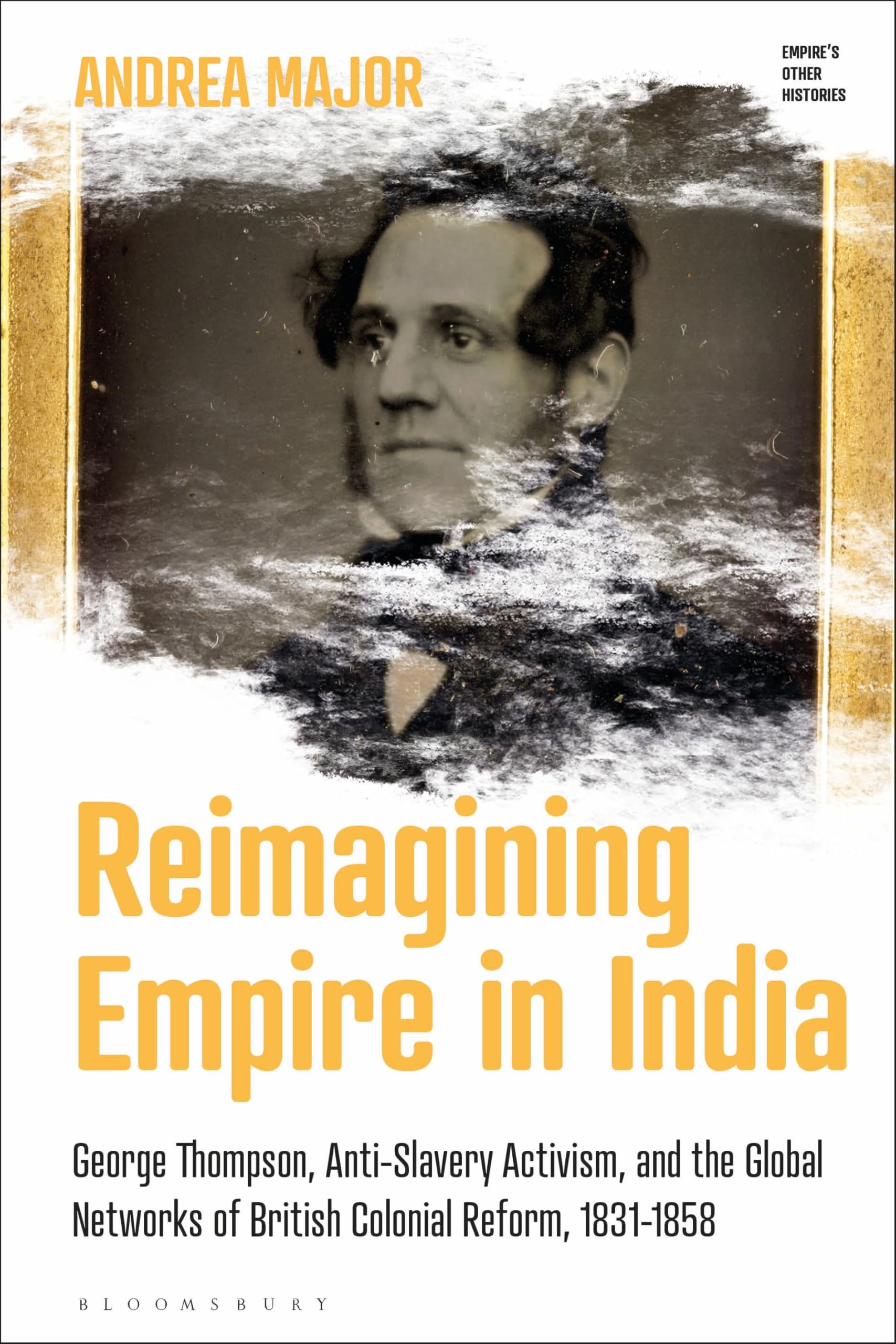
Reimagining Empire in India: George Thompson, Anti-Slavery Activism, and the Global Networks of British Colonial Reform, 1831-1858 (Empire’s Other
$115.00
by Andrea Major



This book explores debates about East India Company colonialism that took place on the lecture circuits of Britain, in the meeting houses of Calcutta, and at the Mughal court in Delhi in the late 1830s and 1840s. In the decades that followed the Emancipation Act (1833) British abolitionists and colonial philanthropists turned their attention to conditions across the empire, sometimes collaborating with colonised groups to challenge the impositions and iniquities of British colonial rule and sometimes prescribing their own vision of how an imperial relationship should look. This book uses the travels, experiences, and activism of anti-slavery lecturer and East India reformer George Thompson as a starting point for a wider exploration and reassessment of the ways in which Company rule in India was challenged in the decades before the Indian Uprising of 1857. An important organiser in the campaign for East India reform as the main spokesperson for the Aborigines Protection Society and a champion of the causes of Indian rulers such as Pratap Singh and Bahadur Shah Zafar, Thompson was also a flawed character. As a paid agent, he was remunerated for his activism and accusations of pecuniary self-interest were never far away. His story therefore offers important insights into the limitations of early anti-colonial sentiment, and the problems of cosmopolitan collaboration in colonial contexts. By exploring early Victorian debates about India’s commercial potential, role in the imperial labour market, and place within an increasingly interconnected post-emancipation empire, the book seeks to contextualise evolving ideas regarding Britain’s humanitarian responsibilities towards her ‘fellow subjects in the East’, and how these connected with, and were superseded by, nascent forms of Indian anti-colonialism, political protest, and civic activism. Andrea Major is Professor of Colonial History at University of Leeds, UK, specialising in the relationship between Britain and India during the period of East India Company rule c. 1757-1857. She has published three monographs, four edited volumes, and numerous peer reviewed articles, all dealing in different ways with the relationship between the British colonial philanthropy and social reform issues in India. These include Slavery, Abolitionism, and Empire in India (2012) and articles in Cultural and Social History and the Journal of British Studies . Victoria K Haskins is Professor of History at the University of Newcastle, Australia. Director of the Purai Global Indigenous History Centre, she works on histories of gender and colonialism, domestic service, and women's cross-cultural relationships. She is the author of One Bright Spot (2005), Matrons and Maids: Regulating Indian Domestic Service in Tucson, 1914-1934 (2012), Living with the Locals: Early Europeans' Experience of Indigenous Life (with John Maynard, 2016), and Colonialism and Male Domestic Service across the Asia Pacific (with Julia Martinez, Claire Lowrie and Frances Steel, 2019). Emily Manktelow is Senior Lecturer of Imperial and Global History at Royal Holloway, University of London, UK. She is the author of Missionary Families: Race, Gender and Generation on the Spiritual Frontier and co-editor of Subverting Empire: Deviance and Disorder i the British Colonial World (2015).