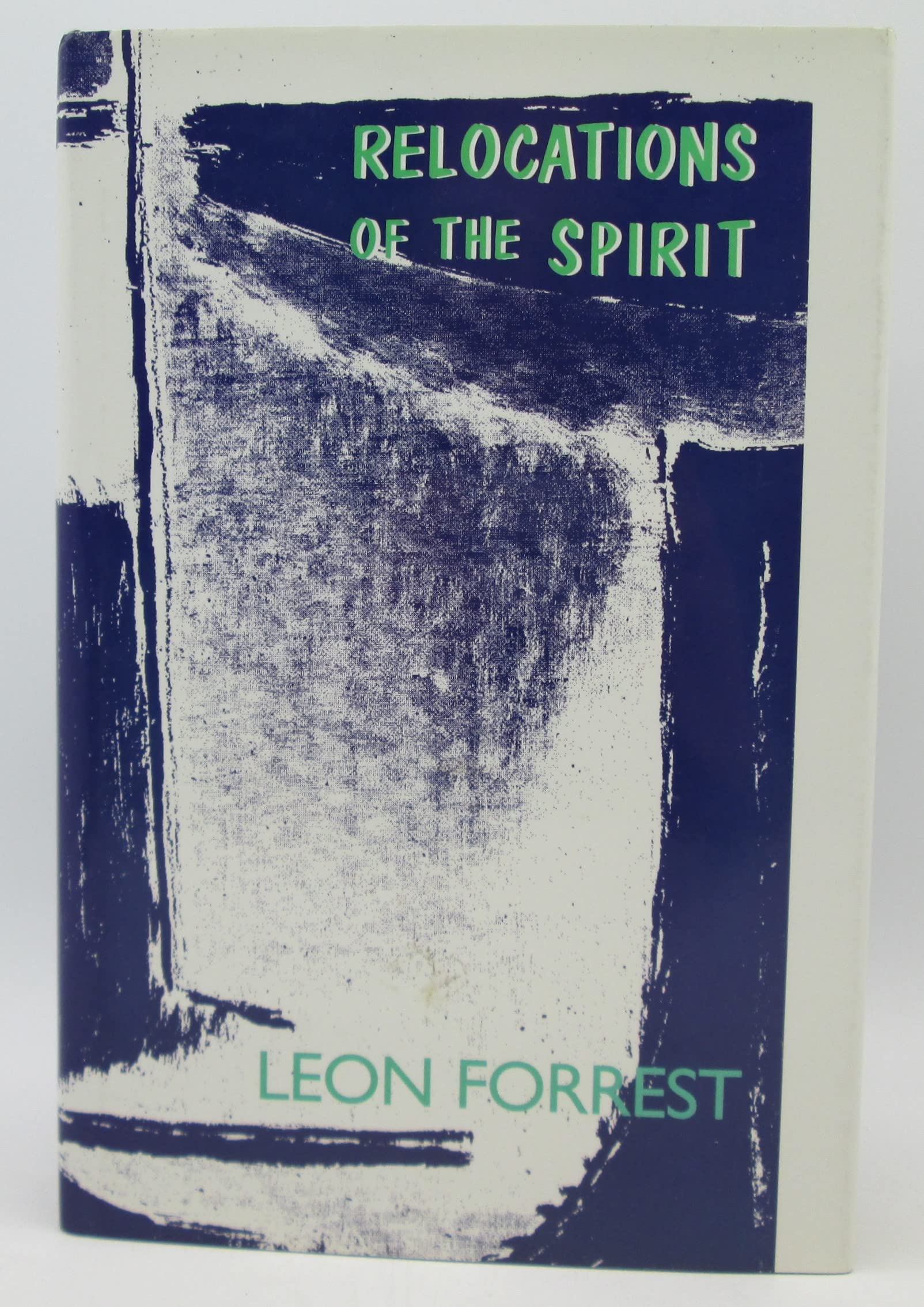



In this collection's opening autobiographical essay entitled "In the Light of Likeness - Transformed", Leon Forrest tells us that he came from a lower-middle-class Negro household on the South Side of Chicago. My father was a bartender on the Santa Fe Railroad and Daddy would read to me and my mother when he was at home. My mother read to me constantly. My great-grandmother lived with us until I was ten, and I used to read the Bible to her, mainly the Old Testament". Leon Forrest's lifetime love of words shines forth in the essays, articles, and book reviews that comprise this volume. We share his fine-tuned, careful perceptions in essays on the moment of epiphany in the black Baptist church, on Michael Jordan, on Toni Morrison's novel, Sula, on William Faulkner, on Billie Holiday, on the sculptor Richard Hunt, among many others. Book reviews address James Baldwin's Just Above My Head, Joyce Carol Oates' Son of the Morning, Rita Mae Brown's Six on One, and The Book of Sand by Jorge Luis Borges. In each, we learn something new, about literature, about life, about ourselves. The pieces in Relocation of the Spirit traverse twenty years in American culture. Leon Forrest was there as witness - and we are wiser for his observations. A novelist, professor, and former journalist ( Two Wings To Veil My Face , LJ 3/1/84), Forrest presents here a collection of 27 essays, many autobiographical. Forrest's writing is evocative, vivid, even poetic. He speaks fluently of the inspirations in his life and work, such as the strong matriarchal, spiritual, religious (Baptist and Catholic), and musical (blues and gospel) influences, all heightened by the rich African American culture and art present in his boyhood and adult communities. He stresses the idea of reinvention and transformation in his own writing and that of Ralph Ellison, Toni Morrison, the poet Sterling Brown, among others. Also included is a long critical essay on the black Muslim movement. This collection abounds in universal ideas expressed in a meaningful way. Recommended not only for African American studies collections but for those in the humanities as well. - Janice Braun, Hoover Inst. Lib., Stanford, Cal. Copyright 1994 Reed Business Information, Inc. Forrest's last novel was the jazzy, episodic Divine Days (1992), a rambling yet vivid tale about a young black writer trying to sort out all the voices that inspire, confuse, and intimidate him. This exhilarating and confounding atmosphere of talk, preaching, advice from family members, literature, and music is also manifest in this collection of Forrest's free-form essays from the past two decades. Forrest writes with zest about his youth and Chicago's black South Side. He takes us into a variety of black churches, discusses Elijah Muhammad at length, and extols the virtues of his favorite writers, including Richard Wright, Ralph Ellison, Gwendolyn Brooks, Toni Morrison, and William Faulkner. He also trained his keen and lyrical mind on Michael Jordan just as the full extent of Jordan's uncanny powers were being revealed to an adoring public. Forrest is a stream-of-consciousness writer, flowing easily from memory to anecdote to musings on questions of faith, race, pride, prejudice, politics, justice, and art. Donna Seaman Thoughts on Afro-American writers, artists, and sports figures by novelist Forrest (Two Wings to Veil My Face, 1984, etc.), assembled largely from magazines such as The Carleton Miscellany and Callalloo and from book reviews in the Chicago Tribune and elsewhere. Aside from biographical delights about his home in Chicago, Forrest covers the expected territory: Toni Morrison, Ralph Ellison, Billie Holiday, poet Sterling Brown, James Baldwin, Roland Kirk, Jackie Robinson, Faulkner's treatment of blacks, musings on Michael Jordan--and white writers such as Jorge Luis Borges and John Gardner, whose The Art of Fiction he compares with Dostoyevsky's notebooks, James's The Art of the Novel, and Forster's Aspects of the Novel, a comparison that is meaningful only in kind, not in ideas. Forrest's heaviest efforts focus on Faulkner: ``Reinvention is a primary attribute of intelligence, identity, and endurance in the character make-up of many memorable black figures in...The Sound and the Fury: Dilsey, Deacon, Louis Hatcher, and Reverend Shegog. I believe that this major Afro- American cultural attribute--reinvention--was also used by Faulkner as a salient and ironic instrument of structural linkage to reveal the discontinuities and failure of Quentin Compson...and the decline of the South.'' This is lit-crit of a milder sort, not so dense that you can't more or less follow it, and yet it raises the question: Do you want to? We sense that Faulkner himself would not get past the essay's title--``Faulkner/Reforestation.'' A lively interview with Ralph Ellison subjects Ellison to more structural salience, linkage, and ``metaphorical patterning, ``under a viscous dose of Kenneth Burke's ``formula of