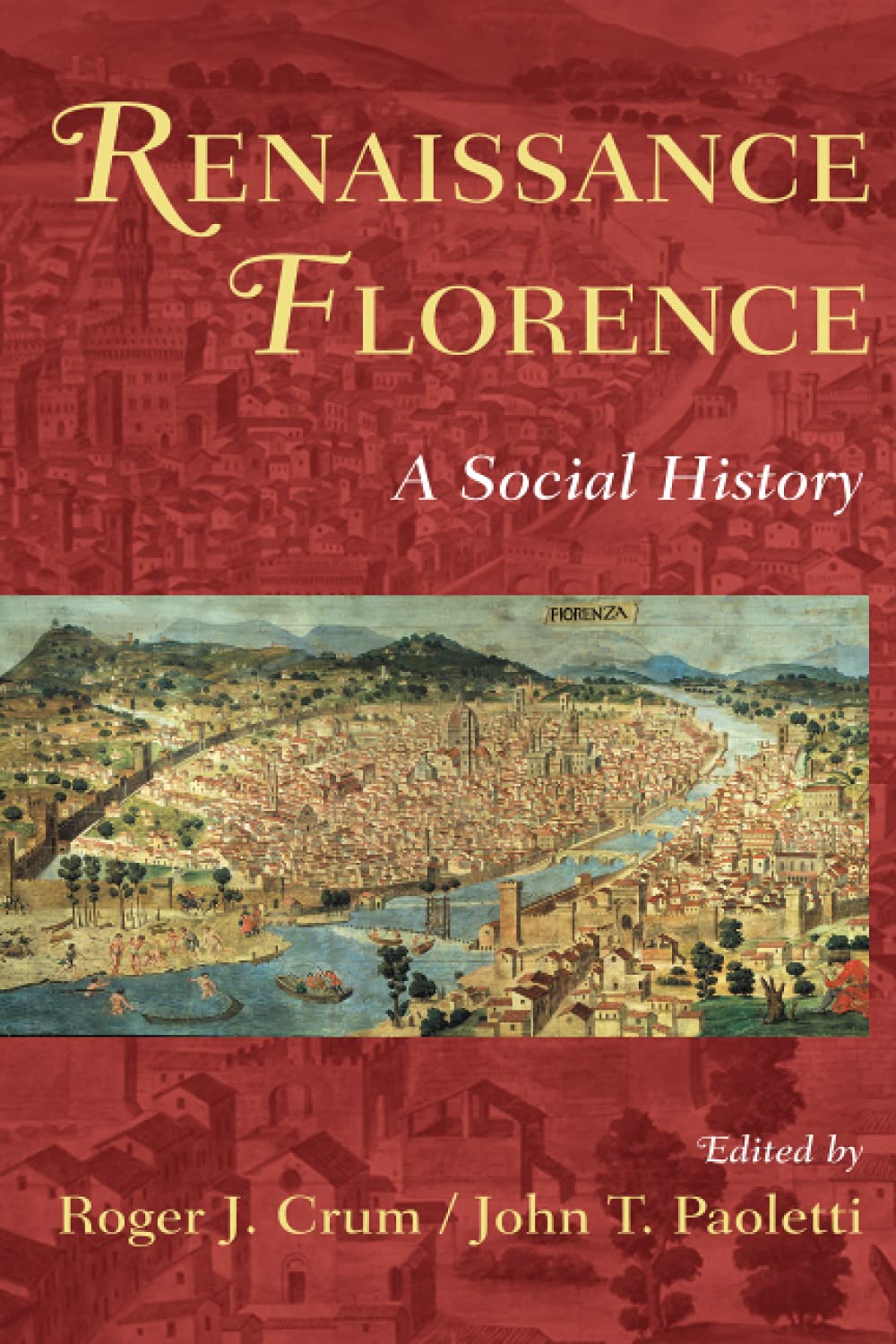



This book examines the social history of Florence during the critical period of its growth and development in the early modern period, from the fourteenth through sixteenth centuries. Treating the city, its art, and its rituals as lived experiences that extended through space and time, the contributors to this volume consider well-known objects, monuments, sites, and events in the vivifying context of a variety of spaces, which are here understood as a dimension of physical, psychological, religious, and political perceptions for the city of Florence during the Renaissance. The volume provides a multi-dimensional view of Florence as it evolved into an economic powerhouse and dynamic center of artistic achievement, as well as the setting for political and religious struggles. It also demonstrates how permeable boundaries between the disciplines of history and art history have become. "The spatial fabric of the city...becomes the vehicle for examining Florentine daily life, from confraternal processions and artisanal workshops to domestic interiors, both plebian and patrician." -Choice "Substantial notes and bibliography expand this volume to a very hefty size. Yet unlike many large encyclopedic collections of recent years that serve mainly to digest the authors' and other longer works on the subjects at hand, this volume contains much that is new without merely descending into detail and the particular. It points to the value of accumulated local knowledge and scholarship in allowing for richer and finer-grained historical understanding. It also serves as an example of the continuing fruitful collaborations between history and the history of art that have long characterized Renaissance studies." -Ann E. Moyer, Department of History, University of Pennsylvania, H-NET "This welcome collection of essays on the society and art of Renaissance Florence serves as an up to date and accessible introduction to much current research in the field." -F.W. Kent, Monash University, The Catholic Historical Review This book examines the social history of Florence from the fourteenth through to sixteenth centuries. Roger J. Crum is Professor of Art History at the University of Dayton, where he has held the Graul Chair in Arts and Languages. John T. Paoletti is William B. Kenan Professor of the Humanities and Professor of Art History at Wesleyan University.