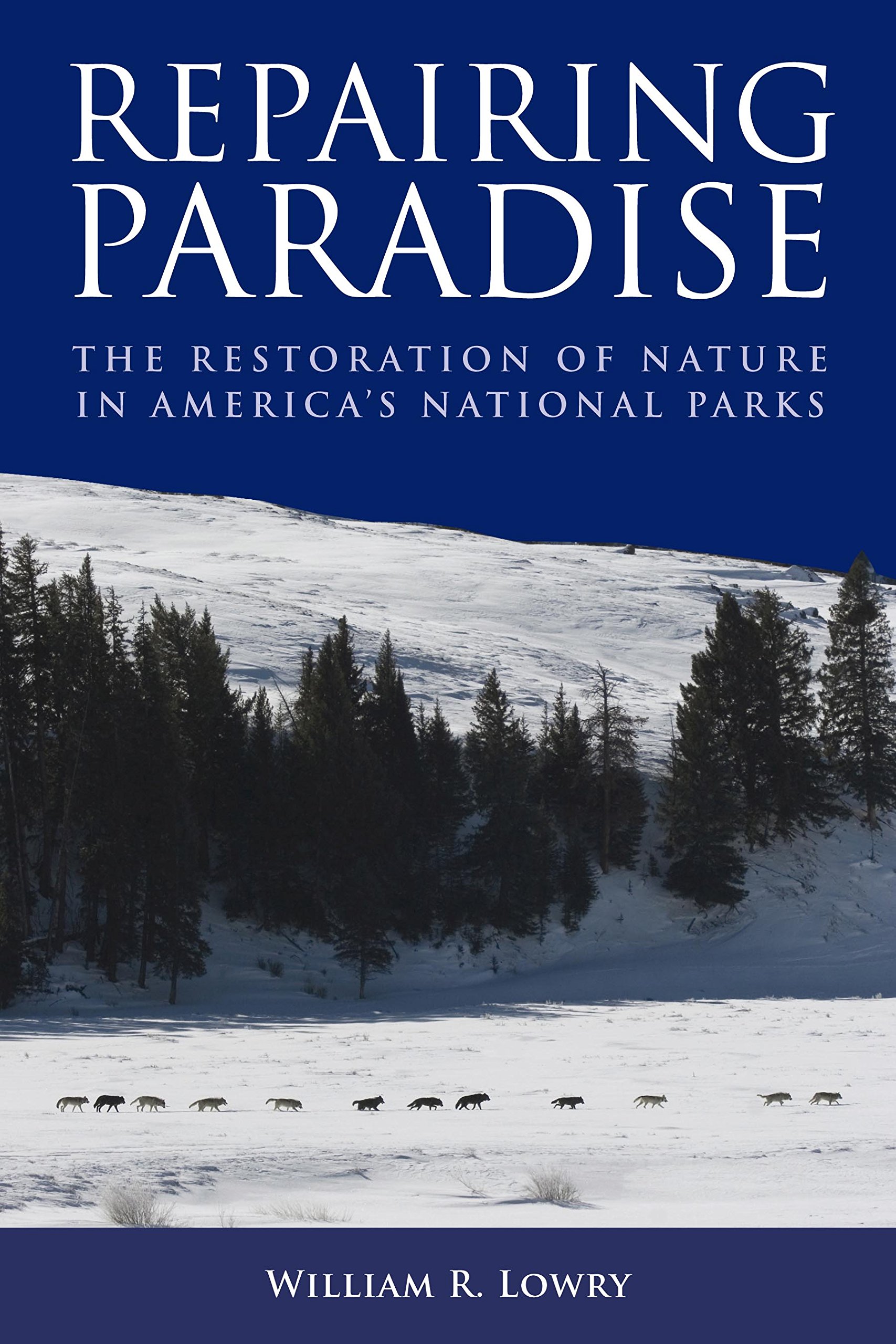
Repairing Paradise: The Restoration of Nature in America's National Parks
$25.95
by William R. Lowry



By the turn of the millennium, it had become painfully apparent that the United States had made some serious misjudgments in its interactions with the natural world. The country's treasured national parks, while remaining immensely popular tourist destinations, were not immune to the damage. Preservation alone would no longer be enough; by this time, repair and restoration were necessary. Can the United States reverse the mistaken policies that severely damaged the crown jewels of its national park system? This thoughtful and hopeful book, in turns analytical and personal, investigates that critical question by focusing on four of America's most-loved public paces. In Repairing Paradise , William Lowry, an eminent expert on U.S. natural resource policy, details and assesses four ambitious efforts to reverse environmental damage in the national parks: The reintroduction of wolves in Yellowstone Reducing the impact of vehicle traffic in Yosemite Restoring fresh water to the Everglades Removing structural impairments to river flows in the Grand Canyon Repairing Paradise combines authoritative research with extensive personal experience. Lowry has spent time in all four of the parksobserving conditions, talking to the most informed decisionmakers, and taking photos. He deftly combines his field research with solid public policy analysis to paint an instructive portrait of the mission to restore the natural health and glory of some of the world's most wondrous places. William R. Lowry is a professor of political science at Washington University in St. Louis and one of the foremost scholars of U.S. environmental and natural resource policy. He is the author of Dam Politics: Restoring America's Rivers (Georgetown University Press, 2003), Preserving Public Lands for the Future: The Politics of Intergenerational Goods (Georgetown, 1998), and The Capacity for Wonder: Preserving National Parks (Brookings, 1994). REPAIRING PARADISE THE RESTORATION OF NATURE IN AMERICA'S NATIONAL PARKS By WILLIAM R. LOWRY BROOKINGS INSTITUTION PRESS Copyright © 2009 THE BROOKINGS INSTITUTION All right reserved. ISBN: 978-0-8157-0274-0 Contents Acknowledgments...............................................................ix1 Changing Policies in National Parks.........................................12 Reintroducing Wolves at Yellowstone.........................................193 Reducing Automobile Impacts at Yosemite.....................................634 Restoring Water to the Everglades...........................................1075 Removing Impediments to River Flows at the Grand Canyon.....................1576 Repairing Damage from Past Policies.........................................205Appendix......................................................................227Notes.........................................................................229Index.........................................................................273 Chapter One CHANGING POLICIES IN NATIONAL PARKS It's time for us to change America. Barack Obama If you want to make enemies, try to change something. Woodrow Wilson The overarching theme of U.S. politics today is change. As suggested by the opening quote, which comes from Barack Obama's speech accepting the Democratic Party's nomination for president, Obama built his campaign on that theme. Not to be outdone, his opponent, John McCain, countered Obama's slogan, "Change you can believe in," with "Change you can trust." But as the famous quote from former President Wilson warnsand as President Obama is now fully awaresignificant change does not come easily. How, then, does it occur? Natural resource management is one area in which policymakers have sought to make significant changes. In the closing decades of the twentieth century, many Americans realized that traditional natural resource policies had resulted in substantial and often negative impacts on the environment. Whether intentionally or not, those policies had diminished or destroyed or at least altered many of the most precious public lands and rivers on the North American continent. Some Americans began to think about taking the next step in their evolving relationship with nature, an evolution that historically has witnessed stages of fear, ignorance, abuse, use, and finally preservation. But preservation was not enough. Conditions had been changed, so simply saving public sites as they now were might preserve what many viewed as the mistakes of the past. The next step involved restorationor if that was not possible, then at least repair of those mistakes. Thus, a decade into the twenty-first century, decisionmakers have promised to change policies to restore natural conditions at literally hundreds of public sites across the United States. This book discusses efforts to change traditional policies at four sites that are important to millions of people, not just U.S. citizens. The n