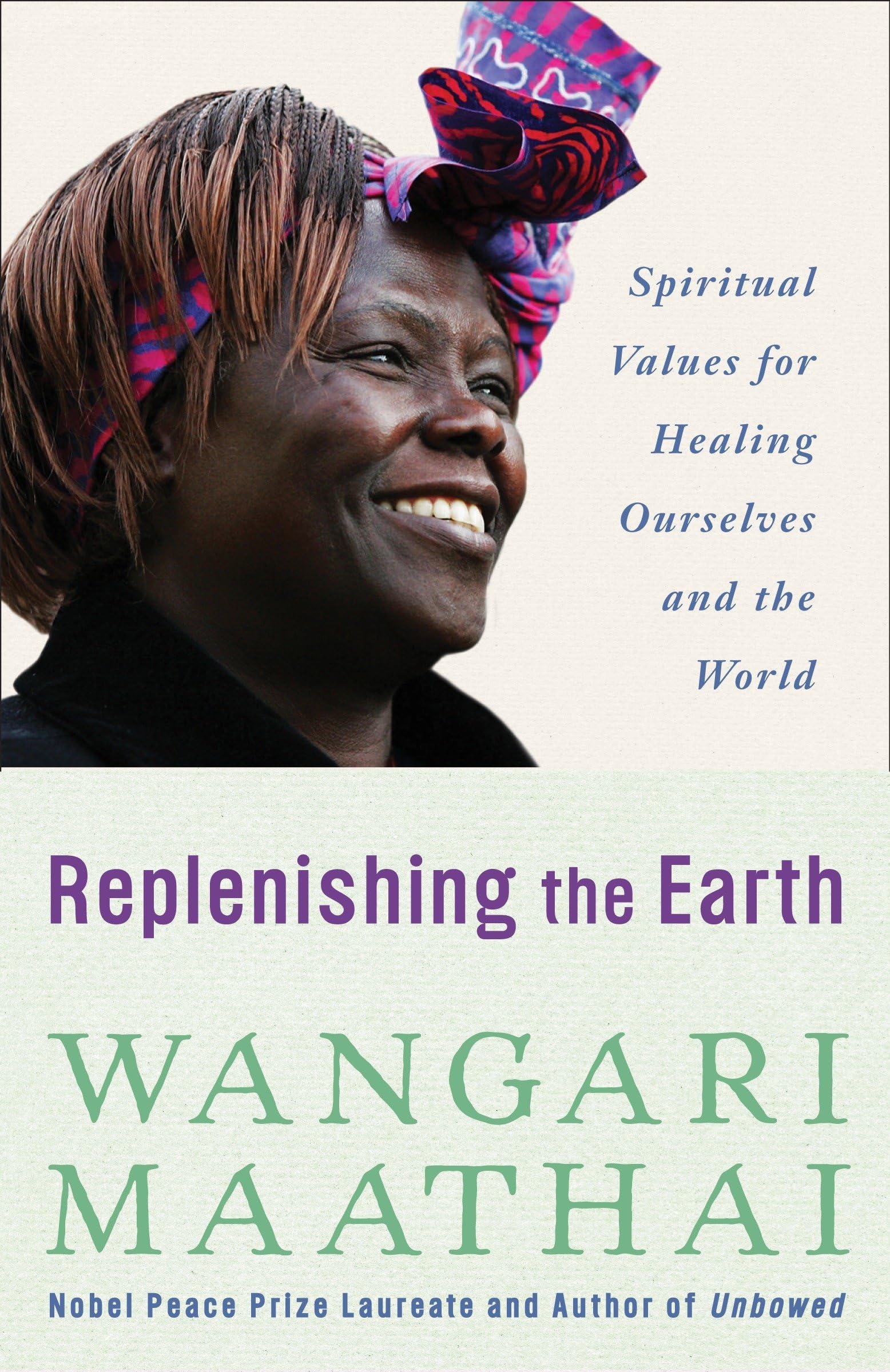
Replenishing the Earth: Spiritual Values for Healing Ourselves and the World
$12.49
by Wangari Maathai



An impassioned call to heal the wounds of our planet and ourselves through the tenets of our spiritual traditions, from a winner of the Nobel Peace Prize It is so easy, in our modern world, to feel disconnected from the physical earth. Despite dire warnings and escalating concern over the state of our planet, many people feel out of touch with the natural world. Nobel laureate Wangari Maathai has spent decades working with the Green Belt Movement to help women in rural Kenya plant—and sustain—millions of trees. With their hands in the dirt, these women often find themselves empowered and “at home” in a way they never did before. Maathai wants to impart that feeling to everyone, and believes that the key lies in traditional spiritual values: love for the environment, self-betterment, gratitude and respect, and a commitment to service. While educated in the Christian tradition, Maathai draws inspiration from many faiths, celebrating the Jewish mandate tikkun olam (“repair the world”) and renewing the Japanese term mottainai (“don’t waste”). Through rededication to these values, she believes, we might finally bring about healing for ourselves and the earth. Nobel Peace Prize laureate Maathai, founder of the green-belt movement in Kenya, brings a firm grasp of the science of environmental destruction and climate change, and of the dire physical and political consequences for humankind, to this bracing and breathtaking investigation of the spiritual dimension of this growing crisis. Lucid and inspiring, as in Unbowed (2006), Maathai explicates our bred-in-the-bone reliance on the great web of life; the ancient, now largely lost perception of nature as divine, yet not limitless or invulnerable; and the bedrock truth that when the environment is degraded, so, too, are we. Maathai looks to her Kikuyu upbringing as an example of a sustainable way of living, and draws on her Catholic education in fresh and striking readings of the Bible. She also studies the living gospel of the planet, tallying the far-reaching harm done by our “craving for more.” As Maathai presents a clarion set of “core values” based on “gratitude and respect for the Earth’s resources” and a commitment to conservation, she gracefully entwines environmentalism and justice, the practical and the sacred. --Donna Seaman WANGARI MAATHAI is the founder of the Green Belt Movement, which has planted over 45 million trees across Kenya since 1977. In 2002, she was elected to Kenya’s Parliament, and in 2003, she was appointed Deputy Minister for the Environment and Natural Resources, posts she held until 2007. Maathai was awarded the Nobel Peace Prize in 2004. In 2009, she was appointed a United Nations Messenger of Peace by UN Secretary-General Ban Ki-moon. CHAPTER ONE Beginnings Within a few years of its inception in 1977, the Green Belt Movement (GBM) expanded from a small, tree-planting project at the National Council of Women of Kenya to a full-time engagement. Simultaneously, a small number of community groups grew to a network of thousands of such groups. As this occurred, it became clear that both the groups and the individuals were not upholding standards of behavior that they expected of others, especially those in government, which was already much criticized. These standards included honesty, hard work, and a commitment to transparency and accountability. It gradually became clear that the Green Belt Movement's work with communities to repair the degraded environment could not be done effectively without participants embracing a set of core spiritual values. Therefore, it became necessary to raise awareness of issues of governance and the management of resources. Consequently, these values- love for the environment, gratitude and respect for the earth's resources, self-empowerment and self-betterment, and the spirit of service and volunteerism-emerged as a central feature of what we came to call "civic and environmental education." These comprised a set of seminars that we held for those wanting to participate in the work of the movement so they could know the procedures and values that should guide them. The seminars were designed to deepen individuals' understanding of the root causes of ecological destruction and the role political management of resources can play in the breakdown of the environment. Participants were encouraged to delve into why their environment was degraded, and the role that they and other members of their communities and society at large play in this. At each seminar, each group enumerates its problems. It is then challenged to explore where those problems came from and how to develop a set of actions it can take to solve them both immediately and in the long term-at individual, household, and community levels, and on a small or larger scale. While many people may see a reason to plant trees to meet their own basic needs, the idea of creating a clean and healthy environment that may benefit everyone rather th