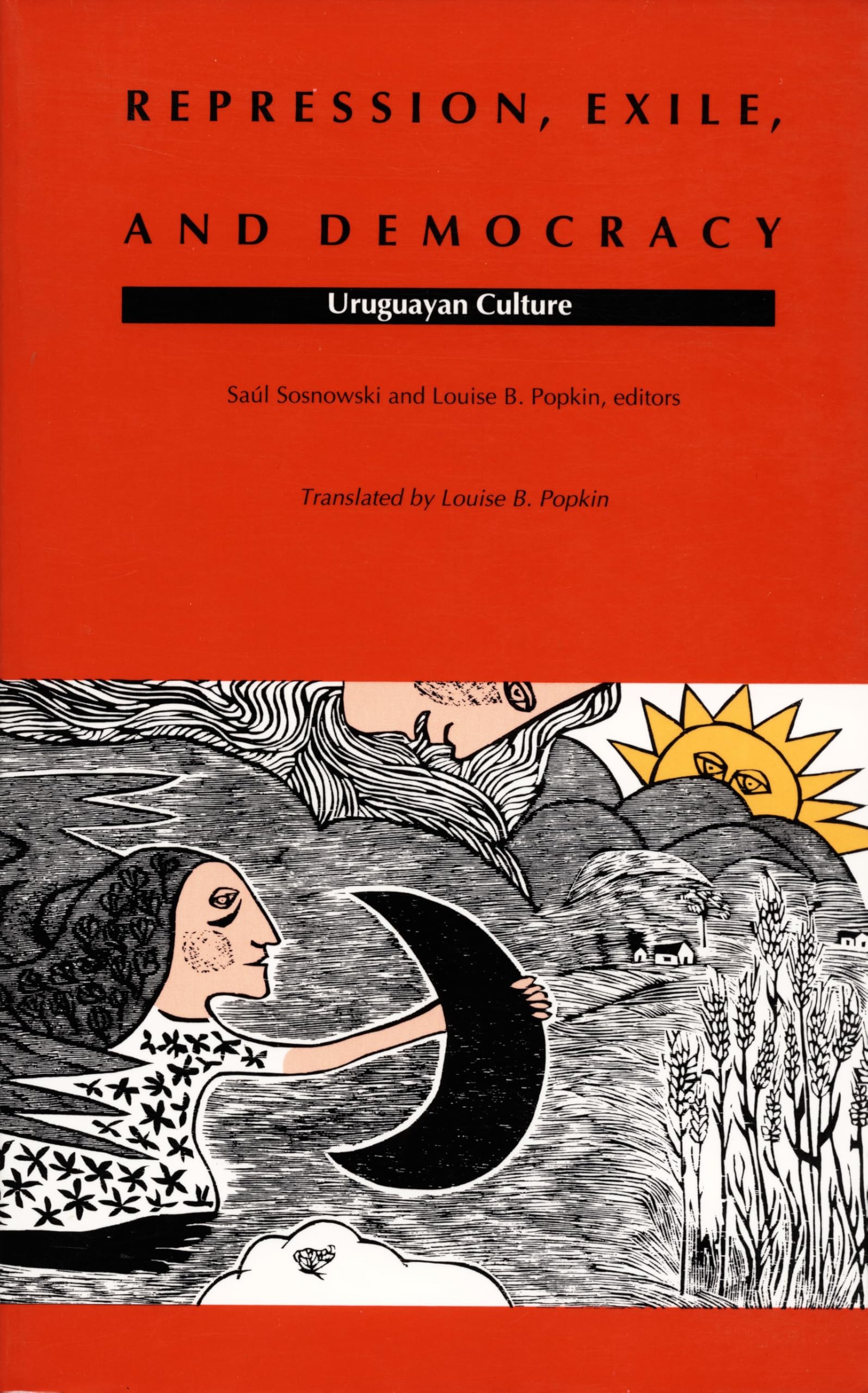



Repression, Exile, and Democracy , translated from the Spanish, is the first work to examine the impact of dictatorship on Uruguyan culture. Some of Uruguay's best-known poets, writers of fiction, playwrights, literary critics and social scientists participate in this multidisciplinary study, analyzing how varying cultural expressions have been affected by conditions of censorship, exile and "insilio" (internal exile), torture, and death. The first section provides a context for the volume, with its analyses of the historical, political, and social aspects of the Uruguayan experience. The following chapters explore various aspects of cultural production, including personal experiences of exile and imprisonment, popular music, censorship, literary criticism, return from exile, and the role that culture plays in redemocratization. This book's appeal extends well beyond the study of Uruguay to scholars and students of the history and culture of other Latin American nations, as well as to fields of comparative literature and politics in general. Contributors. Hugo Achugar, Alvarro Barros-Lémez, Lisa Block de Behar, Amanda Berenguer, Hiber Conteris, José Pedro Díaz, Eduardo Galeano, Edy Kaufman, Leo Masliah, Carina Perelli, Teresa Porzecanski, Juan Rial, Mauricio Rosencof, Jorge Ruffinelli, Saúl Sosonowski, Martin Weinstein, Ruben Yáñez "A very original work of fine scholarship, an excellent contribution to the literature on the Uruguyan experience. Its multidisciplinary appeal extends well beyond the study of Uruguay to scholars and students with interest in the histories and cultural realities of other Latin American nations, and even beyond that, to the fields of comparative politics and literature."—Deborah Jakubs, Chair, Council on Latin American Studies "A very original work of fine scholarship, an excellent contribution to the literature on the Uruguyan experience. Its multidisciplinary appeal extends well beyond the study of Uruguay to scholars and students with interest in the histories and cultural realities of other Latin American nations, and even beyond that, to the fields of comparative politics and literature."--Deborah Jakubs, Chair, Council on Latin American Studies Saul Sosnowski is Professor of Latin American Studies and Director of the Office of International Programs at the University of Maryland. Repression, Exile, and Democracy Uruguayan Culture By Saúl Sosnowski, Louise B. Popkin Duke University Press Copyright © 1993 Duke University Press All rights reserved. ISBN: 978-0-8223-1268-0 Contents Editorial Note, As Seen from the Other Shore: Uruguayan Culture (Repression, Exile, and Democracy), A 1991 Postscript, Notes, I Contexts, II Culture and Power, III Literature and Repression, IV The Shores of Exile, Contributors, CHAPTER 1 Contexts The Role of the Political Parties in the Redemocratization of Uruguay Edy Kaufman Introduction The first dilemma I encountered in the preparation of this essay was what to call it: can we talk about "redemocratization"? At the level of intention the consensus is affirmative, although any claim that the supremacy of the civilian political forces over the military is again what it was before the autogolpe, or "self-coup," of 1973 would be premature. The Uruguayan military had spent most of the twentieth century in virginal seclusion from political life. And once they tasted power, they may have learned a lesson and developed a new appetite for it. The extent of their return to the barracks is an important matter for analysis here. With that in mind, we will also have to take up a second question related to the dynamics of the process of liberalization which the Brazilians have called descompressao, or "decompression": in the Uruguayan case specifically, to what extent was the decompression known as apertura, or "opening," a victory of the political parties and other social groups over the Armed Forces? Is the situation in Uruguay comparable to that of Argentina, where, according to one expert, the military government which collapsed in December 1983 had invited its own defeat? "Far from being overcome by a formidable opposition, the armed forces, through their own blunders and inadequacies, opened up a political space which their adversaries gladly occupied" (Pion-Berlin 1985, 71). A third point: it would also be possible to reject a "zero sum" concept in which the weakening of the military could be either the result or the cause of the strengthening of the political parties. Many other variables may have played a role, and it would be important to identify them. Even more, instead of concluding after the fact that such a bivariate relationship may have existed, perhaps it would be feasible to explore in greater depth the impact of circumstantial factors—developments unforeseen by either group that may have surprised both and affected the subsequent stages of the process. In that connection, the results of the