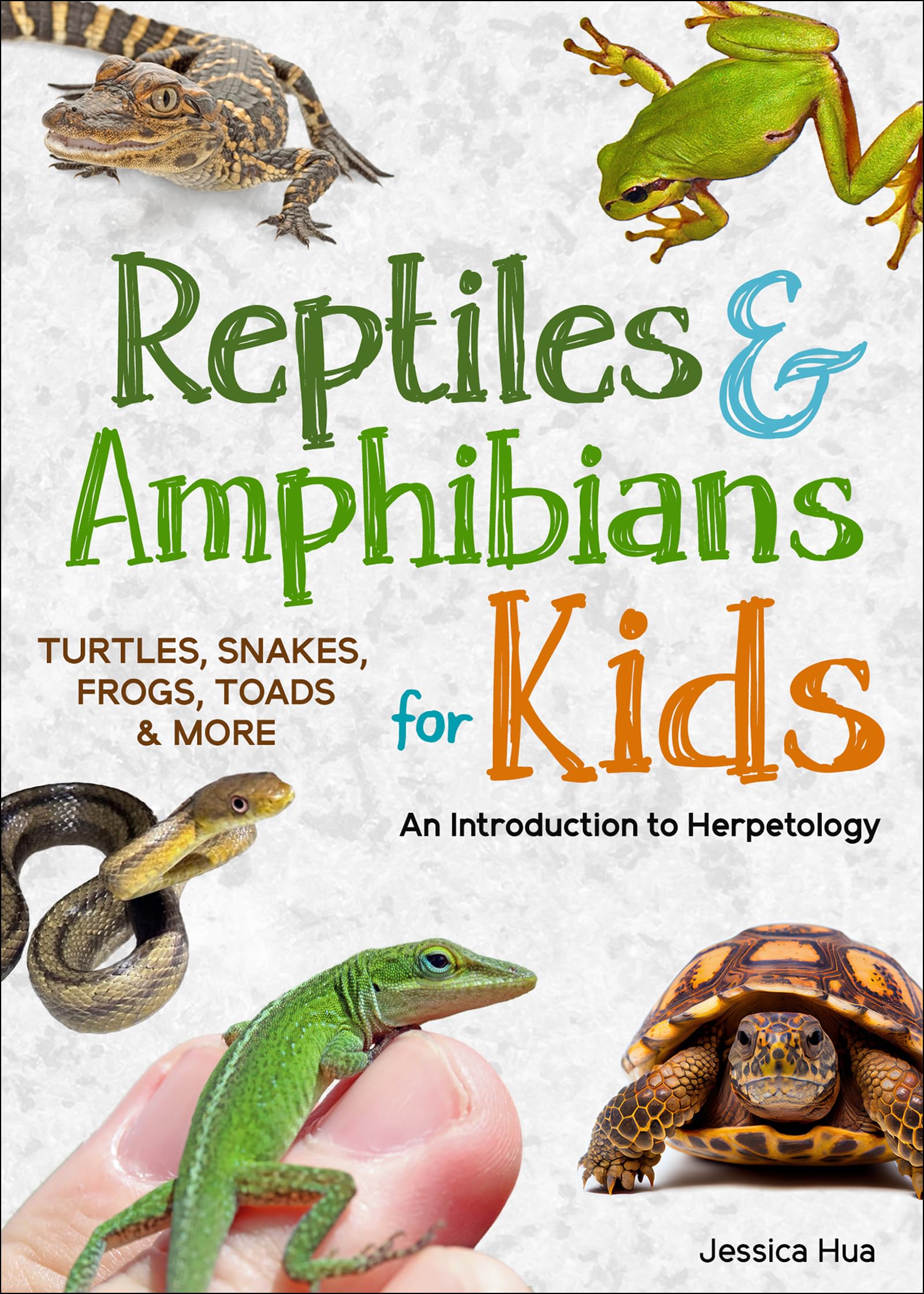
Reptiles & Amphibians for Kids: An Introduction to Herpetology (Simple Introductions to Science)
$14.95
by Jessica Hua



Get to know herptiles (herps) with this fun and fascinating children’s guide that includes an introduction to herpetology and a section for identifying over 70 species. Reptiles and amphibians are some of the most exciting animals for children to discover. These small but mighty creatures spark curiosity and inspire outdoor learning. Become a young herpetologist. Learn all about frogs, lizards, snakes, turtles, and other cool critters. Jessica Hua, a professional educator and researcher, presents a kids’ introduction to herpetology, the study of reptiles and amphibians. From alligators and crocodiles to skinks and salamanders, this easy-to-understand book is a perfect guide for beginners. Reptiles & Amphibians for Kids features expert insights on a variety of common and important species. It delves into such topics as the differences between reptiles and amphibians, their evolutionary beginnings, and staying safe when encountering them. In the field-guide section, featured species are organized by type and then by size. Full-color photographs and descriptions of key markings help readers to identify the critters they see in nature. Inside You’ll Find Beginner’s guide to reptiles and amphibians - The basics of herpetology and animal anatomy - Identification guide to common and important species to know - Fun bonus activities for the whole family “It was an utter delight reading Reptiles and Amphibians for Kids. The book is filled with amazing photos and illustrations of amphibians and reptiles that will certainly satisfy the curiosity of herpers (lovers of amphibians and reptiles) and soon-to-be herpers young and old. Reading the book, you can immediately hear the author’s voice in your head. Dr. Hua’s enthusiasm and thoughtfulness are palpable in her vivid portrayals of these fascinating animals and the way she gently guides the readers on this wonderful journey. To have had this book in my younger years would have been a treat, and I am both thrilled for and a bit envious of those opening this book and discovering the world of amphibians and reptiles for the first time. One could not have asked for a better book or a better guide.” — Dr. Sinlan Poo , Curator of Research, Memphis Zoo Jessica Hua is an associate professor at the University of Wisconsin–Madison in the Department of Forest and Wildlife Ecology. There, she leads a group of scientists working to understand the threats that amphibians face. She and her team also study how to use non-traditional resources—like art, children’s books, and citizen (community) science—to make science more accessible to broader audiences. What Is a Reptile? What Is an Amphibian? All amphibians and reptiles have a backbone. Animals with backbones are called vertebrates . Reptiles and amphibians are also cold-blooded, or ectothermic (eck-toe-ther-mic). Cold-blooded animals are really neat because their body temperature depends on the temperature of their environment. If it is cold outside, reptiles and amphibians will also be cold. In fact, amphibians, like wood frogs, can freeze completely solid during winter. They produce an antifreeze-like substance in their bodies that prevents ice crystals from forming and damaging their cells while frozen. To warm up their bodies up, you might find amphibians and reptiles basking in the sun. Many amphibians and reptiles also experience a period of very low movement. In colder areas, amphibians and reptiles enter brumation (broo-may-shun) during winter. This is an extended period of low activity. When it’s warmer, they may become active for a short period of time. In warmer areas, this reduction in movement is called aestivation (ess-tuh-vay-shun). While reptiles and amphibians are related, there are some pretty notable differences between them. The meaning of the word amphibian provides a clue. It comes from the Greek word Amphibios, which means to have “two lives.” While there are some exceptions, most amphibians lay their eggs in the water and live in water when they are young (tadpoles, as an example). They then move to land when they are older. For example, many frog species like bullfrogs lay eggs in water that hatch into tadpoles and use gills to breathe underwater. Tadpoles, also called larvae (lar-vee), then undergo a wonderful transformation called metamorphosis . During metamorphosis, tadpoles lose their tail and gills, replacing them with legs and lungs. This allows them to move and breathe on land. While most amphibians complete the dual water-land life cycle, some amphibians always stay on land or always stay in the water. For instance, red-back salamanders lay their eggs on land in moist areas (under rocks or leaf litter). Their young hatch into mini-salamander—no larval stage. In contrast, mudpuppies (also called waterdogs) never lose their gills and never leave the water. There are some other general differences between amphibians and reptiles: Amphibians don’t have scales or claws, they lay egg