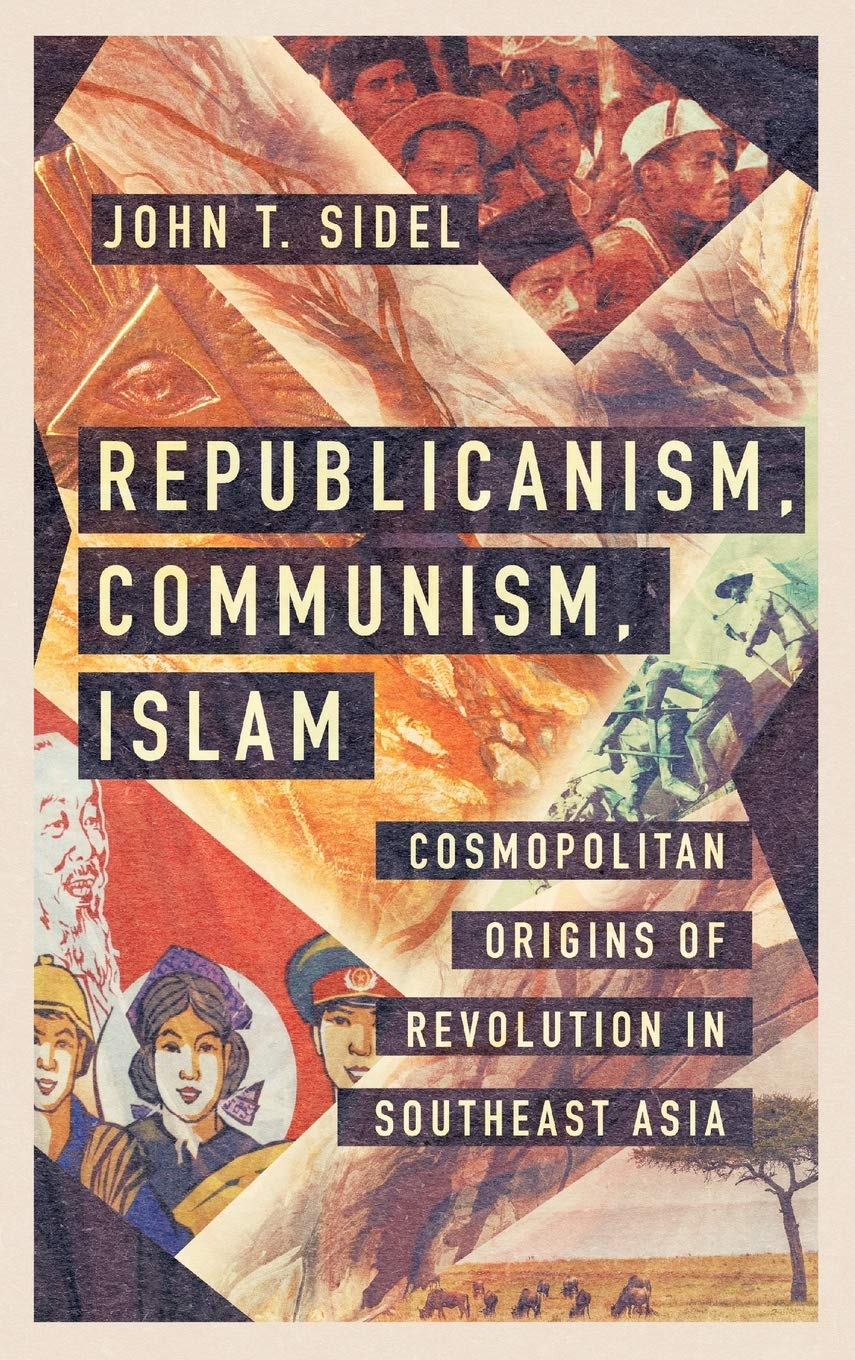
Republicanism, Communism, Islam: Cosmopolitan Origins of Revolution in Southeast Asia
$36.74
by John T. Sidel



In Republicanism, Communism, Islam , John T. Sidel provides an alternate vantage point for understanding the variegated forms and trajectories of revolution across the Philippines, Indonesia, and Vietnam, a perspective that is de-nationalized, internationalized, and transnationalized. Sidel positions this new vantage point against the conventional framing of revolutions in modern Southeast Asian history in terms of a nationalist template, on the one hand, and distinctive local cultures and forms of consciousness, on the other. Sidel's comparative analysis shows how―in very different, decisive, and often surprising ways―the Philippine, Indonesian, and Vietnamese revolutions were informed, enabled, and impelled by diverse cosmopolitan connections and international conjunctures. Sidel addresses the role of Freemasonry in the making of the Philippine revolution, the importance of Communism and Islam in Indonesia's Revolusi, and the influence that shifting political currents in China and anticolonial movements in Africa had on Vietnamese revolutionaries. Through this assessment, Republicanism, Communism, and Islam tracks how these forces, rather than nationalism per se, shaped the forms of these revolutions, the ways in which they unfolded, and the legacies which they left in their wakes. John T. Sidel's Republicanism, Communism, Islam: Cosmopolitan Origins of Revolution in Southeast Asia provides an incisive account of the most prominent anticolonial revolutions in Southeast Asia - the Philippines, Indonesia and Vietnam - from a rigorous comparative perspective. This book is an invaluable addition to the existing scholarship on Southeast Asian history. ― The London School of Economics and Political Science John Sidel succeeds in making us rethink nationalism itself. In fact, he achieves even more than what he explicitly attempts; he's moved us a quantum leap forward in out understanding of the international drivers of Southeast Asia's nationailst revolutions. ― SOJOURN - Journal of Social Issues in Southeast Asia John T. Sidel's Republicanism, Communism, Islam will forever change our understanding of the nineteenth and twentieth century revolutions in the Philippines, Indonesia, and Vietnam. Breaking boldly with conventional narratives, Sidel argues that those revolutions were shaped less by nationalism and nationalists than by global economic trends, international conjunctures, and cosmopolitan intellectual currents and organizational networks. Richly detailed, persuasively argued, and elegantly written, this book is a singular intervention in the study of modern Southeast Asian history, and an invaluable contribution to the historiography of revolution more broadly. A tour de force. -- Geoffrey Robinson, Professor of History, UCLA John T. Sidel is the Sir Patrick Gillam Professor of International and Comparative Politics at the London School of Economics and Political Science (LSE). His previous books include Capital, Coercion, and Crime , The Islamist Threat in Southeast Asia , and Riots, Pogroms, Jihad .