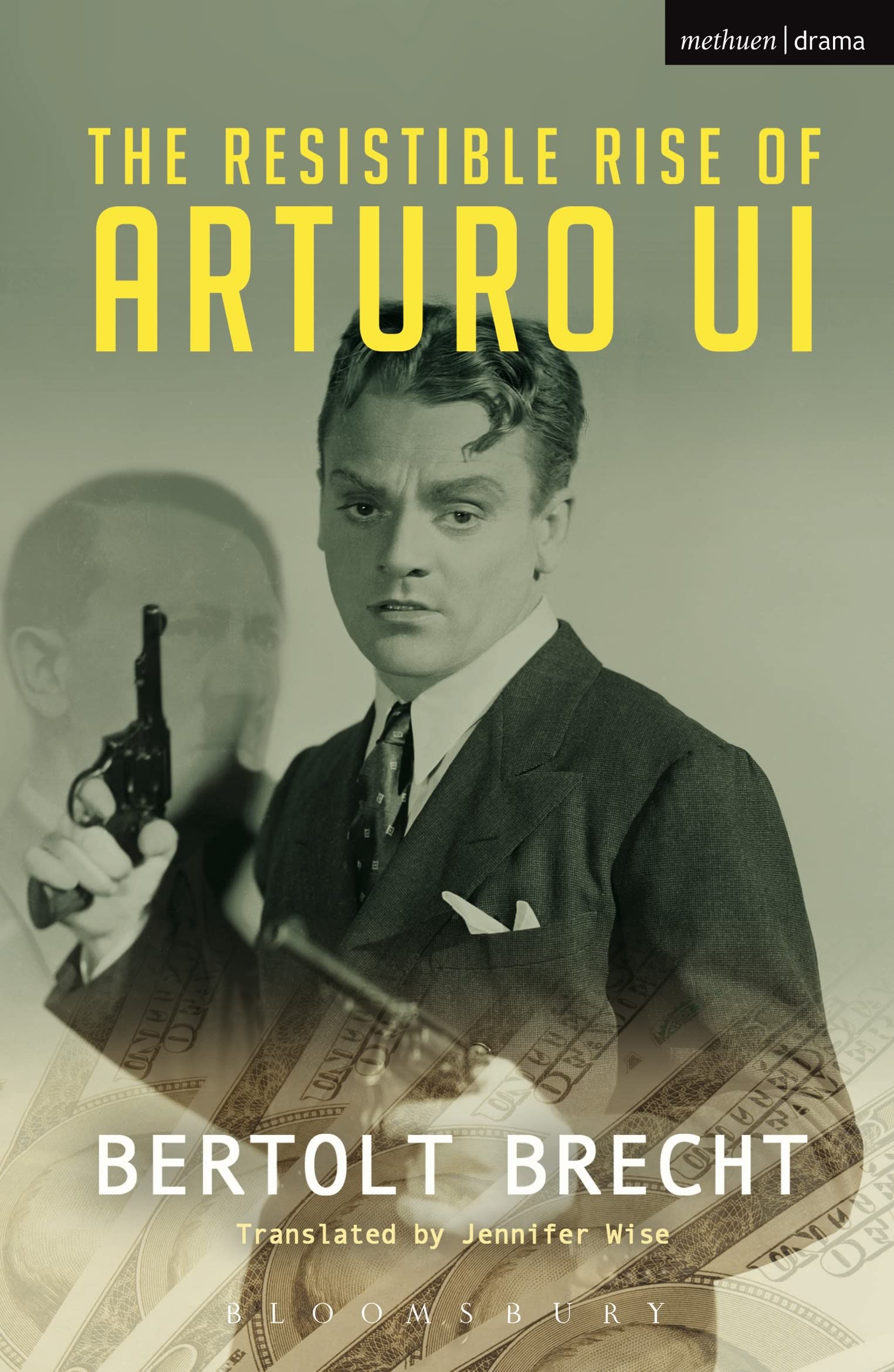



Described by Brecht as 'a gangster play that would recall certain events familiar to us all', Arturo Ui is a witty and savage satire of the rise of Hitler - recast by Brecht into a fictional, small-time Chicago gangster's takeover of the city's greengrocery trade in the 1930s. The satirical allegory combines Brecht's Epic style of theatre with black comedy and overt didacticism. Using a wide range of parody and pastiche - from Al Capone to Shakespeare's Richard III and Goethe's Faust - Brecht's compelling parable continues to have relevance wherever totalitarianism appears today. Written during the Second World War in 1941, the play was one of the Berliner Ensemble's most outstanding box-office successes in 1959, and has continued to attract a succession of major actors, including Leonard Rossiter, Christopher Plummer, Antony Sher and Al Pacino. This version of The Resistible Rise of Arturo Ui is by Canadian theatre academic Jennifer Wise. The American gangster movie meets Richard III Guardian Bertolt Brecht (1898-1956) is acknowledged as one of the great dramatists whose plays, work with the Berliner Ensemble and critical writings have had a considerable influence on the theatre. His landmark plays include The Threepenny Opera , Fear and Misery of the Third Reich , The Life of Galileo, Mother Courage and Her Children and The Caucasian Chalk Circle. Bruce Norris is the author of Clybourne Park , which won the Olivier and Evening Standard Awards (London) for Best Play, 2010, as well as the Pulitzer Prize for Drama, 2011, and the Tony Award for Best Play in 2012. Other plays include The Infidel (2000), Purple Heart (2002), We All Went Down to Amsterdam (2003), The Pain and the Itch (2004), The Unmentionables (2006) and The Qualms (2014), all of which had their premieres at Steppenwolf Theatre, Chicago. Recent productions include The Low Road (2013 at the Royal Court Theatre (London), Domesticated (2013 at Lincoln Center Theatre), and The Qualms at Playwrights Horizons in 2015.