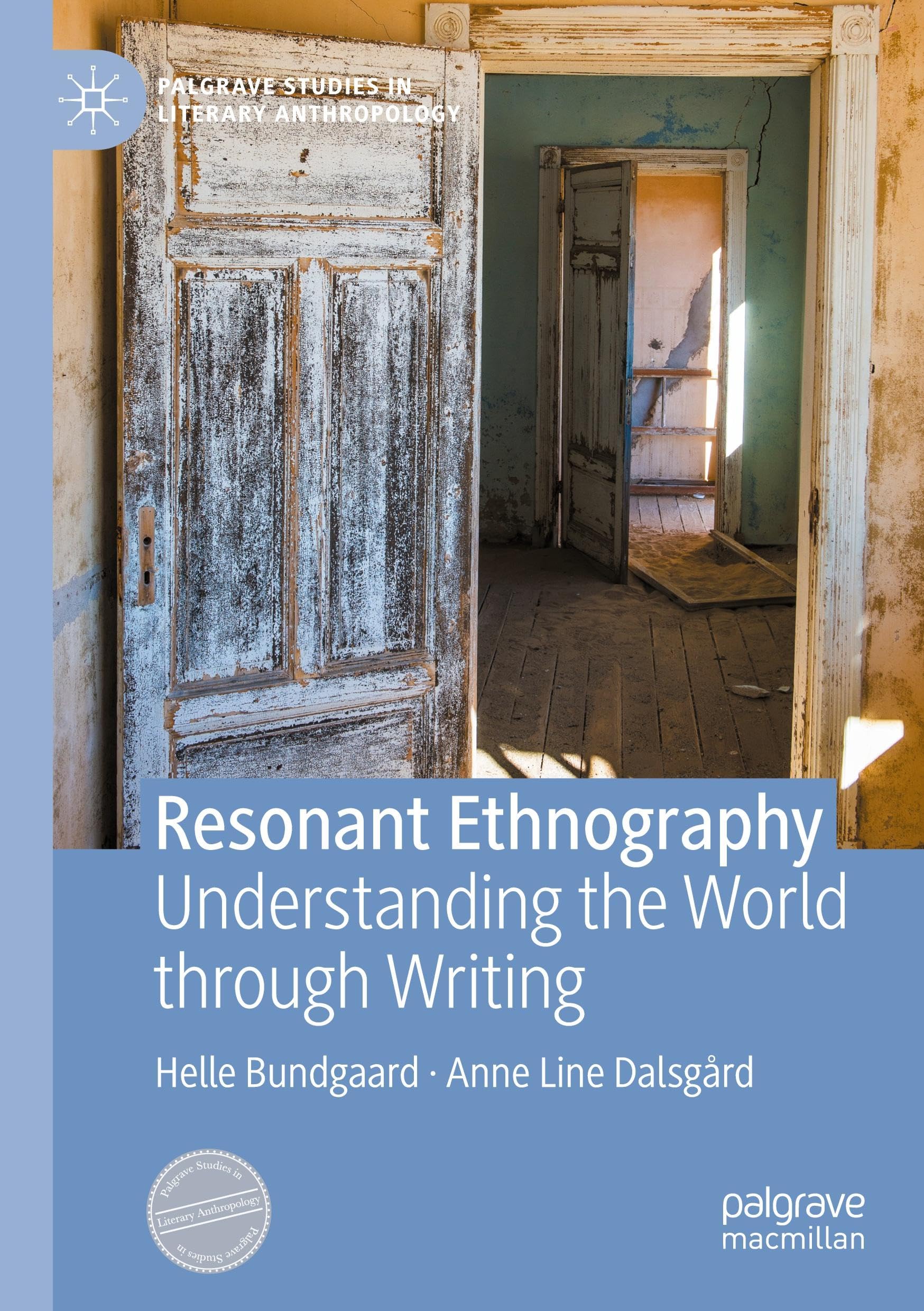
Resonant Ethnography: Understanding the World through Writing (Palgrave Studies in Literary Anthropology)
$38.95
by Helle Bundgaard



This book explores what it means—and what it takes—to write ethnographic texts that resonate with both fieldwork and readers. It approaches writing as a form of embodied thinking and encourages conceptual openness and a willingness to experiment. Drawing on exemplary texts and the authors’ experiences as teachers and writers, it explores the importance of attentiveness, imagination, and ethical engagement. Grounded in anthropology and phenomenology, and inspired by literature, it weaves conceptual reflection with practical guidance and literary sensibility. Throughout the book, the authors show how ambiguity, affect, and imagination can foster understanding. Each chapter focuses on a key aspect of the writing process, exploring fundamentals such as time, voice, argument, and composition. More than just a guide to writing, Resonant Ethnography is an invitation to think, feel, and imagine through writing, and to appreciate what ethnography can be in the world today. “ Resonant Ethnography makes an eloquent case for verisimilitude in ethnographic writing. Not only do Bundgaard and Dalsgård argue that the cultivation of literary and observational skills can enable us to capture the bodily, emotional, and evanescent aspects of social existence; they adduce a wealth of perspicacious examples that vividly show the innovative and vital character of contemporary anthropological writing.” (Michael D. Jackson, author of “Playing the Hand we are Dealt: the Counterpoint of Fate and Freewill in Literature and Life”) “ Resonant Anthropology is a great boon to anyone interested in the craft of ethnographic writing. Rich with keen insights, and a joy to read, this innovative book leads the reader into a wealth of observations, advice, and wise reflections on the `hows’ and `whys’ of ethnographic prose for the contemporary moment. Helle Bundgaard and Anne Line Dalsgård, anthropologists known internationally for their innovative approaches to ethnography, have given us something truly instructive and thought-provoking.” (Robert Desjarlais, author of “The Visual Afterlife of Abdelkader Bennahar”) “ Resonant Ethnography is an inspiring resource for anyone keen to harness the power of ethnographic writing. Both a guide to attentive reading and a prompt to imaginative writing, it offers a welcome invitation to ethnographers to reach beyond the comfort zone of academic writing and have the courage to experiment with literary form and technique. I highly recommend this book as a companion to all aspiring ethnographic writers, whether experienced or new to the craft.” (Emma Tarlo, author of “Entanglement: The Secret Lives of Hair and Under the Hornbeams”) This book explores what it means—and what it takes—to write ethnographic texts that resonate with both fieldwork and readers. It approaches writing as a form of embodied thinking and encourages conceptual openness and a willingness to experiment. Drawing on exemplary texts and the authors’ experiences as teachers and writers, it explores the importance of attentiveness, imagination, and ethical engagement. Grounded in anthropology and phenomenology, and inspired by literature, it weaves conceptual reflection with practical guidance and literary sensibility. Throughout the book, the authors show how ambiguity, affect, and imagination can foster understanding. Each chapter focuses on a key aspect of the writing process, exploring fundamentals such as time, voice, argument, and composition. More than just a guide to writing, Resonant Ethnography is an invitation to think, feel, and imagine through writing, and to appreciate what ethnography can be in the world today. Helle Bundgaard is an associate professor in the Department of Anthropology at the University of Copenhagen, Denmark. Her books include the literary ethnography Painting Stories: Lives and Legacies from an Indian Crafts Village , which features a short story that received the Society for Humanistic Anthropology’s Ethnographic Fiction and Creative Nonfiction Writing Award (AAA). Anne Line Dalsgård is a professor in the Department of Anthropology at Aarhus University, Denmark. Her books include the monograph Matters of Life and Longing: Female Sterilisation in Northeast Brazil . Helle Bundgaard is an associate professor in the Department of Anthropology at the University of Copenhagen, Denmark. Her books include the literary ethnography Painting Stories: Lives and Legacies from an Indian Crafts Village , which features a short story that received the Society for Humanistic Anthropology’s Ethnographic Fiction and Creative Nonfiction Writing Award (AAA). Anne Line Dalsgård is a professor in the Department of Anthropology at Aarhus University, Denmark. Her books include the monograph Matters of Life and Longing: Female Sterilisation in Northeast Brazil .