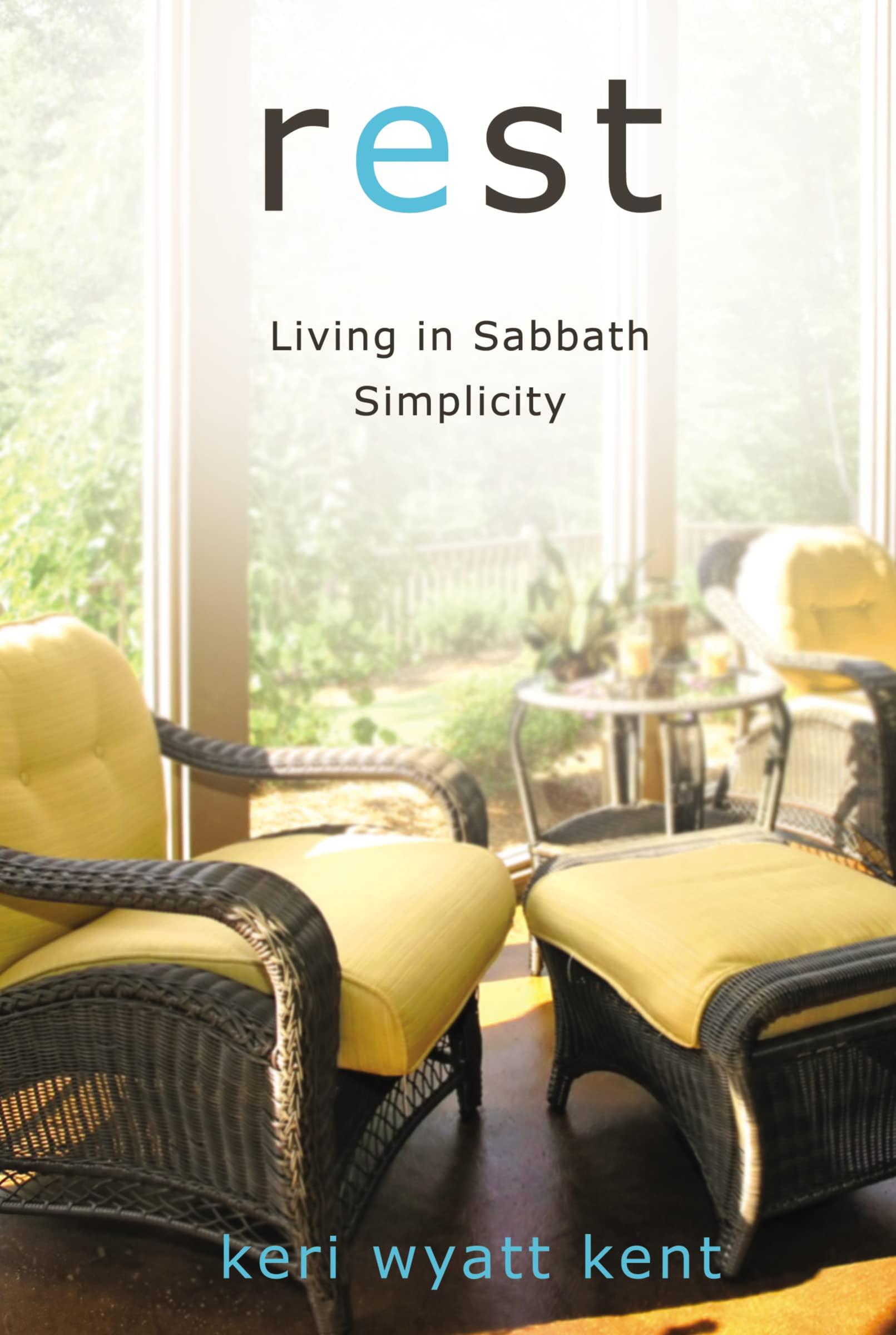



Keri Wyatt Kent invites readers to rediscover the ancient practice of Sabbath in this practical and accessible book. Kent’s experiences as a retreat leader and a journalist collide as she offers true, interview-based stories along with scripturally based advice and guidance on how to live in a rhythm of work and rest she calls “Sabbath simplicity.” Based on what Jesus taught about Sabbath and how he practiced it, Kent explores six aspects of Sabbath as Christian spiritual practice: resting, reconnecting, revising, pausing, playing, and praying. These are the antidote to our restlessness, isolation, and our hurried lives, workaholism, and self-absorption. Living a nonlegalistic, sanely paced, God-focused life leads us to freedom and grace, joy and connection. A group study guide is included, making this book an excellent choice for small groups. Keri Wyatt Kent invites readers to rediscover the ancient practice of Sabbath in this practical and accessible book. Kent's experiences as a retreat leader and a journalist collide as she offers true, interview-based stories along with scripturally based advice and guidance on how to live in a rhythm of work and rest she calls “Sabbath simplicity.” Based on what Jesus taught about Sabbath and how he practiced it, Kent explores six aspects of Sabbath as Christian spiritual practice: resting, reconnecting, revising, pausing, playing, and praying. These are the antidote to our restlessness, isolation, and our hurried lives, workaholism, and self-absorption. Living a nonlegalistic, sanely paced, God-focused life leads us to freedom and grace, joy and connection. A group study guide is included, making this book an excellent choice for small groups. Keri Wyatt Kent is the author of several books, including Oxygen, Listen, and Breathe, and is a sought-after retreat leader and speaker. She and her husband, Scot, live with their son and daughter in Illinois. Learn more about Keri's ministry at www.keriwyattkent.com. Rest Living in Sabbath Simplicity By Keri Wyatt Kent Zondervan Copyright © 2009 Keri Wyatt Kent All right reserved. ISBN: 978-0-310-28597-7 Contents introduction Living in Sabbath Simplicity..............................91. shaking things up What Jesus Said about Sabbath.....................152. resting A Release from Our Restlessness.............................273. reconnecting A Rescue from Isolation................................554. revising A Shift from Rut to Rhythm.................................915. pausing A Retreat from Our 24/7 World...............................1296. playing An Escape from Workaholism..................................577. praying An Antidote for Self-Absorption.............................177acknowledgments.........................................................205reading group guide.....................................................207notes...................................................................217 Chapter One shaking things up What Jesus Said about Sabbath Do not think that I have come to abolish the Law or the Prophets; I have not come to abolish them but to fulfill them. -Jesus (Matt. 5:17) What did Jesus teach about the Sabbath? Something shifted tremendously in how people followed God after Jesus walked our planet. Although the roots of the Christian faith are in Judaism, the way that modern Christians keep Sabbath, or don't, looks quite different from the way ancient Jews did. Jesus said he came not to abolish the law but to fulfill it. But really, that fulfillment changed a lot about how people lived out their faith. Why? We have the same Old Testament Scriptures. Jesus, it seems, created this seismic shift that affected how God's law would be lived out. Sabbath is not the only law that was affected, but that's where we'll focus for now. a new yoke Even when Jesus walked the earth, people were aware that he was shaking things up. The gospel writers often tell us that people marveled at Jesus' teaching because he spoke with "authority." Commenting on the rabbinic tradition and this idea of authority, pastor and author Rob Bell writes, "Different rabbis had different sets of rules, which were really different lists of what they forbade and what they permitted. A rabbi's set of rules and lists, which was really that rabbi's interpretation of how to live the Torah, was called that rabbi's yoke. When you followed a certain rabbi, you were following him because you believed that rabbi's set of interpretations were the closest to what God intended through the Scriptures. And when you followed that rabbi, you were taking up that rabbi's yoke." Bell continues, "Most rabbis taught the yoke of a rabbi who had come before them.... Every once in a while, a rabbi would come along who was teaching a new yoke, a new way of interpreting the Torah. This was rare and extraordinary.... Now imagine if a rabbi who had a new perspective on the Torah was coming to town. This rabbi who