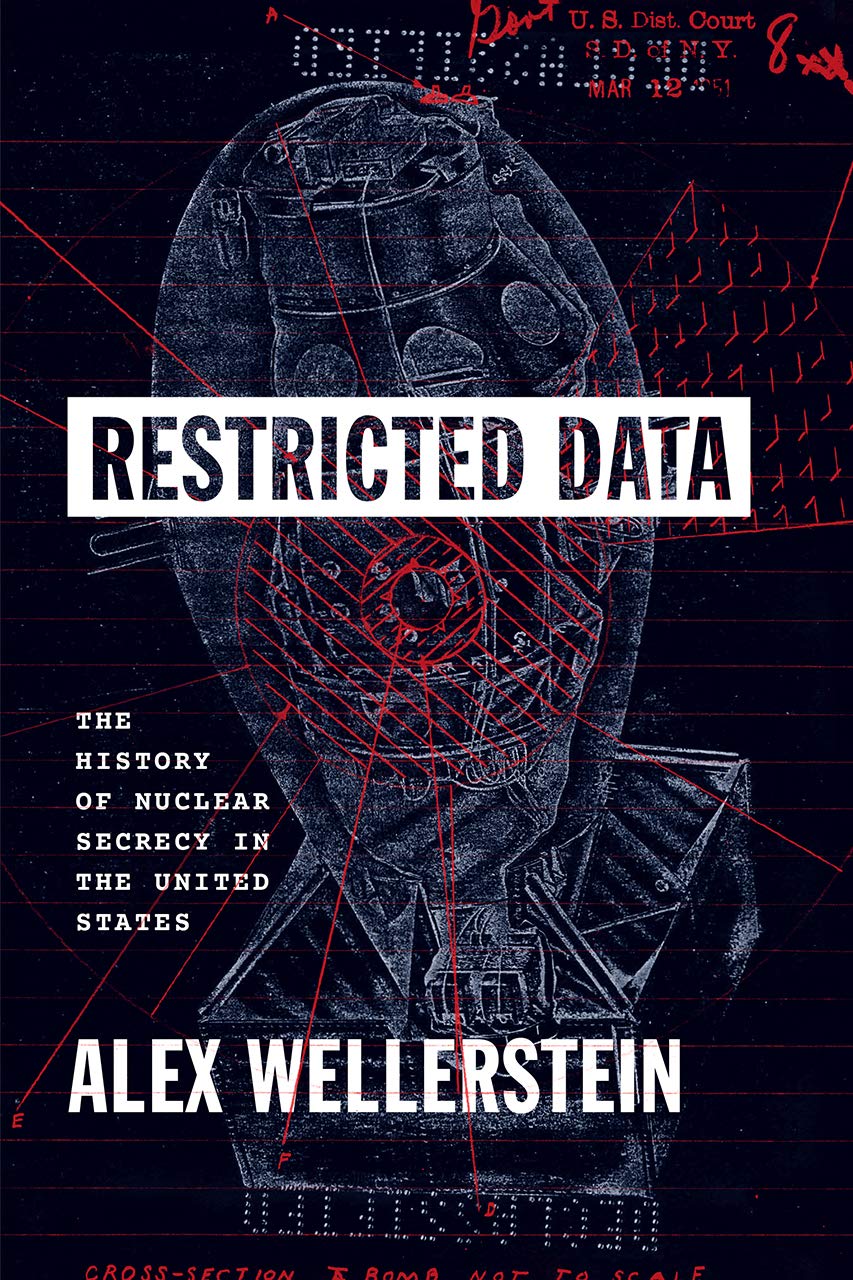
Restricted Data: The History of Nuclear Secrecy in the United States
$18.91
by Alex Wellerstein



The first full history of US nuclear secrecy, from its origins in the late 1930s to our post–Cold War present. The American atomic bomb was born in secrecy. From the moment scientists first conceived of its possibility to the bombings of Hiroshima and Nagasaki and beyond, there were efforts to control the spread of nuclear information and the newly discovered scientific facts that made such powerful weapons possible. The totalizing scientific secrecy that the atomic bomb appeared to demand was new, unusual, and very nearly unprecedented. It was foreign to American science and American democracy—and potentially incompatible with both. From the beginning, this secrecy was controversial, and it was always contested. The atomic bomb was not merely the application of science to war, but the result of decades of investment in scientific education, infrastructure, and global collaboration. If secrecy became the norm, how would science survive? Drawing on troves of declassified files, including records released by the government for the first time through the author’s efforts, Restricted Data traces the complex evolution of the US nuclear secrecy regime from the first whisper of the atomic bomb through the mounting tensions of the Cold War and into the early twenty-first century. A compelling history of powerful ideas at war, it tells a story that feels distinctly American: rich, sprawling, and built on the conflict between high-minded idealism and ugly, fearful power. "It's a stunning achievement: a historical exercise that documents not just all the things we cannot know but all the things we only thought we couldn't know, and which Wellerstein's dogged research has dug out." ― London Review of Books "In Restricted Data , Wellerstein has drafted one of the finest blueprints of our national security apparatus by focusing on nuclear weapons, its deepest cogs and wheels. He reveals the wiles, machinations, and ruses of physicists who first kept the secrets of the nucleus. He uncovers the prevarications, leaks, and conspiracies of the officers and bureaucrats who held those physicists to account. He has found a peephole into a stadium where the most important games are played. . . . Wellerstein asks brilliant questions that reach to the heart of what secrecy and science and security mean. . . . Wellerstein takes the reader down the long path to understand what nuclear secrecy meant, guiding the reader through the subject's many tangles." ― Los Angeles Review of Books "Groundbreaking. . . . The best writers make the familiar seem foreign, challenging assumptions about a state of affairs we take for granted. It might seem obvious that building the most powerful weapon in the world, a device that could end human civilization, requires extreme secrecy. Yet Wellerstein peels back the layers of the nuclear onion to reveal a rich debate about what should be kept secret and why. . . . Wellerstein's book is compelling and frightening as it confronts the reader with the confounding questions that scientists and government officials faced when trying to decide what information should be withheld." ― Nature "Secrecy was a defining aspect of the creation of the atomic bomb and, 75 years later, nuclear secrecy remains a feature of American democracy. In Restricted Data , Alex Wellerstein examines the health of democracy in the face of big science, big government, and big weapons." ― Science "Wellerstein draws on a voluminous body of documentary research. . . . One of the great ironies of Restricted Data is that none of this research involved information that is currently secret. Though Wellerstein is clearly well versed in the art of filing Freedom of Information Act requests, he has no security clearance and professes not to want one. That a book of such calibre and depth can nevertheless be written is a testament both to Wellerstein's scholarship and to one of the book's central contentions: knowledge, once created, is very hard to keep secret." ― Physics World "Based on interviews and years of tireless spadework in government archives, the present book showcases [Wellerstein's] talents as a researcher and a skillful writer of narrative and analysis. One of Restricted Data 's many strengths is its reconstruction of the work of those inside the state who debated, designed, and performed the day-to-day bureaucratic practices of secrecy. The effect is one of demystification." ― Physics Today " Restricted Data informs the present as much as the past. . . . The history of US nuclear secrecy is messy and fraught—all of which makes for delicious, if at times disturbing, reading." ― Bulletin of the Atomic Scientists “Fascinating, truly fascinating, and readable, and I do mean readable.” ― Ploughshares Fund, Press the Button podcast "One might suppose that nuclear secrecy is merely incidental to the larger history of nuclear weapons, but Wellerstein demonstrates that the subject is rich and dynamic