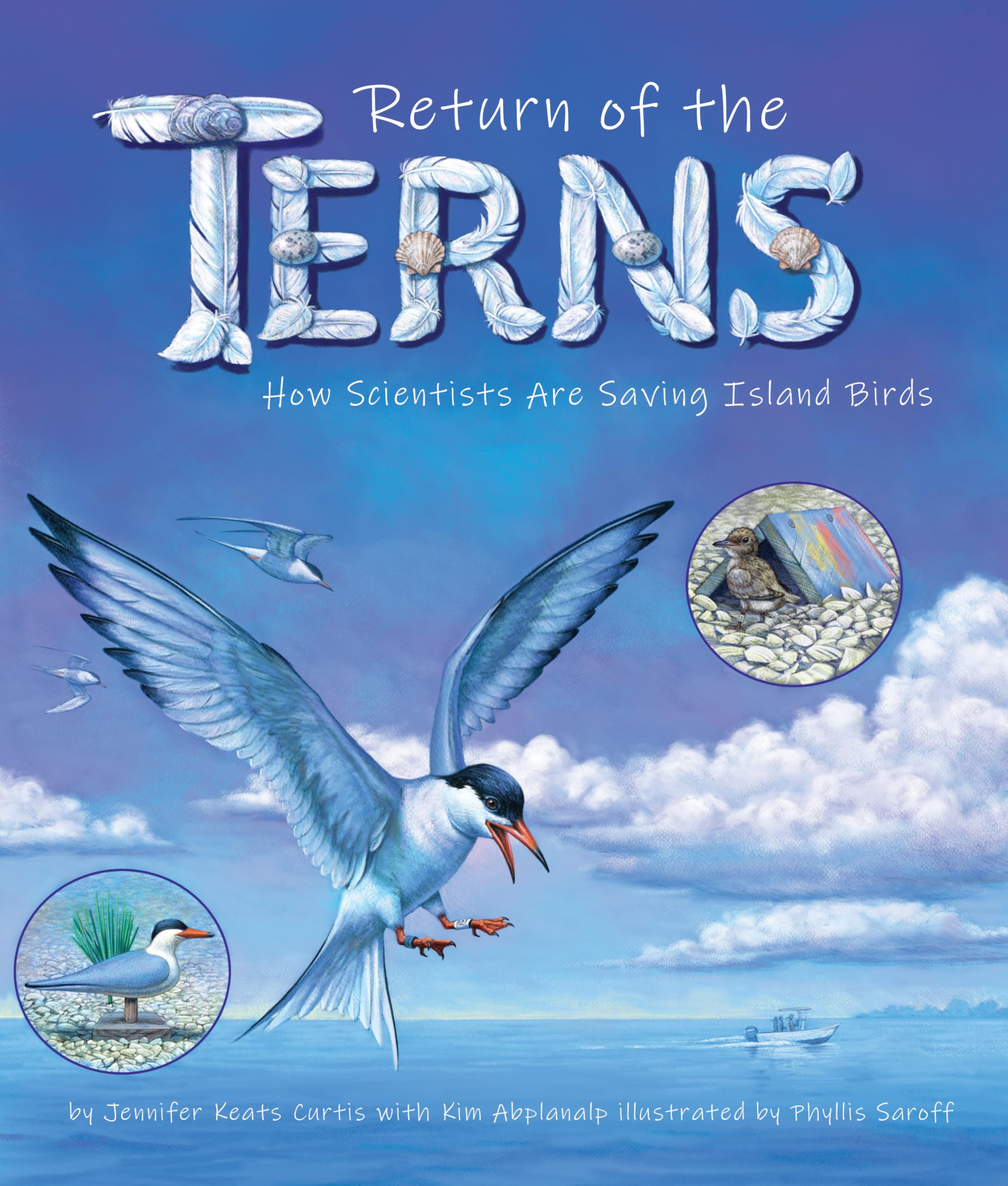
Return of the Terns: How Scientists Are Saving Island Birds
$10.35
by Jennifer Keats Curtis



Discover the inspiring, true story of how scientists are helping Common Terns. Scientists in a partnership between Maryland Coastal Bays Program, Maryland’s Department of Natural Resources Wildlife and Heritage Program, and Audubon Mid-Atlantic are building huge rafts to serve as nesting areas for these birds whose nesting habitats have disappeared due to climate change and erosion. On the rafts, the nests are also safe from development and predators. Will the birds use the rafts? Perfect for young readers, this beautifully illustrated book teaches important lessons about environmental conservation, habitat restoration, and wildlife protection. “The simply written but informative text is enhanced by attractive, realistic illustrations, offering good views of the rafts, which attract terns with artificial grasses, small wooden shelters, sand, crushed shells, tern decoys, and sound systems playing recordings of their calls. Hundreds of nesting birds might use a single raft each year. A fascinating book with fun, photo-based games (learning activities) appended.” —Booklist Jennifer Keats Curtis is an award-winning author that regularly, and delightedly, works with biologists, environmental specialists, and science experts to research and write her books. Some of her books include Children’s Choice Book Award Winner Kali’s Story: An Orphaned Polar Bear Rescue; NSTA Outstanding Science Trade Books for Children: Pooper Snooper (also 2023 Children’s Book Councils Favorites), After A While Crocodile: Alexa’s Diary, Moonlight Crab Count, and Maggie: Alaska’s Last Elephant. The realistic fiction, Creek Critters, co-authored with scientists at Stroud Water Research Center, was a finalist for the AAAS/Subaru SB&F Prize for Excellence in Hands-on Science Books. Kim Abplanalp (ab-plan-alp) is Maryland Coastal Bays’ Bird Habitat Coordinator in charge of bird habitat restoration, waterbird monitoring, and the artificial breeding habitat project, the Tern Raft. She has presented at the Waterbird Society Meeting and Pacific Seabird Group and serves as the tern raft photographer for Audubon Mid-Atlantic. Her photos have been featured in Chesapeake Bay Magazine, the Capital Gazette, and other publications. Her images are the basis of this book’s illustrations and appear in the For Creative Minds section. Besides researching horseshoe crab behavior, Kim has had a myriad of life experiences as a myofascial release therapist, art gallery owner, jewelry designer, and as a dock worker! She was also a yoga and meditation teacher spanning decades. In her spare time, she remains an avid birder and a bird guide. Since childhood, Phyllis Saroff has brought together her loves of science and art. In addition to Return of the Terns: How Scientists Are Saving Island Birds, Pooper Snoopers, Creek Critters, Maggie: Alaska’s Last Elephant, Vivian and the Legend of the Hoodoos, Tuktuk: Tundra Tale and Sounds of the Savanna for Arbordale, Phyllis has illustrated nonfiction books about the natural world such as Teeth and Mary Anning: Fossil Hunter. She also illustrates for children’s magazines, wayside signs and other educational material. Phyllis works digitally and with oil paint. Phyllis lives in Maryland with her husband, two sons, and two dogs. How are scientists helping migrating birds whose nesting islands are eroding away