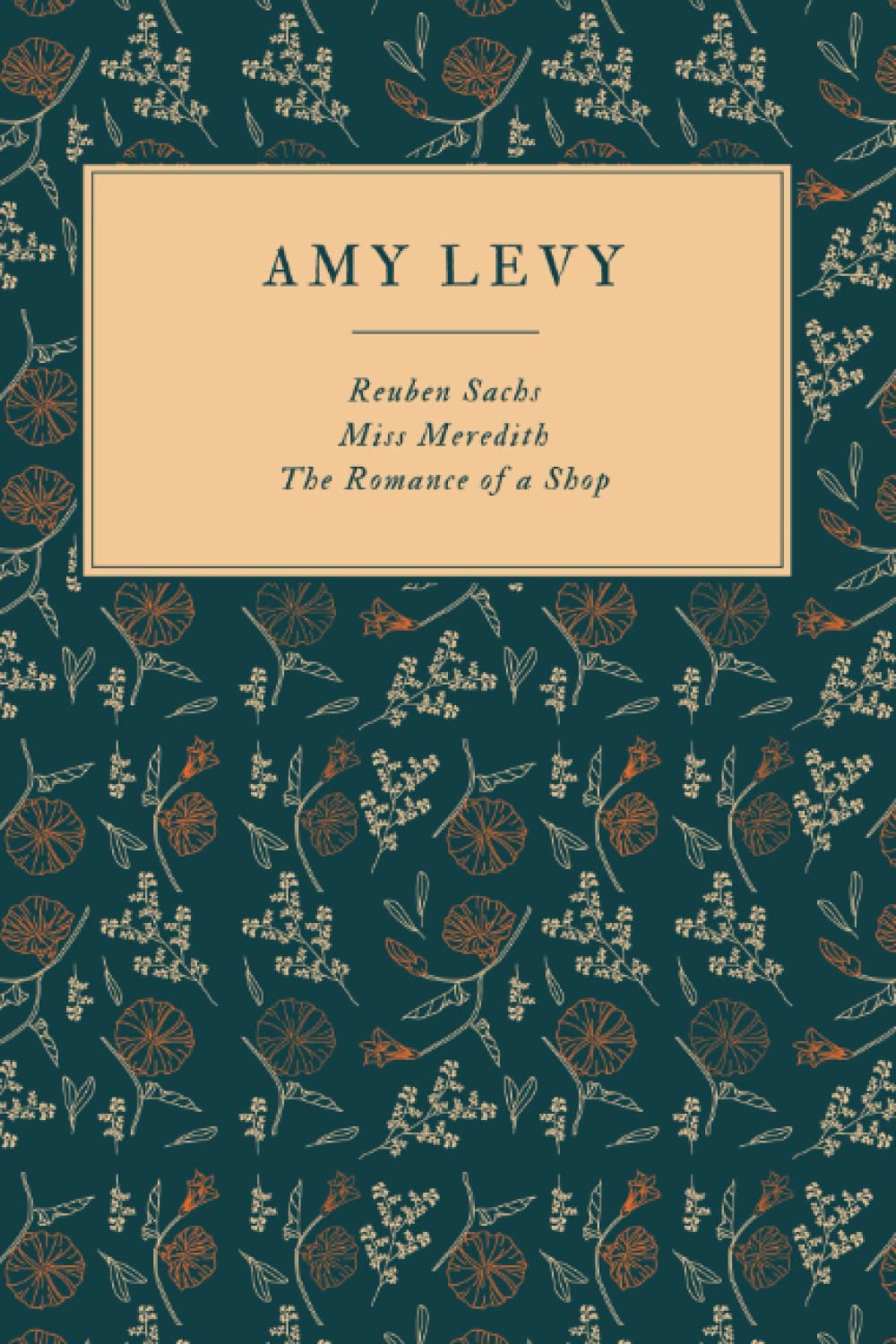



All three novels written by Amy Levy in one edition. Reuben Sachs: Reuben Sachs is a satirical portrait of a Jewish family, focussing on the relationship between "cousins" Reuben Sachs and Judith Quixano, and the tensions between their Jewish identities and English society. Oscar Wilde wrote that this novel's “directness, its uncompromising truths, its depth of feeling, and above all, its absence of any single superfluous word, makes Reuben Sachs, in some sort, a classic.” Miss Meredith Elsie Meredith is keenly aware of her mother's fate in life, and although she wants to be there for her in her time of greatest need, she fears more than anything the prospect of following in her footsteps. "[N]either literary nor artistic, neither picturesque like Jenny nor clever like Rosalind," Elsie is a textbook middle child, destined to go through life on her own terms, yet unequipped with the drive or willingness to conform possessed by her sisters. On a whim, she decides to embark for Italy to work as a governess for the Marchesa Brogi. Miss Meredith (1889) is a novel by Amy Levy. Published the year of her tragic death, Miss Meredith is the final novel of a pioneering writer and feminist whose poetry and prose explores the concept of the New Woman while illuminating the realities of Jewish life in nineteenth century London. "A hard fight with fortune had been my mother's from the day when, a girl of eighteen, she had left a comfortable home to marry my father for love. Poverty and sickness--those two redoubtable dragons--had stood ever in the path. Now, even the love which had been by her side for so many years, and helped to comfort them, had vanished into the unknown." The Romance of a Shop The Lorimar family was a family of five; four sisters - Fanny, Gertrude, Lucy and Phyllis - and their father. When their father dies, the sisters are left facing abject poverty - until Gertrude proposes that they open up a photography shop. This novel by Amy Levy examines the opportunities and difficulties of urban life for the "New Woman" in the late nineteenth century, maintaining their right to independent opinion and the questioning of social norms. "A bright and clever story, full of sparkling touches." - Oscar Wilde "Decidedly a success" - The Spectator "Called it "touched by a true artist's hand" - British Weekly