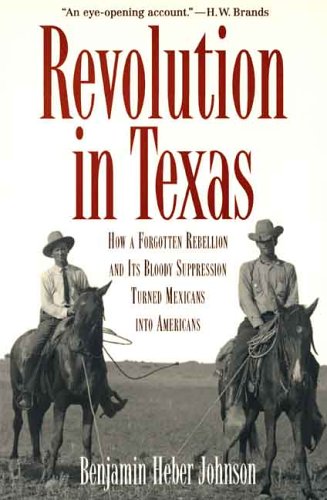
Revolution in Texas: How a Forgotten Rebellion and Its Bloody Suppression Turned Mexicans into Americans
$84.38
by Benjamin Heber Johnson



In Revolution in Texas Benjamin Johnson tells the little-known story of one of the most intense and protracted episodes of racial violence in United States history. In 1915, against the backdrop of the Mexican Revolution, the uprising that would become known as the Plan de San Diego began with a series of raids by ethnic Mexicans on ranches and railroads. Local violence quickly erupted into a regional rebellion. In response, vigilante groups and the Texas Rangers staged an even bloodier counterinsurgency, culminating in forcible relocations and mass executions. Faced with the overwhelming forces arrayed against it, the uprising eventually collapsed. But, as Johnson demonstrates, the rebellion resonated for decades in American history. Convinced of the futility of using force to protect themselves against racial discrimination and economic oppression, many Mexican Americans elected to seek protection as American citizens with equal access to rights and protections under the U.S. Constitution. "Benjamin Johnson's study of the Plan de San Diego uprising is a clear, absorbing analysis of a bloody but little-known revolt along a border that's been troubled ever since it was a border. By looking both backward and forward from the Plan de San Diego, the book does much to explain why Mexican-American identity is the complex fate we know it to be today."-Larry McMurtry; "An eye-opening account of a time when the Mexican Revolution came to the United States, when conflicting ethnic and national loyalties produced ghastly violence, deep bitterness, and a happier ending than anyone involved could have hoped for."-H.W. Brands, author of The Age of Gold: The California Gold Rush and the New American Dream Benjamin Heber Johnson is assistant professor of history at Southern Methodist University.