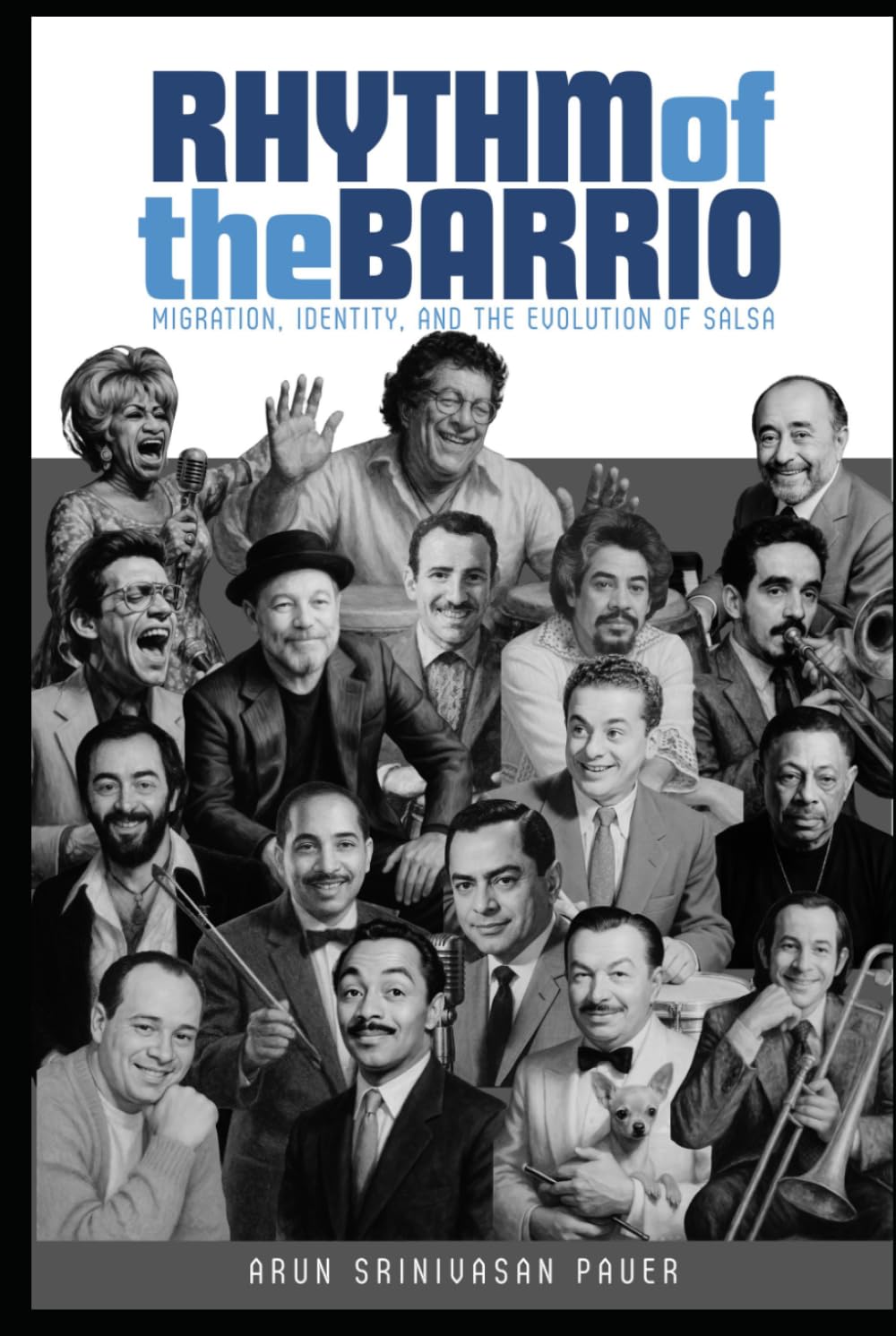
Rhythm of the Barrio: Migration, Identity, and the Evolution of Salsa
$50.00
by Mr. Arun Srinivasan Pauer



Rhythm of the Barrio: Migration, Identity, and the Evolution of Salsa is a comprehensive cultural history of Salsa—not as a single genre born in the 1970s, but as a living continuum shaped by migration, politics, race, and urban life across the Caribbean and New York City. Spanning more than a century, the book traces Salsa’s deep roots from late-19th-century Cuba—through Danzón, Changüí, Son, and Mambo—to the Puerto Rican diaspora, the Palladium era, the rise of Fania Records, the commercial salsa boom of the 1980s–90s, and the fragmented, globalized landscape of the digital age. Rather than treating Salsa as a marketing label, the book frames it as a diasporic language, forged in barrios, ballrooms, and recording studios by musicians navigating displacement, identity, and power. Blending social history with musical analysis, Rhythm of the Barrio examines: How colonialism, migration laws, and urban segregation shaped sound; The cultural role of Plena, Boogaloo, Mambo, Salsa Dura, and modern fusions; Key figures, rivalries, record labels, and movements that defined each era;The internal mechanics of Salsa—clave, song structure, improvisation, and orchestration. With detailed illustrations, timelines, and technical breakdowns, the book connects music, society, and history into a single narrative, showing how rhythm became a tool of survival, resistance, and collective memory. Written for dancers, musicians, scholars, and serious listeners alike, Rhythm of the Barrio is both an academic chronicle and a human story—revealing how a community in motion turned migration into music, and sound into identity.