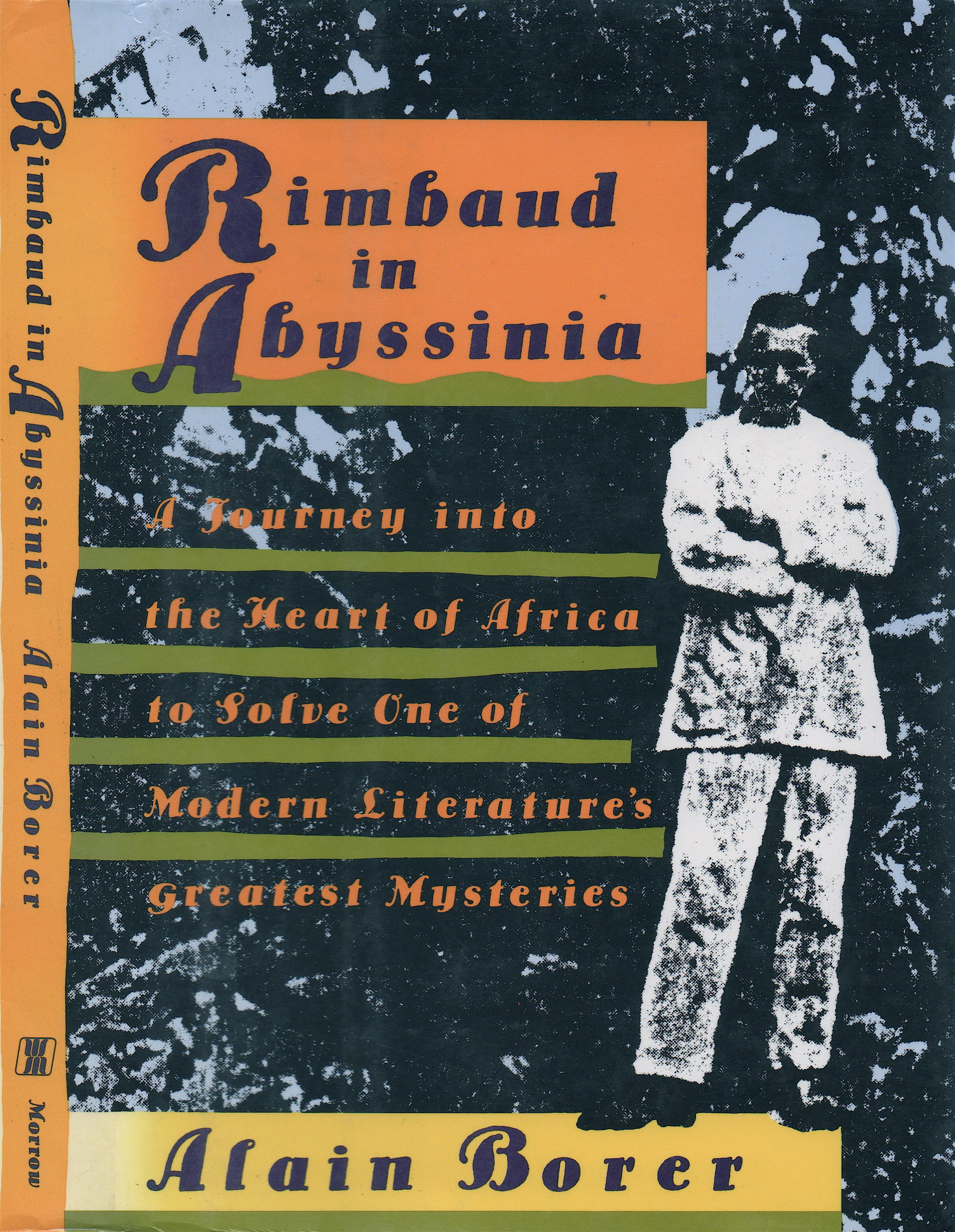



The author retraces Rimbaud's journey into Abyssinia, modern-day Ethiopia, where the poet disappeared for the last decade of his life, and presents his findings about Rimbaud's interaction with the native people In 1879, the 25-year-old French poet Arthur Rimbaud abandoned art and Europe, moving to Africa. To explore the silence of this period, Borer combines biography, literary analysis, and travelog, retracing Rimbaud's movements through Ethiopia and Egypt, trying to evoke the place, and searching for traces of the poet. Guided by Rimbaud's letters and glancing back at his poetry, especially Illuminations and A Season in Hell , Borer finds a coherence between the two halves of Rimbaud's life, an existence defined and unified by the act of searching. While often interesting and occasionally suggestive, this study of Rimbaud's silence offers little new to our appreciation of the poet or his work. -T.L. Cooksey, Armstrong State Coll., Savannah, Ga. Copyright 1991 Reed Business Information, Inc. By age 20, when he mysteriously renounced his poetic career without publishing a single volume, Rimbaud had created a body of poetry that many still consider perfect; at age 27, after a brief life of wandering in Europe, he went to North Africa, where he amassed a small fortune in trading guns and coffee. At the same age, though a century later, Borer, a French Rimbaud specialist, accompanied by a TV crew filming a documentary of Rimbaud's last ten years, followed Rimbaud's footsteps--producing along with the film this fascinating, bewildering, and innovative study. Joining the great array of ``Rimbaudians,'' as Borer calls them--the many writers, from the poet's own sister to Enid Starkie and Henry Miller, whom Rimbaud inspired--Borer explores the puzzles and eccentricities of Rimbaud: his fascination with evil; his sensuality; his iconoclasm and rage; his experiments with drugs, love, religion; his restlessness; his crimes--he had a police record in every country he visited and provoked Paul Verlaine, his lover whom he tortured with knives, into shooting him. Despising convention, courtesy, morality (``a weakness of the brain''), glorifying evil and excess, Rimbaud became a permanent symbol of adolescent rebellion before literally escaping from his own identity as the ``visionary'' that he described in the one book he published during his life, an autobiography of his own mind called A Season in Hell. Borer searches for the vestiges of this identity in the adventurer-entrepreneur Rimbaud became--and, in the process, finds the poet in himself. An odd combination of Rimbaud himself, his words and his experiments with form, and the assertive, fragmentary style of the TV documentary on which the book is based--a very challenging read for those uninitiated in Rimbaud and ``Rimbaudrary.'' The translation must have been a trial: What to make of ``his bulimia for reading remained unsated''? -- Copyright ©1991, Kirkus Associates, LP. All rights reserved. Used Book in Good Condition