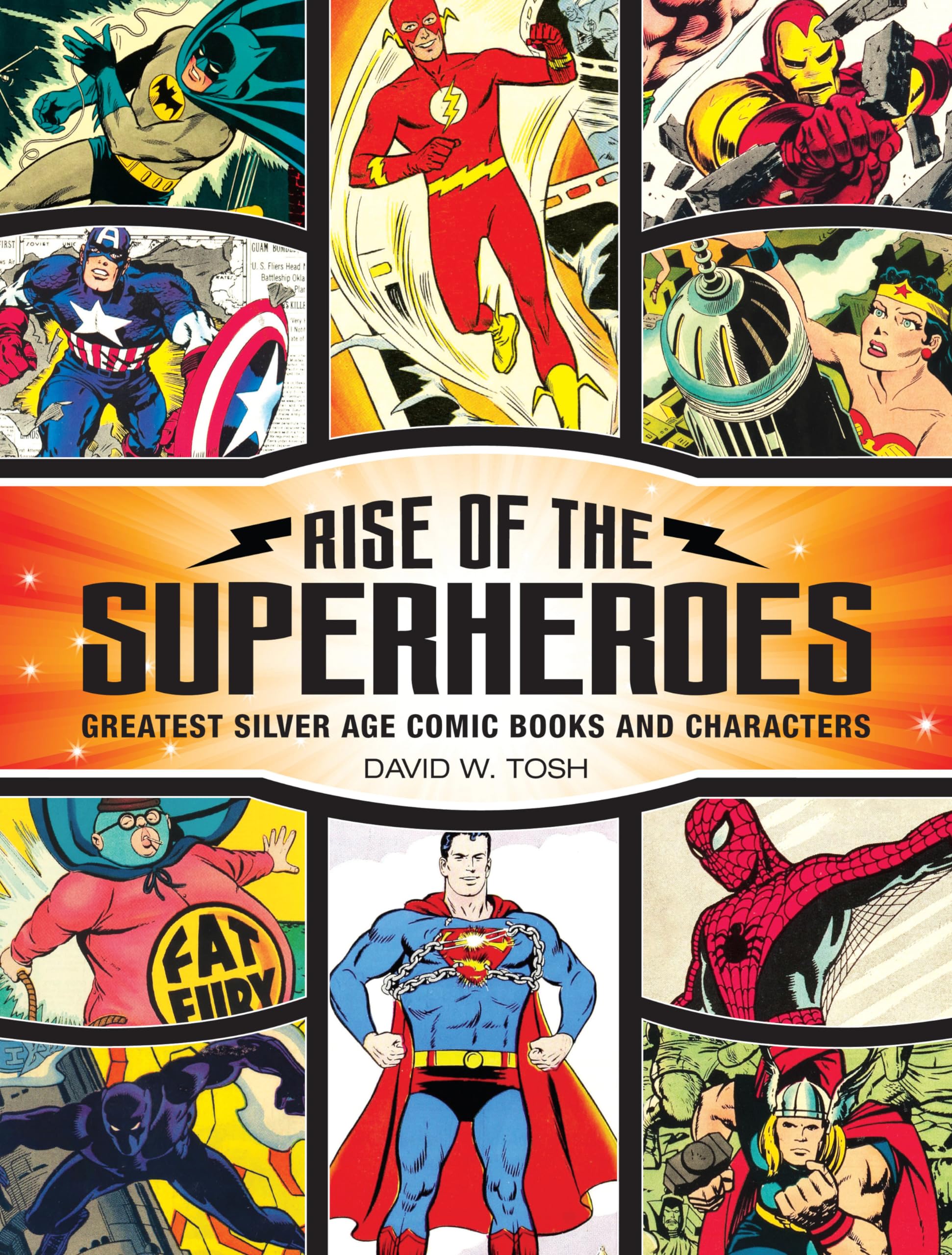
Rise of the Superheroes: Greatest Silver Age Comic Books and Characters
$15.98
by David Tosh



They Could Be Heroes Rise of the Superheroes--Greatest Silver Age Comic Books and Characters is a visual and entertaining adventure exploring one of the most popular and significant eras of comic book history. From 1956 to 1970, the era gave us Spider-Man, The Avengers, X-Men, The Incredible Hulk, Iron Man and a flurry of other unforgettable and formidable characters. The Silver Age redefined and immortalized superheroes as the massive pop culture titans they are today. Lavishly illustrated with comic book covers and original art, the book chronicles: • The new frontier of DC Comics, with a revamped Batman, Superman and Wonder Woman, and new characters including Hawkman • Marvel's new comics featuring Thor and The Fantastic Four • The pop art years that saw Batman's "new look" and the TV series • Independent characters, including Fat Fury and T.H.U.N.D.E.R. Agents • Spotlights new and re-imagined superheroes, like Wonder Woman, who have become central to modern pop culture • Includes values of these comics, which are popular with collectors Thanks to the Silver Age, superheroes are bigger and badder than ever. David W. Tosh has been an avid fan of comic strips, animated cartoons, and comic books for most of his life. Since 2003, he has been a cataloger for Heritage Auctions in Dallas, Texas, specializing in comic books, original comic and animation art, and vintage rock posters. He and his wife, Sonia, live in Mesquite, Texas. Rise of the Superheroes Greatest Silver Age Comic Books And Characters By David W. Tosh, Kristine Manty F+W Media, Inc. Copyright © 2018 David W. Tosh All rights reserved. ISBN: 978-1-4402-4816-0 Contents INTRODUCTION, CHAPTER 1 OLD STANDBYS AND NEW BEGINNINGS, CHAPTER 2 DC'S NEW FRONTIER: 1960-63, CHAPTER 3 THE NEW HOUSE OF IDEAS: MARVEL 1961-64, CHAPTER 4 THE POP ART YEARS: 1964-67, CHAPTER 5 MEANWHILE, ACROSS TOWN: THE OTHER HEROES, CHAPTER 7 THINGS TO COME, COLLECTING SILVER AGE SUPERHERO COMICS, ACKNOWLEDGMENTS, CHAPTER 1 OLD STANDBYS AND NEW BEGINNINGS COSTUMED SUPERHEROES in comic books had been popular during World War II, but by 1946, their popularity began to slip. By 1950, many of the old guard had been retired, and for some of those that remained, the clock was definitely ticking. The original Captain Marvel had been one of (if not the) biggest selling superhero comic book during the forties, but a long-simmering lawsuit with DC over the similarities between the "Big Red Cheese" and Superman finally ended in 1953, effectively finishing the series. Marvel's "Timely" imprint was shifting gears in its publications, pushing its remaining heroic characters in different directions — horror for Captain America, fighting communist enemies instead of garden-variety criminals for the Human Torch and Sub-Mariner. Over at Fox, their standard torch-bearer, the Blue Beetle, had wound down his heroic exploits around 1950, not to resurface again until 1955 for a short, unsuccessful run with Charlton. Quality Comics sold out to DC after dumping most of its superheroes in favor of detectives and soldiers. In fact, the whole concept of brightly colored "mystery men" in comic books was rapidly replaced with crime comics that focused more on the criminals than the lawmen who always brought them in (or did away with them) by each story's end. The violence and bloodshed in these new titles like Crime Does Not Pay (with the word "Crime" in much larger letters than the rest of the title) led to even more gruesome comics with "horror" and "terror" being the hot-button terms to splash across the covers. Each year saw the envelope pushed further, with companies like EC and Harvey leading the blood-soaked trail. Nothing seemed to be off-limits, with sex and drugs creeping into stories. In time, parents, teachers, and clergymen demanded a change in the way their children's entertainment was presented. Enter the Comics Code. The 1950s saw a growing rise in juvenile delinquency. The post-war generation was considered "lazy, spoilt, lacking in discipline, disrespectful of authority and violent." (Cliomuse.com, "Blackboard Jungle and Juvenile Delinquency in the 1950s.") Parents and teachers looked for anything to pin the blame on (certainly not the way they brought up/taught their children, of course), and youth culture's habits were picked apart and examined by the adults, looking for that scapegoat. Comic books, long-hated by many educators and child psychiatrists, were an easy target, especially the over-the-top horror titles that were popular at the time. Anxiety over the Cold War with Russia and the movie Blackboard Jungle, which opened with a loud bang courtesy of Bill Hailey and the Comets' "Rock Around the Clock" (the new rock and roll fad was "part of the problem" as well) pretty much sealed the deal. Something had to be done, and it was — the formation of the Comics Code Authority to curb those nasty ten centers that were co