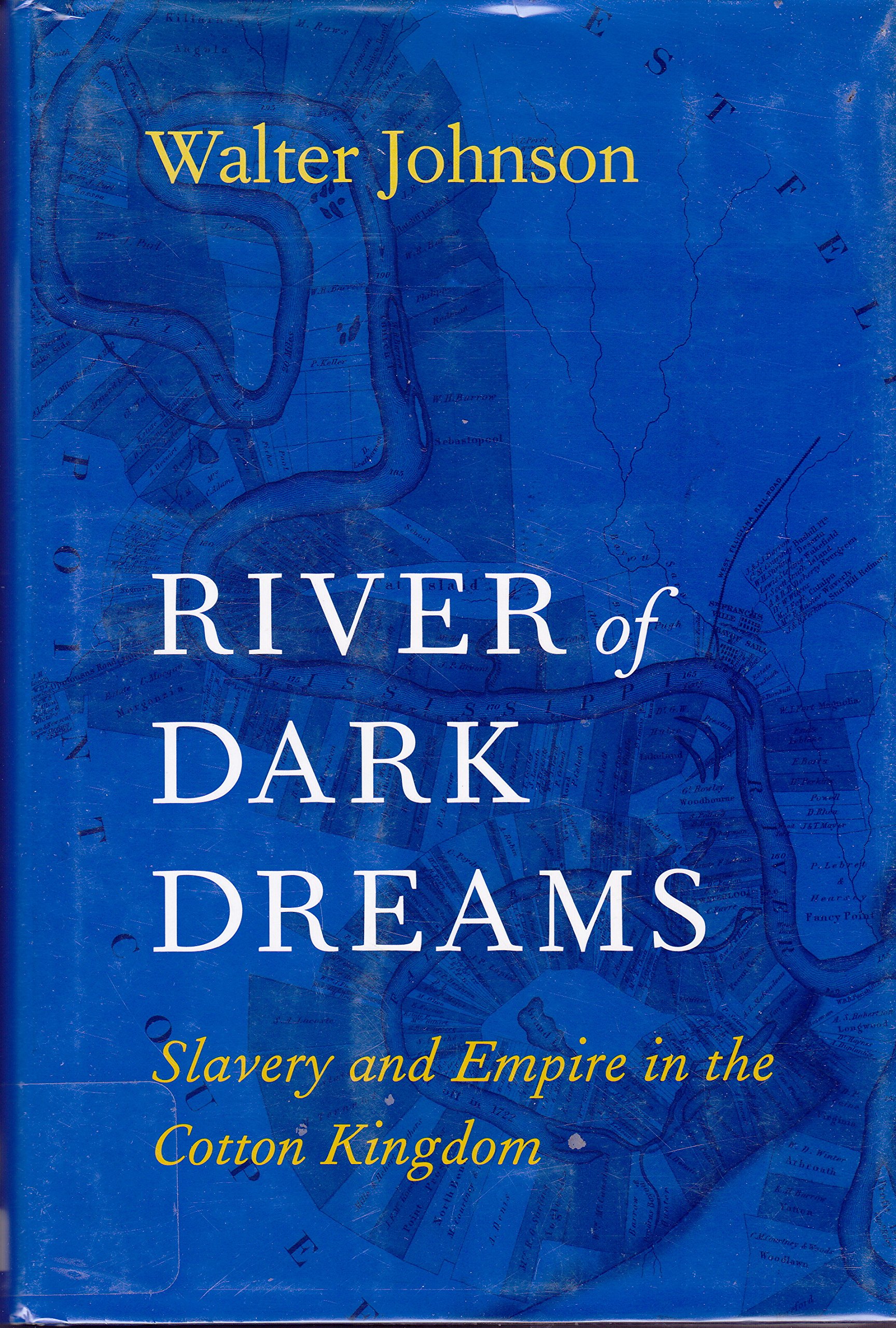



When Jefferson acquired the Louisiana Territory, he envisioned an “empire for liberty” populated by self-sufficient white farmers. Cleared of Native Americans and the remnants of European empires by Andrew Jackson, the Mississippi Valley was transformed instead into a booming capitalist economy commanded by wealthy planters, powered by steam engines, and dependent on the coerced labor of slaves. River of Dark Dreams places the Cotton Kingdom at the center of worldwide webs of exchange and exploitation that extended across oceans and drove an insatiable hunger for new lands. This bold reaccounting dramatically alters our understanding of American slavery and its role in U.S. expansionism, global capitalism, and the upcoming Civil War. Walter Johnson deftly traces the connections between the planters’ pro-slavery ideology, Atlantic commodity markets, and Southern schemes for global ascendency. Using slave narratives, popular literature, legal records, and personal correspondence, he recreates the harrowing details of daily life under cotton’s dark dominion. We meet the confidence men and gamblers who made the Valley shimmer with promise, the slave dealers, steamboat captains, and merchants who supplied the markets, the planters who wrung their civilization out of the minds and bodies of their human property, and the true believers who threatened the Union by trying to expand the Cotton Kingdom on a global scale. But at the center of the story Johnson tells are the enslaved people who pulled down the forests, planted the fields, picked the cotton—who labored, suffered, and resisted on the dark underside of the American dream. With deep insights, original readings, expansive vision, and dramatic narratives, Walter Johnson reconfigures both the political economy of American slavery and the landscape of struggle in the slave South. (Steven Hahn, author of A Nation under Our Feet: Black Political Struggles in the Rural South from Slavery to the Great Migration ) Walter Johnson 's River of Dark Dreams is a unique, brilliant, and relentless critique of the sordid logic of American slavery as it unfolded on cotton plantations, aboard steamboats plying the Mississippi, and in toxic proslavery adventures that spilled across the country's borders. The next generation of debates over slavery in the United States must wrestle with Johnson's startling and profound insights. (Adam Rothman, author of Slave Country: American Expansion and the Origins of the Deep South ) River of Dark Dreams solidifies Walter Johnson 's standing as a brilliantly gifted interpreter of the past, whose work sets the benchmark for a powerfully lucid--sometimes heart-wrenching--vision of what enslavement meant for slaveowners, for the women and men they enslaved, and for the nations that participated in the trans-Atlantic slave trade. (Jennifer L. Morgan, author of Laboring Women: Gender and Reproduction in New World Slavery ) Mining journals, correspondence, public records and popular literature, Johnson reminds us that New Orleans, not Richmond, was the engine of Southern prosperity: its largest city, largest slave market and the center of a booming international trading system...Mixed with fascinating anecdotes, grim accounts of slave life and a convincing argument for plantation slavery's essential role in the 19th century's burgeoning industrial capitalism. ( Kirkus Reviews 2012-12-15) River of Dark Dreams is an important, arguably seminal, book...It is always trenchant and learned. And in highly compelling fashion, it helps us more fully appreciate how thoroughly the slaveholding South was part of the capitalist transatlantic world of the first half of the 19th century. (Mark M. Smith Wall Street Journal 2013-02-22) Johnson has written a book as big and bold as the Mississippi River valley region it surveys. In it, he maps the various interlocking connections among slavery, land surveys and speculation, steamboats, capital and credit, cotton planting, and more to show how President Jefferson's promise of an 'empire for liberty' to come from the Louisiana Purchase became instead a place of people grasping for advantage, gouging for wealth, and gaining through will and brutality. Readers will find Johnson's discussions of steamboat technology, adaptations of new strains of cotton, and credit and market arrangements especially compelling as he makes the case for a modernizing, slave-based cotton empire that sought to extend its reach across the continent and, through violence, to claim Central America and Cuba as well...An essential book for understanding the dynamism and direction of American economic ambitions and the human and environmental costs of the physical, political, and social energy that drove such ambitions and ended in civil war. (Randall M. Miller Library Journal (starred review) 2013-03-15) [ Johnson ] firmly believes that the booms of the early 1830s, followed by the devastating collapse of