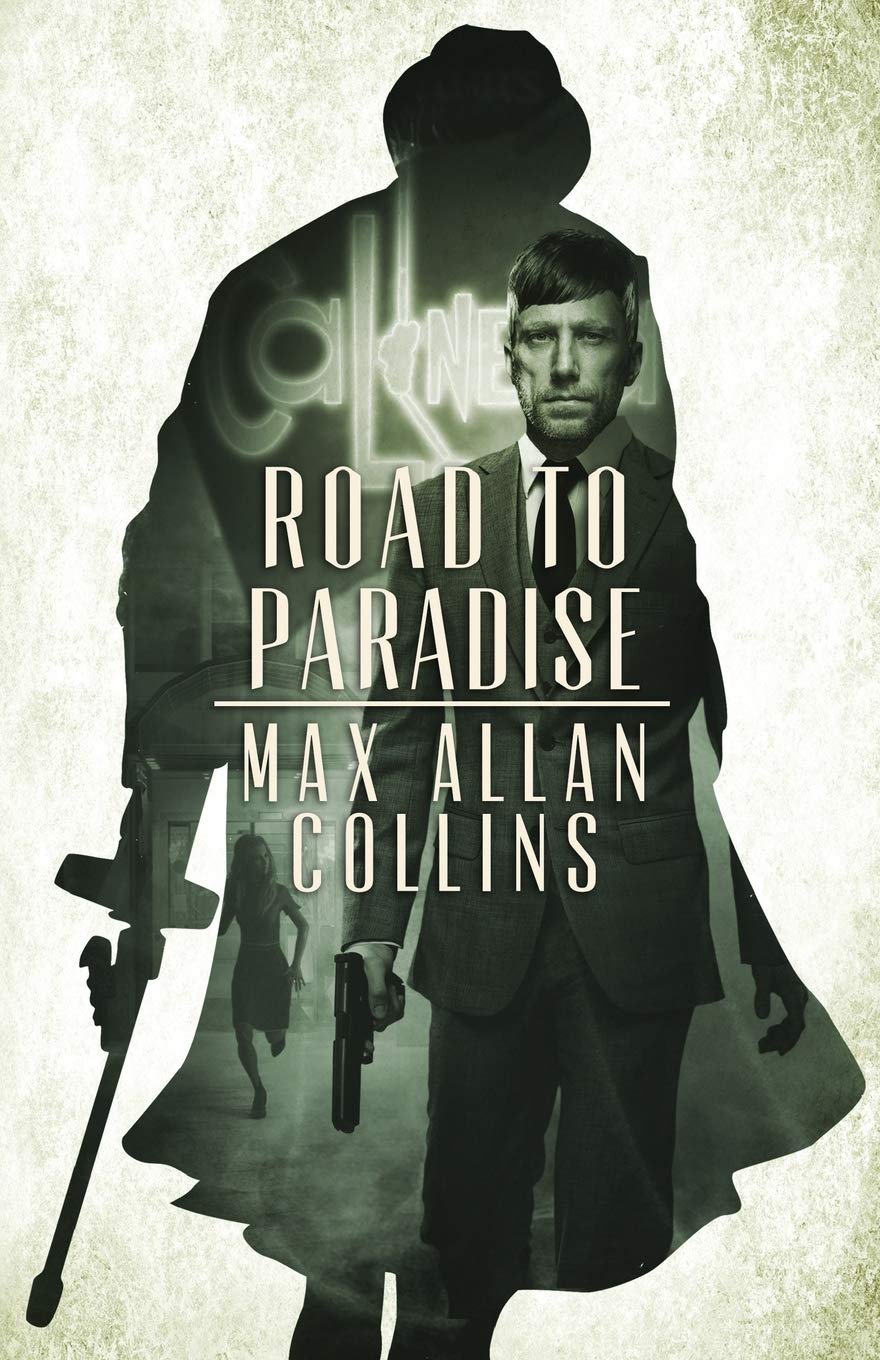



Mystery Writers of America Grandmaster Max Allan Collins brings his acclaimed and unforgettable Perdition saga to a breathtaking conclusion. Lake Tahoe, 1973. Michael Satariano, now middle-aged, is running a mob casino, his days of killing behind him. So when Godfather Sam Giancana orders him to eliminate a foe, Michael refuses. The hit goes down anyway…and Michael is left holding the bag, becoming the target for bloody retribution. To save his family, Michael agrees to testify in return for a new life in the Witness Protection Program. But nobody can save him from the mob’s wrath…and once again the son of the Angel of Death finds himself on the road, this time with his 16-year-old daughter…his life-long struggle for redemption at odds with his thirst for revenge. "A gripping, blood-soaked journey. Collins' compelling mix of history, bloodshed and retribution is irresistible. Readers will eat it up and beg for more." Publishers Weekly "Collins not only gives you a great mob novel, but a serious family drama that blows away anything The Sopranos has done." Bookgasm Max Allan Collins is the 2017 Mystery Writers of America Grand Master, a Lifetime Achievement Award winner from the Private Eye Writers of America, and the author of many books, including “Road to Perdition,” which became the Oscar winning film, and the Quarry novels, the basis for the hit TV series. Road to Paradise By Max Allan Collins Brash Books, LLC Copyright © 2005 Max Allan Collins All rights reserved. ISBN: 978-0-9978323-3-4 Contents PROLOGUE, BOOK ONE CASTLE IN THE AIR One Week Earlier, BOOK TWO PARADISE OF DEVILS Two Months Later, BOOK THREE SAINTS' REST, ROAD TIPS, ABOUT THE AUTHOR, CHAPTER 1 On the morning of the day his life went to hell, Michael Satariano felt fine. At fifty, a slender five feet ten, with a face that had remained boyish, his dark-brown Beatle-banged hair only lightly touched with gray at the temples, Michael appeared easily ten years younger, and the guess most people made was, "Thirty-five?" Only the deep vertical groove that concentration and worry had carved between his eyebrows gave any hint that life had ever been a burden. He wore a gray sharkskin suit and a darker gray tie and a very light gray shirt; he did not go in for either the cheesy pastels or Day-Glo colors that so many middle-aged men were affecting in a sad attempt to seem hip. His major concession to fashion was a little sideburn action — that was about it. And unlike many (most) Outfit guys, Michael had no penchant for jewelry — today he wore pearl cufflinks, gold wedding band on his left hand, and single-carat emerald with gold setting on his right. The latter, a present from his wife, Pat, was as ostentatious as he got. His health was perfect, aided and abetted by nonsmoking and light alcohol consumption. His eyesight was fine — in the one eye that war had left him, anyway — and he did not even need glasses for reading, which remained the closest thing to a vice he had. If pulp fiction were pasta, Michael would have been as fat as his food-and-beverage man here at Cal-Neva — give him the company of Louis L'Amour, Mickey Spillane, or Ray Bradbury, and he was content. Neither could gambling be counted among the sins of the man whose official position at the resort/casino was entertainment director. Nor did he have a reputation for womanizing — he had been married since 1943 to Patricia Ann, the woman he always introduced as his "childhood sweetheart"— and though working in environs littered with attractive young women (from waitresses to showgirls, actresses to songbirds), he rarely felt tempted and had not given in. It was said (not entirely accurately) that he'd never missed a Sunday mass since his marriage. For this reason he had acquired a mocking nickname — the Saint. Saint Satariano, the wise guys called him, particularly the Chicago crowd. Not that his churchgoing ways were the only thing behind the moniker: for three decades now he had served as the Outfit's respectable front man in various endeavors, the Italian boy who had been the first Congressional Medal of Honor winner of World War II, the combat soldier whose fame rivaled that of Audie Murphy. "Saint" had not been his first nickname. During his months on Bataan in the Philippines, when he was barely out of high school, Michael had earned from the Filipino Scouts a deadly sobriquet: un Demonio Angelico. He had killed literally scores of Japanese in those vicious early days of the war, and had lost his left eye saving Major General Jonathan Wainwright from a strafing Zero. The latter event had been prominent in his Medal of Honor citation, but so had an afternoon battle in which he'd taken out an even fifty of the enemy. General MacArthur himself had helped smuggle the wounded soldier off Bataan, to give stateside morale a boost with the war's first American GI hero. But Michael had not lasted long on the PR podium and rubber-chicken circuit —