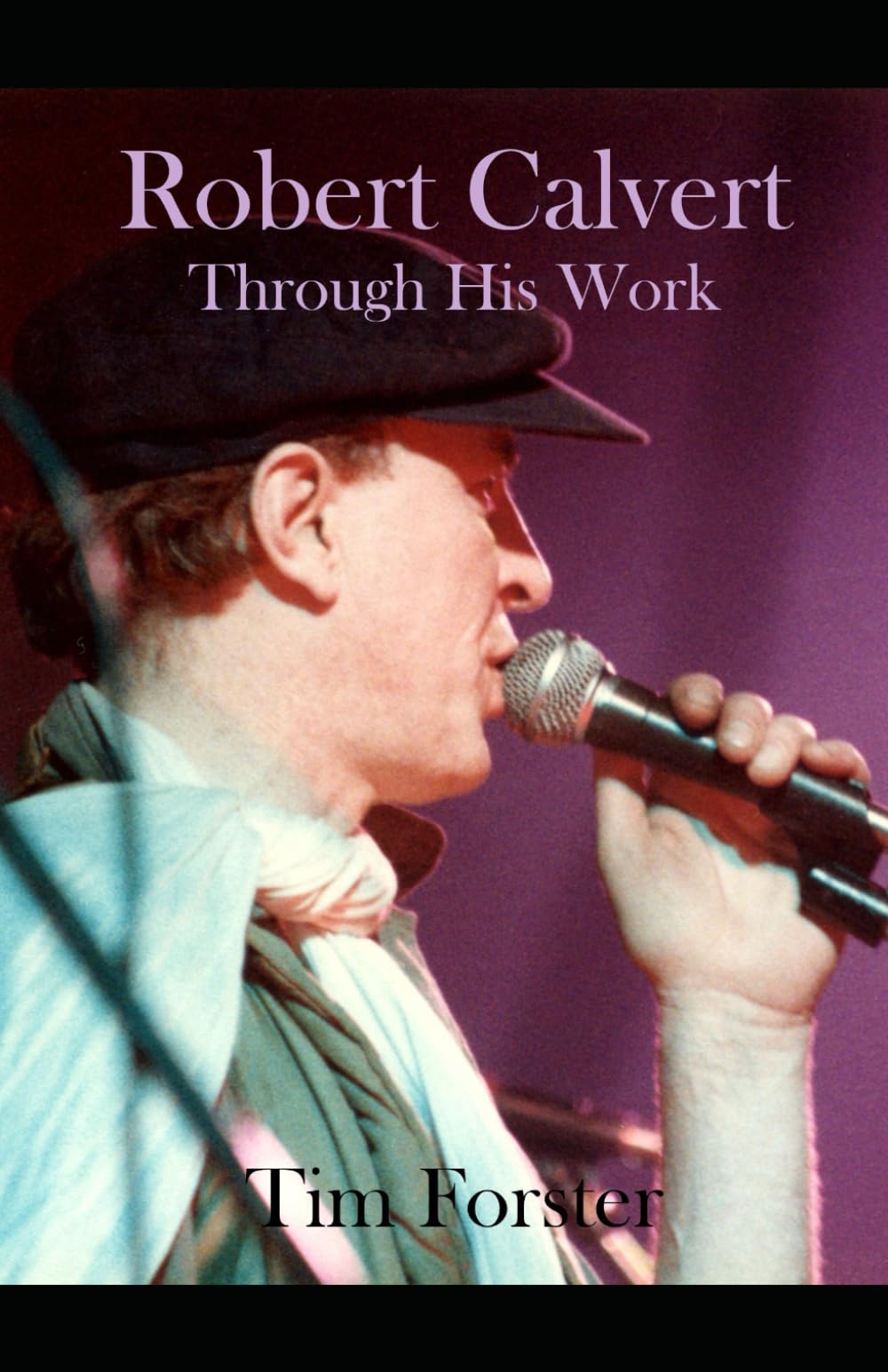



'On fan sites, Robert Calvert (1945-1988), sometime Hawkwind frontman and autodidact polymath, is often characterised as a genius, while to the rest of the populace it’s fair to say he’s pretty much unknown. In this collection of linked essays, Tim Forster largely avoids the G-word, except when critiquing the notion and its validity, and instead discusses Calvert and his work within a culturally-informed framework that is both more rounded and more intriguing. A product of his time, upbringing and circumstances, this first major study shows how Calvert’s work in diverse arts enacted an ongoing interrogation of society, viewed through a compound lens of eclectic intellectual and pop cultural enthusiasms. The picture that forms is of an artist in perpetual conversation with his environment, with an uncannily sharp eye for, as he put it, “things that haven’t quite happened yet.” Calvert worked through a period which was characterised by dramatic shifts in notions of individual and society, and, like many artists of his generation, he both distrusted and challenged authority. More specifically and significantly, though, as Forster’s analysis demonstrates, he was one of those artists whose work consciously challenges the grand narratives upon which authority relies for its ongoing existence. In recognising this, this book makes a very strong, though unstated, case that regardless of whether or not he was a genius – indeed, regardless of whether or not such a designation has any real meaning – Robert Calvert was an artist of substance and significance beyond his limited fame.' Oz Hardwick – poet, professor, and Hawkwind fan Robert Calvert: Through His Work is a (semi) academic study of the multidisciplinary art practice of writer, singer, lyricist, poet, actor and novelist Robert Calvert. Probably most famous for his work with Hawkwind in the 1970s, Robert Calvert’s work covered a broad spectrum of subjects over a period of 20 years. Robert was an artist in continual dialogue with the world around him and therefore this book contextualises his work by outlining the rapidly changing political and cultural situation that he inhabited. The book considers Robert’s art practice from his early involvement with Frendz and 1971’s ‘Hawklog’ (produced with long time collaborator Barney Bubbles) through to his work with Amon Duul (UK) in 1987/8. This twenty year period was a time of profound political and cultural change in the UK as the social democratic post war consensus was overthrown and replaced by neoliberalism following the election of Margaret Thatcher in 1979. Robert’s work both foresaw and commented on those profound changes, most clearly in the project around the 1978 Hawklords' album 25 Years On and in his 1984 solo album Freq. However, his work, across a broad range of disciplines, was always engaged in real life issues expressing a progressive counter cultural perspective at times communicated using sci-fi imagery. By presenting Robert in the historically specific social and political world of the 1960s, 70s and 80s counterculture and mainstream the book shows the influences on his thinking, highlights the continued relevance of his work as a resource and contests the outdated myth of the lone genius producing art out of thin air. £1 from each sale on Amazon will go to a mental health charity.