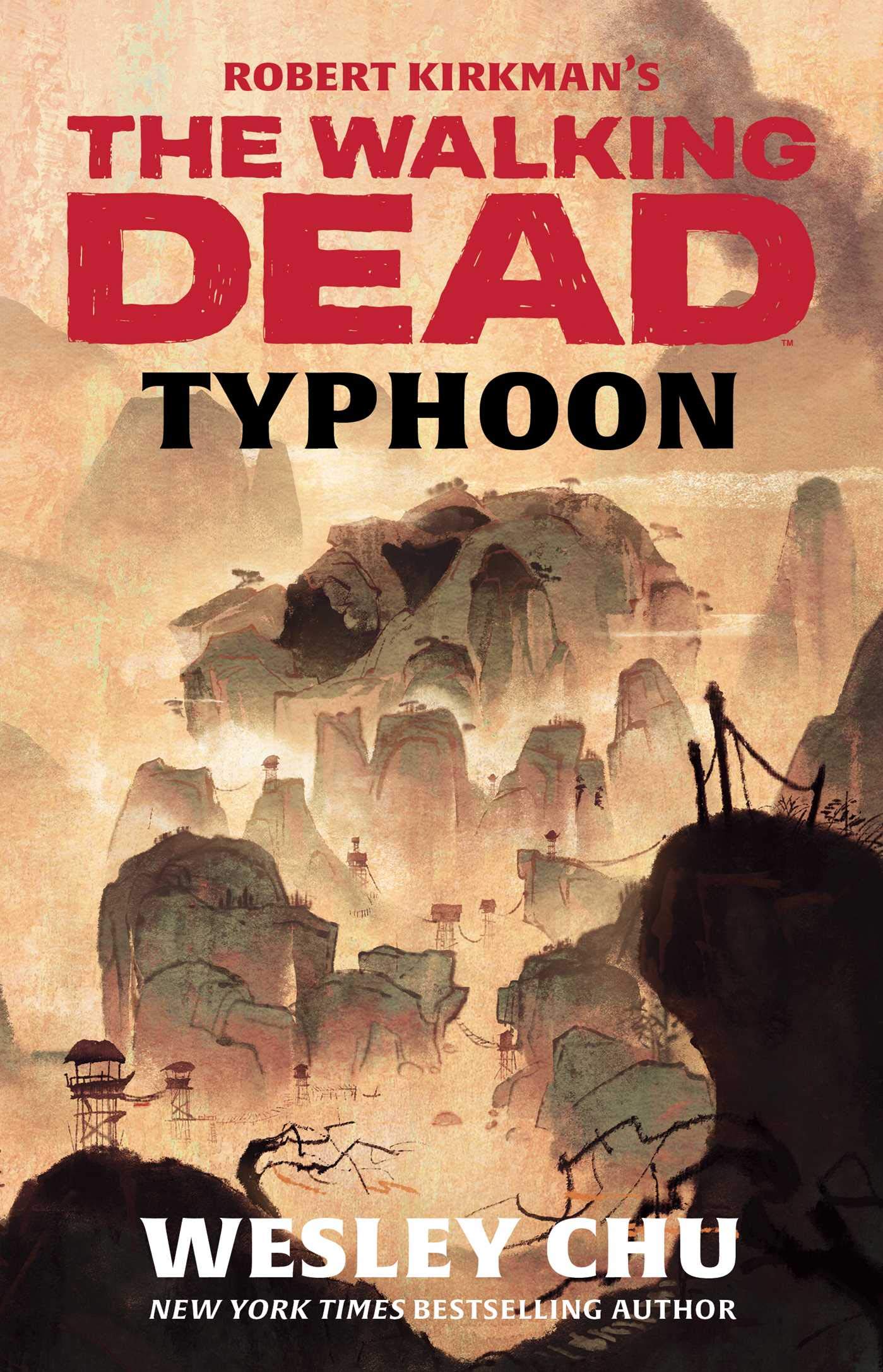



In this riveting, “gory, and action-packed” (Jonathan Maberry) survival thriller, set in the expansive world of Robert Kirkman’s The Walking Dead series, three people from different walks of life in China must join forces against the typhoon of undead as chaos sweeps over Asia. In the aftermath of the zombie virus outbreak, what remains of the Chinese government has estimated that one billion walkers (called jiangshi ) are currently roaming through the country. Across this dramatic landscape, large groups of survivors have clustered together for safety in villages and towns that have been built vertically as a means of protection against the unceasing wave of jiangshi . Before this devastation, Zhu was one of the millions of poor farmers who left their rural roots for the promise of consistent employment in one of China’s booming factory towns. Elena was an American teaching English in China while on a gap year before beginning law school. Hengyen was a grizzled military officer of some renown, and a passionate believer in his nation’s ability to surmount any obstacle. But with the settlement’s 3,000 mouths to feed and the scavengers having to travel further and further in search of food, Zhu ends up at his home village, where he is shocked to find survivors. Does he force them to join the settlement or keep their existence a secret? Meanwhile, Hengyen is tasked with the impossible: fortifying the Beacon against a 100,000-strong “typhoon” of walkers header their way. Even though he realizes that the Beacon hardly stands a chance, Hengyen is a believer and will stand with his compatriots to the very last, bringing him into conflict with Zhu, who intends to flee the path of the typhoon and make for the safety of China’s dramatic mountain ranges before it’s too late. Given “two decaying thumbs up,” (Jonathan Mayberry, author of Rot & Ruin ), this book is sure to get your heart racing and leave you wanting more! "Typhoon is a trans-Pacific arrow through my heart."—Weston Ochse, Bram Stoker award-winning author of SEAL Team 666 and Grunt Life "After the dead start walking, the living have to hold onto each other and run, and run, and keep running. Typhoon knows this, and never stops. There's teeth around every corner, in every shadow, and—this is the Walking Dead, after all—not everyone lives. You won't want this novel to end."—Stephen Graham Jones, Bram Stoker award-winning author of Mapping the Interior and Mongrels “With THE WALKING DEAD: TYPHOON, Wesley Chu takes a big damn bite out of the zombie genre. It’s gory and action-packed but built around a core of characters you genuinely care about. Two decaying thumbs up!”—Jonathan Maberry, New York Times best-selling author of Rot & Ruin and V-Wars Wesley Chu won the John W. Campbell Award for Best New Writer. His debut novel, The Lives of Tao , earned him a Young Adult Library Services Association Alex Award and a Science Fiction Goodreads Choice Award Top 10 slot. He is also the coauthor of the Eldest Curses series with Cassandra Clare, the first book of which debuted at #1 on the New York Times bestseller list. Chapter 1: The New World 1 THE NEW WORLD From a distance, Fongyuan village appeared to exist outside of time. Nestled in the lover’s embrace of the Yuanjiang River in the heart of Hunan province, it was an ancient and beautiful place that held tightly to its storied past and fought bitterly against the ravages of change. Lush mountains rose above the morning mists, like spines on a dragon’s back. A dance of stark white cranes stood on its bank, impassively scanning the water for small prey. The muddled algae-ridden river, wide and meandering, curved through the valley like a spotted mountain viper. The village was a collection of densely stacked old structures dating back to the Song dynasty, along with the occasional multistory twentieth-century apartment building, all capped by traditional curved roofs and flying corners. Several buildings on both sides of the river jutted over the water on stilts, reminiscent of the cranes wading in the shallows. A waterfall cut through the mountains in the distance, feeding a narrow stream that meandered to join the Yuanjiang. Apart from the overgrown flora, burned-out car husks, and the occasional toppled structure, the village looked idyllic. Over the centuries, Fongyuan had withstood famine, foreign invaders, and civil unrest. It had fought bitterly against the Japanese during the Second World War and served as a stronghold to revolutionaries during the ensuing Chinese Civil War. Every time destruction had come for Fongyuan, the village had persisted, rebuilding itself dozens of times over a thousand years. What it could not survive, however, was the dead rising from their graves. Out of the mist, two figures ambled onto a stone road at the edge of the village, their movements stilted and clipped. They bumped into one another as they walked, as if deep in a drunken