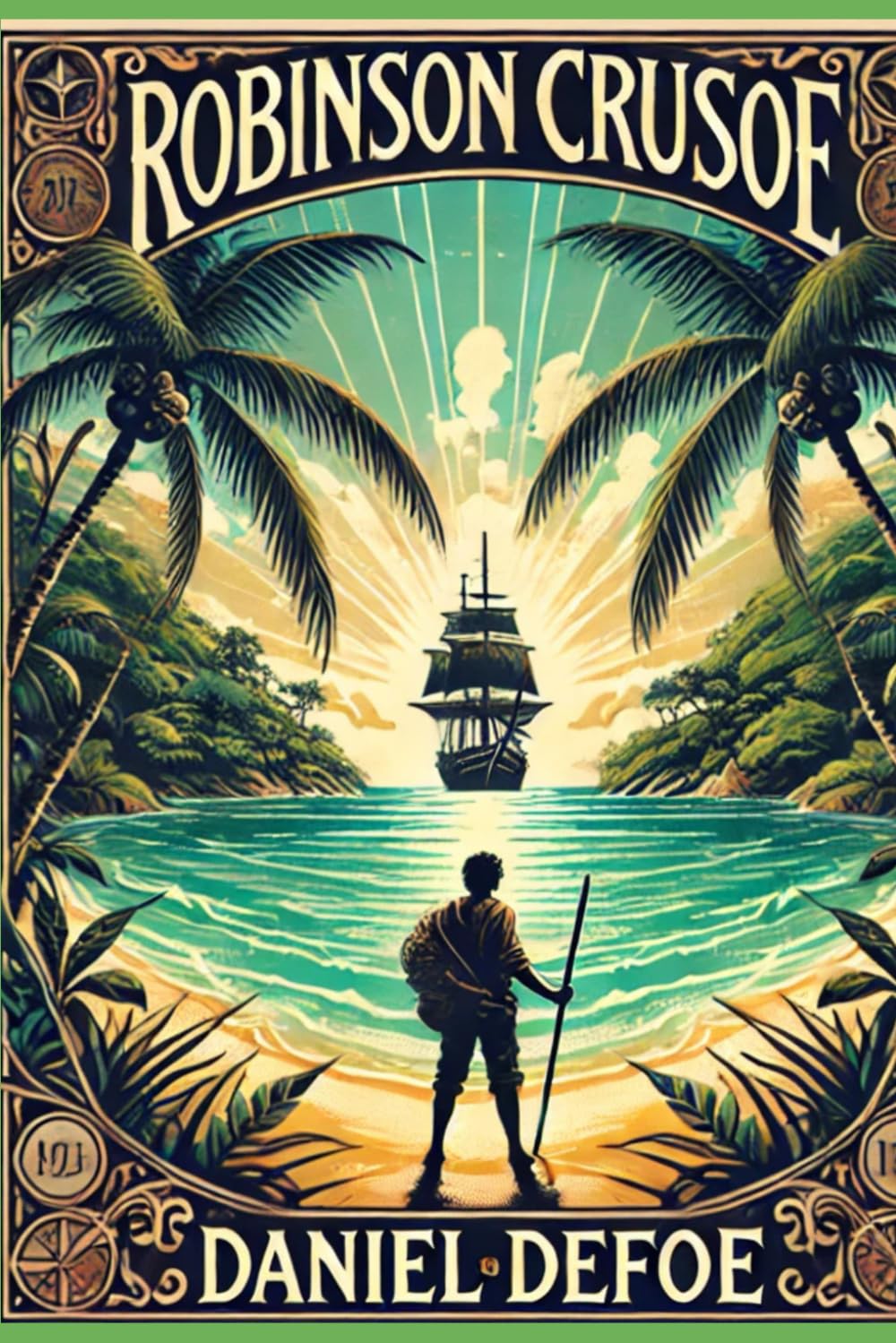



Robinson Crusoe by Daniel Defoe, published in 1719, is widely regarded as one of the first English novels. The book captures the adventurous spirit of the Age of Exploration, a time when European powers expanded their empires across the globe. It reflects themes of survival, self-reliance, and the human capacity for ingenuity, resonating with the Enlightenment-era belief in reason and progress. The story is presented as a fictional autobiography of Robinson Crusoe, an ambitious young man driven by a desire for adventure and independence. Despite his father's wishes for a stable life, Crusoe pursues a life at sea. His journey takes him through a series of challenges that test his courage, resourcefulness, and resilience. Stranded in an unfamiliar environment, Crusoe learns to adapt and create a life for himself using the limited resources available to him. Defoe’s novel also serves as a reflection on human ingenuity and the power of perseverance, while exploring themes of colonialism and cultural encounters, which were significant issues during its time. Crusoe's adventures raise questions about isolation, society, and the relationship between humans and nature, making the book a thought-provoking tale of survival and self-discovery that transcends its historical context.