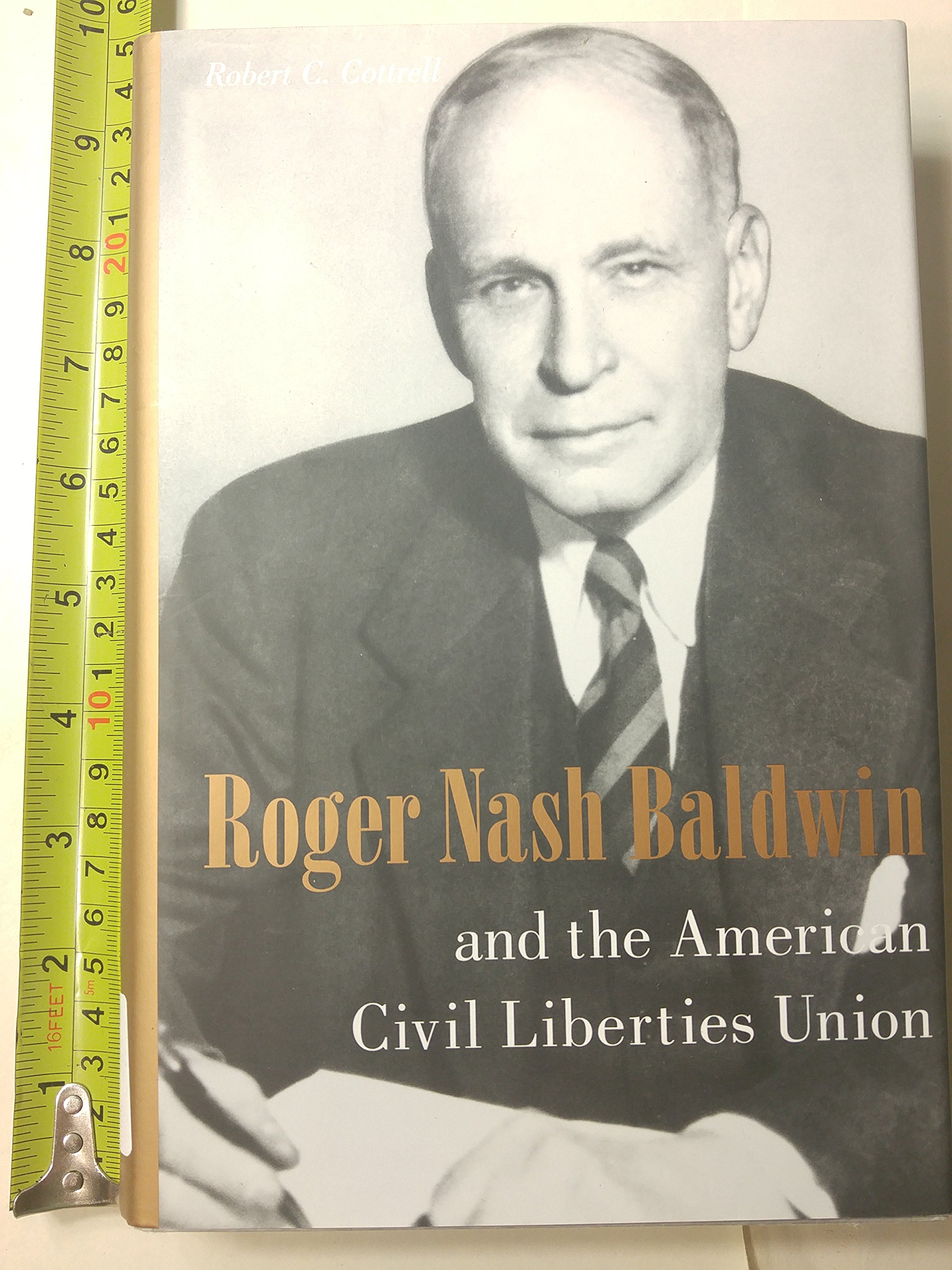



Roger Nash Baldwin's thirty-year tenure as director of the ACLU marked the period when the modern understanding of the Bill of Rights came into being. Spearheaded by Baldwin, volunteer attorneys of the caliber of Clarence Darrow, Arthur Garfield Hays, Osmond Frankel, and Edward Ennis transformed the constitutional landscape. Company police forces were dismantled. Antievolutionists were discredited (thanks to the Scopes Trial). Censorship of such works as James Joyce's Ulysses was halted. The Scottsboro Boys and Sacco and Vanzetti were defended. The right of free speech for communists and Ku Klux Klansmen alike was upheld, and the foundations were laid for an end to school segregation. Robert Cottrell's magnificent book recaptures the accomplishments and contradictions of the complicated man at the center of these events. Driven, vain, frugal, and tempestuous, America's greatest civil libertarian was initially also a staunch defender of Communist Russia, deferred to the U.S. government over the internment of Japanese Americans, and openly admired J. Edgar Hoover and Douglas MacArthur. His personal relationships were equally complex. Spanning a hundred years from the late 1800s through Baldwin's death in 1981, this riveting biography is an eye-opening view of the development of the American left. It's a surprisingly modern story: an advocacy group pushed to national prominence by a single individual's persistence (in recent decades, think Nader, Chavez, and Brower, for example). But the man most identified with the civil liberties crusade was a Harvard-educated Boston Brahmin who began his career at a St. Louis settlement house in 1906. Baldwin was a puzzle; he was sympathetic to the most radical voices (Emma Goldman, the Wobblies, and, later, communists), yet, in his personal and public life, he was certain of his position among "the better sort" of people. He supported unionization of working people but was himself a highly tyrannical boss. From the 1920s through the 1950s, Baldwin headed the ACLU, insisting on an expansive definition of civil liberties that often annoyed even the group's strongest supporters. He remained a grand old man of the movement and worked on international civil liberties until his death at 97 in 1981. Cottrell, a California State University at Chico historian, provides an involving portrait of this often frustrating, ultimately fascinating American activist. Mary Carroll Copyright © American Library Association. All rights reserved Cottrell fills the pages with Baldwin's mentors, allies and foe... providing a detailed and comprehensive understanding of 80 years of progressive activity. ― Publishers Weekly A rich, textured portrait highlighting Baldwin's numerous contradictions.... Highly recommended at all levels. -- R. J. Goldstein ― Choice A tale worth telling. Cottrell tells it very well. -- Michael R. Belknap ― Journal of American HIstory Robert Cottrell is professor of history and American studies at California State University, Chico. He has written numerous books and articles on American liberalism, reform, and radicalism in the twentieth century, including Izzy: A Biography of I. F. Stone.