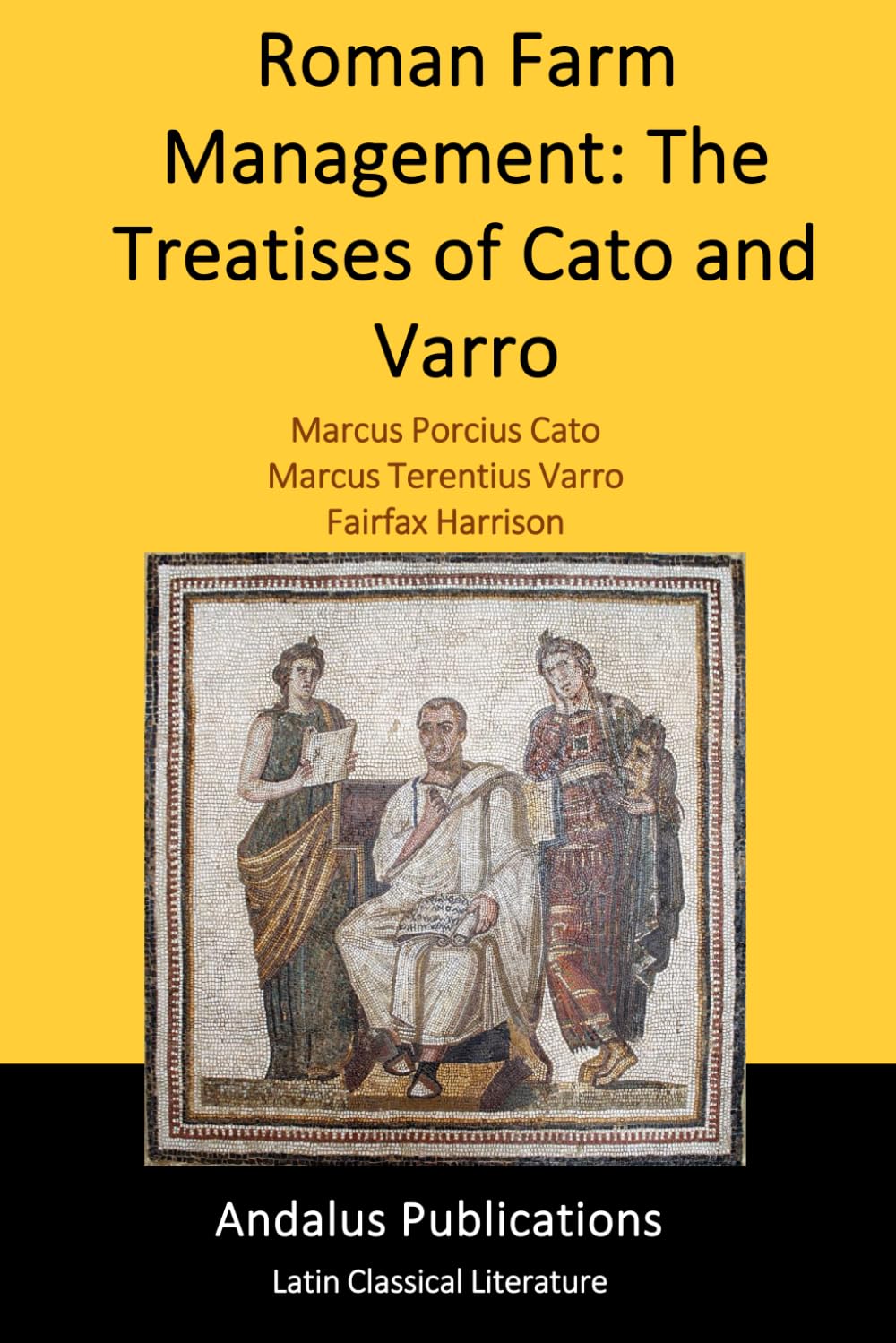



Roman Farm Management: The Treatises of Cato and Varro offers a fascinating glimpse into the world of ancient Roman agriculture. These two works, written by renowned Roman authors, provide practical advice on a wide range of topics, from crop rotation and livestock management to vineyard cultivation and estate management. Roman Farm Management: The Treatises of Cato and Varro provides a fascinating window into the agricultural practices, economic philosophies, and societal values of ancient Rome. This work combines the insights of two of Rome’s most practical and influential thinkers: Cato the Elder and Marcus Terentius Varro. Cato’s De Agricultura is a straightforward, no-nonsense guide to farming, focusing on efficiency, profit, and a disciplined approach to land management. His advice reflects his own values of simplicity, frugality, and respect for hard work, offering a comprehensive look at running a farm, from planting crops to managing slaves. Varro’s Rerum Rusticarum Libri Tres , written later, provides a more expansive view of farming. While still practical, Varro adds philosophical reflections and displays a broader knowledge of agricultural science. He addresses the importance of adapting to different soil types, managing livestock, and even discusses the role of farm aesthetics. Varro’s treatise highlights the interconnectedness of farming, economy, and nature, and his detailed observations reflect a deep respect for the Roman land and its traditions. Together, these texts offer valuable insights into the mindset of Roman landowners, revealing how farm management served not only as an economic pursuit but also as a moral and civic duty. This book is essential for those interested in ancient history, agriculture, and the Roman economy.