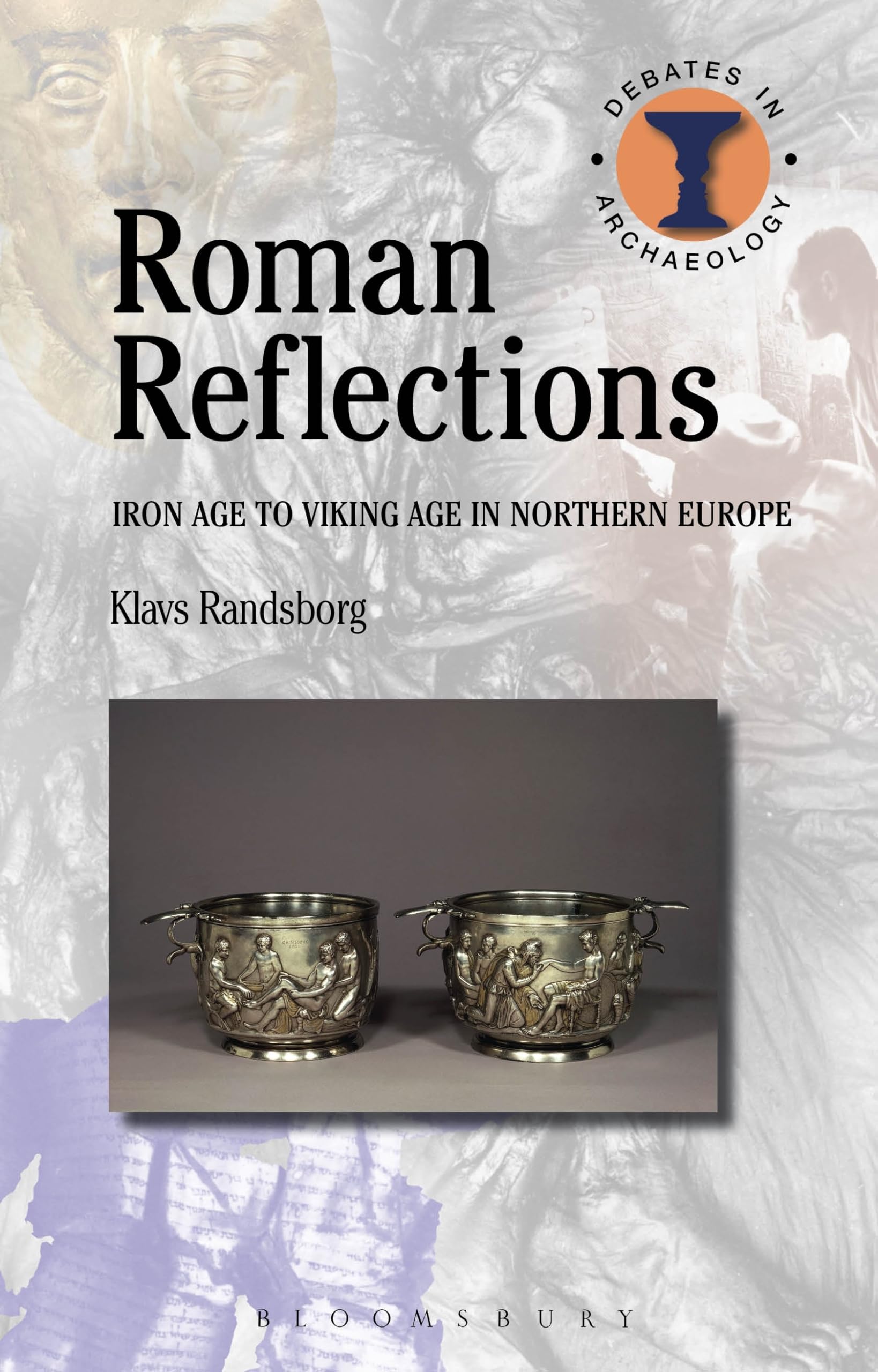
Roman Reflections: Iron Age to Viking Age in Northern Europe (Debates in Archaeology)
$47.03
by Klavs Randsborg



Roman Reflections uses a series of detailed and deeply researched case studies to explore how Roman society connected with and influenced Northern Europe during the Iron and Viking Ages. In an original way, the book brings late prehistoric Denmark – best known for its so-called 'bog bodies' – into a world dominated by textual histories, principally that of Tacitus. The studies include a new examination of the bog-bodies of the late first millennium Bc, a classical archaeological puzzle: men, women and children murdered yet respected in death and adorned with items of fine clothing. A second essay challenges traditionally held ideas about the Cimbri by exploring the textual and archaeological evidence, including the startling and famous European artefact, the Gundestrup silver cauldron. The other studies comprise an archaeologically founded modernist discussion of the ethnography of Tacitus' Germania, in particular considering the character of ancient Germanic Bronze and Iron Age societies; a linguistic exploration of the Latin inheritance in northern European names and places, much of which seems to have been invented by the Romans; and an analysis of the origins of the Danes. Throughout, traditional sources and history are presented in conjunction with new archaeological observations and interpretations. In an accessible way, Roman Reflections assesses Denmark's part on a larger stage, showing how foundations were laid for its zenith in Viking times. “An imaginative analysis of the complex relationships that existed between the Rome empire and the peoples beyond its northern periphery, with a special focus on how Rome affected the conceptual, physical, and topographical worlds in which they [the peoples beyond its northern periphery] lived.” ―John Moreland, Professor of Historical Archaeology, University of Sheffield, UK “[Pulls] the rug out from under a series of national myths while at the same time giving Denmark a new prehistory.” ―Anders Lundt Hansen, Historian, Weekendavisen/section Ideer, (Bloomsbury Translation) “This volume has been conceived with students and scholars in mind, and each chapter is fully referenced and accompanied by a comprehensive bibliography. The content is also accessible for the general reader with an interest in history and archaeology ... non-specialists will [also] be pleased to dive into this eye-opening and thought-provoking volume.” ―Ana Martin, Northwood College for Girls GDST, Classics for All Reviews Klavs Randsborg is Professor of World Archaeology at the University of Copenhagen, Denmark. His research covers the Scandinavian, European and Mediterranean Neolithic, the Bronze and Iron Ages, Classical and Near Eastern Antiquity, the Roman Period, the Migration Period, the Viking Age and the Early Middle Ages as well as African archaeology and Global topics. He is a member of the permanent council of UNESCO. Richard Hodges OBE is Emeritus President of The American University of Rome, Italy. He is the editor of the Debates in Archaeology series; and his publications include Dark Age Economics (2012), The Anglo-Saxon Achievement (1991), Towns and Trade in the Age of Charlemagne (2000), Goodbye to the Vikings (2006) and (as co-author) Villa to Village (2003), all published by Bloomsbury Academic. He has previously been Director of Archaeology for the Butrint Foundation, Albania, and Director of the Pennsylvania Museum of Archaeology and Anthropology, USA.