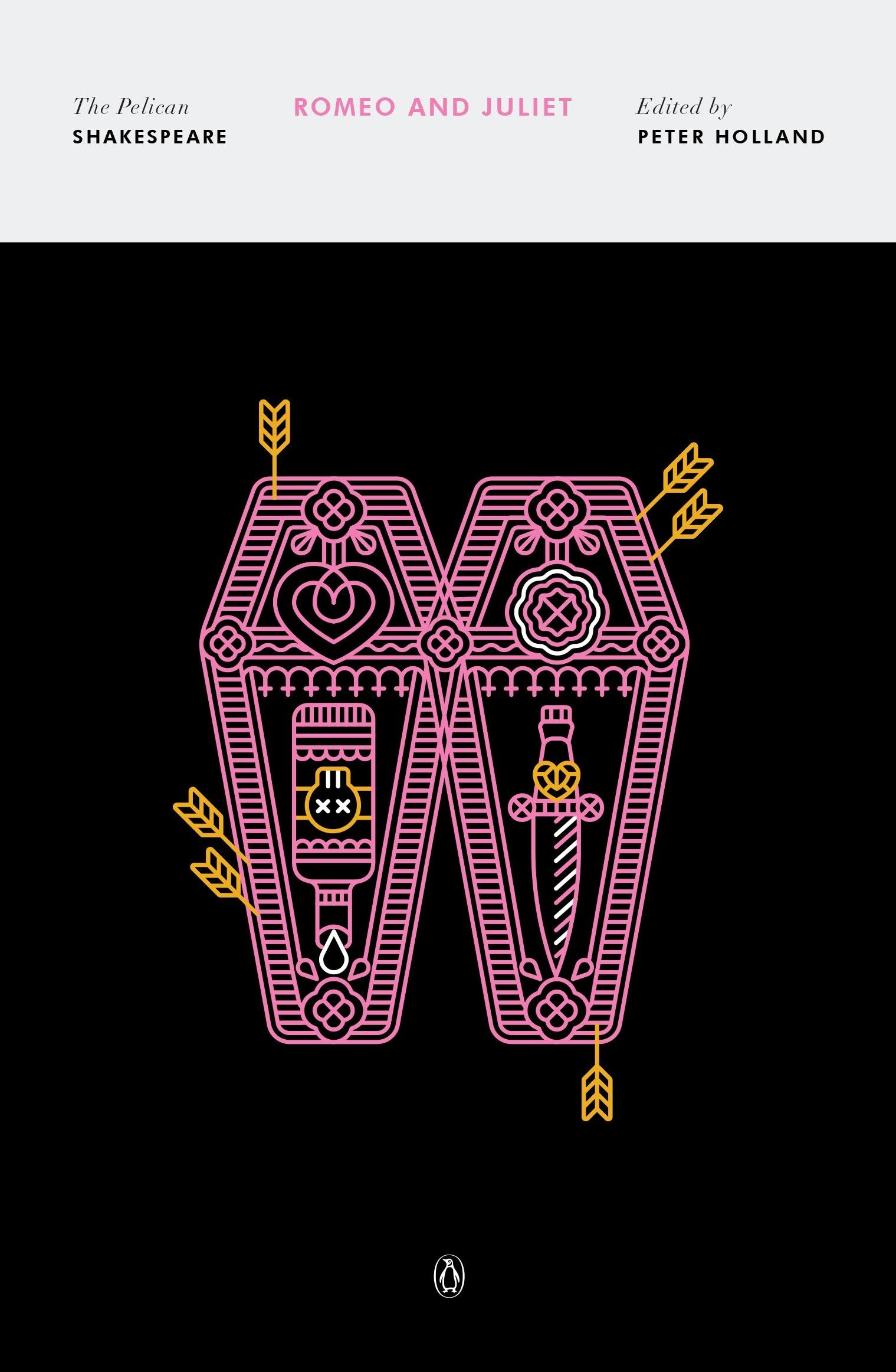



The acclaimed Pelican Shakespeare series, now in a dazzling new series design Winner of the 2016 AIGA + Design Observer 50 Books
50 Covers competition Gold Medal Winner of the 3x3 Illustration Annual No. 14 This edition of Romeo and Juliet is edited with an introduction by Peter Holland and was recently repackaged with cover art by Manuja Waldia. Waldia received a Gold Medal from the Society of Illustrators for the Pelican Shakespeare series. The legendary Pelican Shakespeare series features authoritative and meticulously researched texts paired with scholarship by renowned Shakespeareans. Each book includes an essay on the theatrical world of Shakespeare’s time, an introduction to the individual play, and a detailed note on the text used. Updated by general editors Stephen Orgel and A. R. Braunmuller, these easy-to-read editions incorporate over thirty years of Shakespeare scholarship undertaken since the original series, edited by Alfred Harbage, appeared between 1956 and 1967. With stunning new covers, definitive texts, and illuminating essays, the Pelican Shakespeare will remain a valued resource for students, teachers, and theater professionals for many years to come. For more than seventy years, Penguin has been the leading publisher of classic literature in the English-speaking world. With more than 1,700 titles, Penguin Classics represents a global bookshelf of the best works throughout history and across genres and disciplines. Readers trust the series to provide authoritative texts enhanced by introductions and notes by distinguished scholars and contemporary authors, as well as up-to-date translations by award-winning translators. “Gorgeous new Shakespeare paperbacks.” —Marlon James, author of A Brief History of Seven Killings “I have been using the Pelican Shakespeare for years in my lecture course--it's invaluable, the best individual-volume series available for students.” — Marjorie Garber, William R. Kenan, Jr. Professor of English and Visual and Environmental Studies, Harvard University William Shakespeare was born in Stratford-upon-Avon in April, 1564, and his birth is traditionally celebrated on April 23. The facts of his life, known from surviving documents, are sparse. He died on April 23, 1616, and was buried in Holy Trinity Church, Stratford. Peter Holland was director of the Shakespeare Institute, Stratford-upon-Avon, and a professor of Shakespeare studies at the University of Birmingham. He is now McMeel Family Chair of Shakespeare Studies at University of Notre Dame. A. R. Braunmuller is Distinguished Professor of English and Comparative Literature at the University of California at Los Angeles. He has written critical volumes on George Peele and George Chapman and has edited plays in both the Oxford ( King John ) and Cambridge ( Macbeth ) series of Shakespeare editions. He is also general editor of The New Cambridge Shakespeare. Stephen Orgel is the Jackson Eli Reynolds Professor of the Humanities at Stanford University and general editor of the Cambridge Studies in Renaissance Literature and Culture. His books include Imagining Shakespeare , The Authentic Shakespeare , Impersonations: The Performance of Gender in Shakespeare’s England and The Illusion of Power . Act One SCENE ONE Verona. A Public Place. Enter Sampson and Gregory, armed with swords and bucklers sampson. Gregory, o’ my word, we ’ll not carry coals. gregory. No, for then we should be colliers. sampson. I mean, an we be in choler, we ’ll draw. gregory. Ay, while you live, draw your neck out o’ the collar. sampson. I strike quickly, being moved. gregory. But thou art not quickly moved to strike. sampson. A dog of the house of Montague moves me. gregory. To move is to stir, and to be valiant is to stand; therefore, if thou art moved, thou runnest away. sampson. A dog of that house shall move me to stand: I will take the wall of any man or maid of Montague’s. gregory. That shows thee a weak slave; for the weakest goes to the wall. sampson. ’Tis true; and therefore women, being the weaker vessels, are ever thrust to the wall: therefore I will push Montague’s men from the wall, and thrust his maids to the wall. gregory. The quarrel is between our masters and us their men. sampson. ’Tis all one, I will show myself a tyrant: when I have fought with the men, I will be cruel with the maids; I will cut off their heads. gregory. The heads of the maids? sampson. Ay, the heads of the maids, or their maiden-heads; take it in what sense thou wilt. gregory. They must take it in sense that feel it. sampson. Me they shall feel while I am able to stand; and ’tis known I am a pretty piece of flesh. gregory. ’Tis well thou art not fish; if thou hadst, thou hadst been poor John. Draw thy tool; here comes two of the house of the Montagues. Enter Abraham and Balthasar sampson. My naked weapon is out; quarrel, I will back thee. gregory. How! turn thy back and run? sampso
50 Covers competition Gold Medal Winner of the 3x3 Illustration Annual No. 14 This edition of Romeo and Juliet is edited with an introduction by Peter Holland and was recently repackaged with cover art by Manuja Waldia. Waldia received a Gold Medal from the Society of Illustrators for the Pelican Shakespeare series. The legendary Pelican Shakespeare series features authoritative and meticulously researched texts paired with scholarship by renowned Shakespeareans. Each book includes an essay on the theatrical world of Shakespeare’s time, an introduction to the individual play, and a detailed note on the text used. Updated by general editors Stephen Orgel and A. R. Braunmuller, these easy-to-read editions incorporate over thirty years of Shakespeare scholarship undertaken since the original series, edited by Alfred Harbage, appeared between 1956 and 1967. With stunning new covers, definitive texts, and illuminating essays, the Pelican Shakespeare will remain a valued resource for students, teachers, and theater professionals for many years to come. For more than seventy years, Penguin has been the leading publisher of classic literature in the English-speaking world. With more than 1,700 titles, Penguin Classics represents a global bookshelf of the best works throughout history and across genres and disciplines. Readers trust the series to provide authoritative texts enhanced by introductions and notes by distinguished scholars and contemporary authors, as well as up-to-date translations by award-winning translators. “Gorgeous new Shakespeare paperbacks.” —Marlon James, author of A Brief History of Seven Killings “I have been using the Pelican Shakespeare for years in my lecture course--it's invaluable, the best individual-volume series available for students.” — Marjorie Garber, William R. Kenan, Jr. Professor of English and Visual and Environmental Studies, Harvard University William Shakespeare was born in Stratford-upon-Avon in April, 1564, and his birth is traditionally celebrated on April 23. The facts of his life, known from surviving documents, are sparse. He died on April 23, 1616, and was buried in Holy Trinity Church, Stratford. Peter Holland was director of the Shakespeare Institute, Stratford-upon-Avon, and a professor of Shakespeare studies at the University of Birmingham. He is now McMeel Family Chair of Shakespeare Studies at University of Notre Dame. A. R. Braunmuller is Distinguished Professor of English and Comparative Literature at the University of California at Los Angeles. He has written critical volumes on George Peele and George Chapman and has edited plays in both the Oxford ( King John ) and Cambridge ( Macbeth ) series of Shakespeare editions. He is also general editor of The New Cambridge Shakespeare. Stephen Orgel is the Jackson Eli Reynolds Professor of the Humanities at Stanford University and general editor of the Cambridge Studies in Renaissance Literature and Culture. His books include Imagining Shakespeare , The Authentic Shakespeare , Impersonations: The Performance of Gender in Shakespeare’s England and The Illusion of Power . Act One SCENE ONE Verona. A Public Place. Enter Sampson and Gregory, armed with swords and bucklers sampson. Gregory, o’ my word, we ’ll not carry coals. gregory. No, for then we should be colliers. sampson. I mean, an we be in choler, we ’ll draw. gregory. Ay, while you live, draw your neck out o’ the collar. sampson. I strike quickly, being moved. gregory. But thou art not quickly moved to strike. sampson. A dog of the house of Montague moves me. gregory. To move is to stir, and to be valiant is to stand; therefore, if thou art moved, thou runnest away. sampson. A dog of that house shall move me to stand: I will take the wall of any man or maid of Montague’s. gregory. That shows thee a weak slave; for the weakest goes to the wall. sampson. ’Tis true; and therefore women, being the weaker vessels, are ever thrust to the wall: therefore I will push Montague’s men from the wall, and thrust his maids to the wall. gregory. The quarrel is between our masters and us their men. sampson. ’Tis all one, I will show myself a tyrant: when I have fought with the men, I will be cruel with the maids; I will cut off their heads. gregory. The heads of the maids? sampson. Ay, the heads of the maids, or their maiden-heads; take it in what sense thou wilt. gregory. They must take it in sense that feel it. sampson. Me they shall feel while I am able to stand; and ’tis known I am a pretty piece of flesh. gregory. ’Tis well thou art not fish; if thou hadst, thou hadst been poor John. Draw thy tool; here comes two of the house of the Montagues. Enter Abraham and Balthasar sampson. My naked weapon is out; quarrel, I will back thee. gregory. How! turn thy back and run? sampso