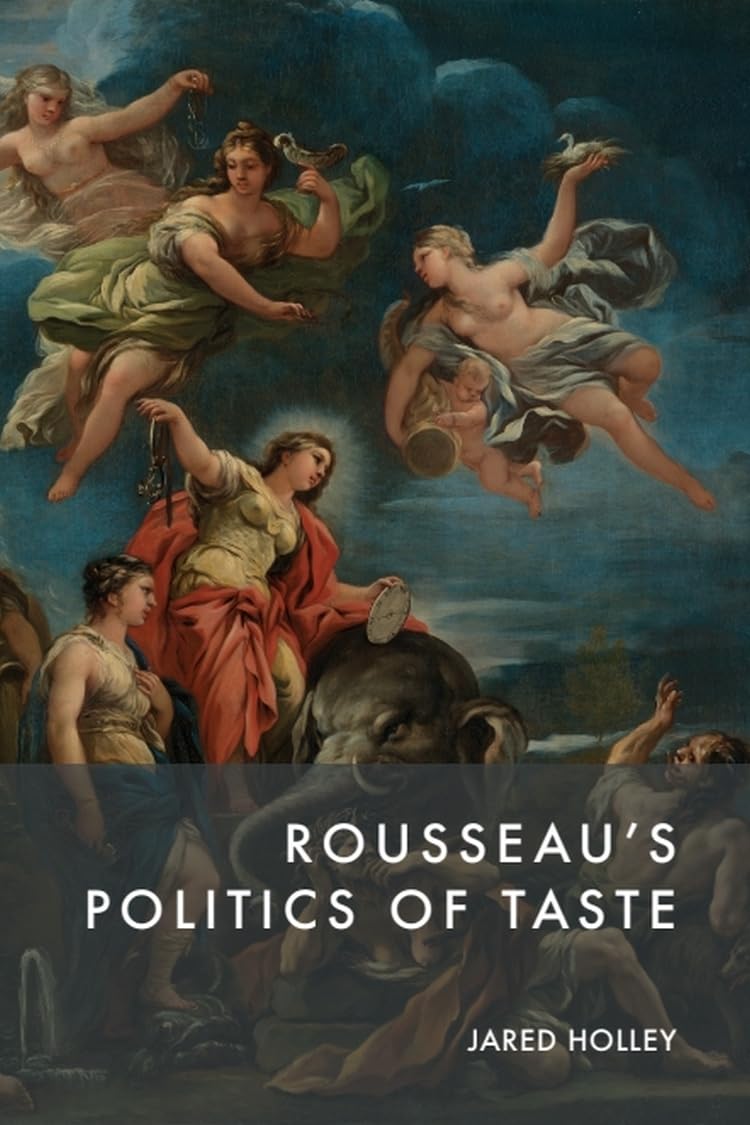



Rousseau’s Politics of Taste challenges the popular but partial pictures we have of Rousseau as an inconsistent ‘ancient’ utopian or a ‘modern’ abstract philosopher with a systematising spirit. Combining intellectual history and political theory, it reinterprets his understandings of pleasure and happiness, judgment and amour-propre, inequality, the general will and, above all, taste. Rousseau’s readers have long recognised the complex tensions in his thought. By reconstructing his theory of taste as a kind of modern Epicureanism, this book provides a way of articulating neglected patterns in those tensions and, a new understanding of what he was attempting to achieve with his political thought. Holley’s account casts Rousseau as a modern and "refined" Epicurean. Drawing on a scholarly reconstruction of Eighteenth-century Epicureanism, his work seamlessly intertwines aesthetics and politics. Through a masterful examination of taste, it provides a fresh perspective on the perennial debate about the general will. -- Céline Spector, Sorbonne University This is an important contribution to the understanding of Rousseau’s paradoxes concerning the relations between happiness and virtue. Holley carefully reconstructs what Epicureanism meant to Rousseau and his contemporaries and shows how Rousseau’s "refined Epicureanism" uses taste and judgment to mediate between pleasure and morality. -- Christopher Kelly, Boston College Jared Holley is Lecturer in Political Theory at University of Edinburgh