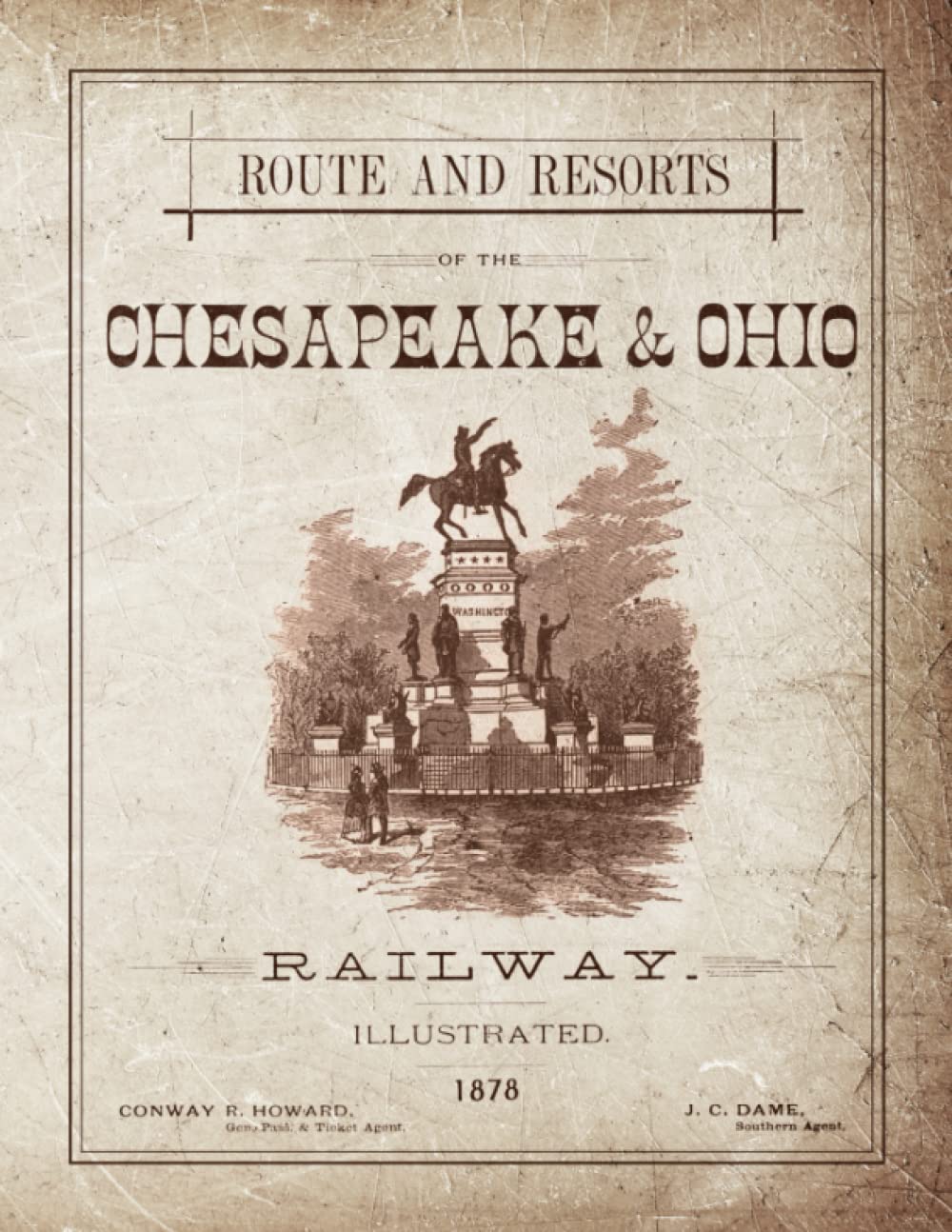



On January 29, 1873, Chesapeake & Ohio (C&O) Railway officials drove a ceremonial spike at Hawks Nest, West Virginia, completing their new rail line from Richmond to Huntington. The C&O opened up southern West Virginia’s coalfields to the world—leading to an economic and cultural transformation summarized in two words—King Coal. The first railroad to cut east-west through the heart of central Appalachia, with some of the most beautiful scenery in the nation, its impact cannot be overstated. Of the many ways Appalachian history can be categorized, perhaps the simplest, most accurate dividing line is “Before the C&O” and “After the C&O.” In 1878, five years after the railroad’s completion, the C&O published this travelogue to promote commerce and tourism along the line. It takes readers on a 421-mile train ride from Richmond to the new city of Huntington, the railroad’s western terminus. It offers glimpses of various historical, scenic, and vacation sites along the route. Since today’s Interstate 64 in Virginia and U.S. Route 60 in West Virginia approximate the C&O’s line, this book is as relevant now as a historical travelogue as it was nearly 150 years ago. Perhaps most eye opening are the hand-drawn pictures throughout. The artists ranged from the famous (French painter Jules Tavernier) to the completely unknown. Thanks to their attention to detail, we get rare views of railroad stations teaming with passengers, iron ore and coal mining, skilled boatsmen running the treacherous New River on nothing but log rafts, timber drives down the Greenbrier River, the Kanawha Valley salt works, and some of the best early views of Charleston and Huntington, burgeoning towns that would soon become West Virginia’s largest. The book is a must for railroad buffs, as well as anyone interested in the histories of Virginia and West Virginia.