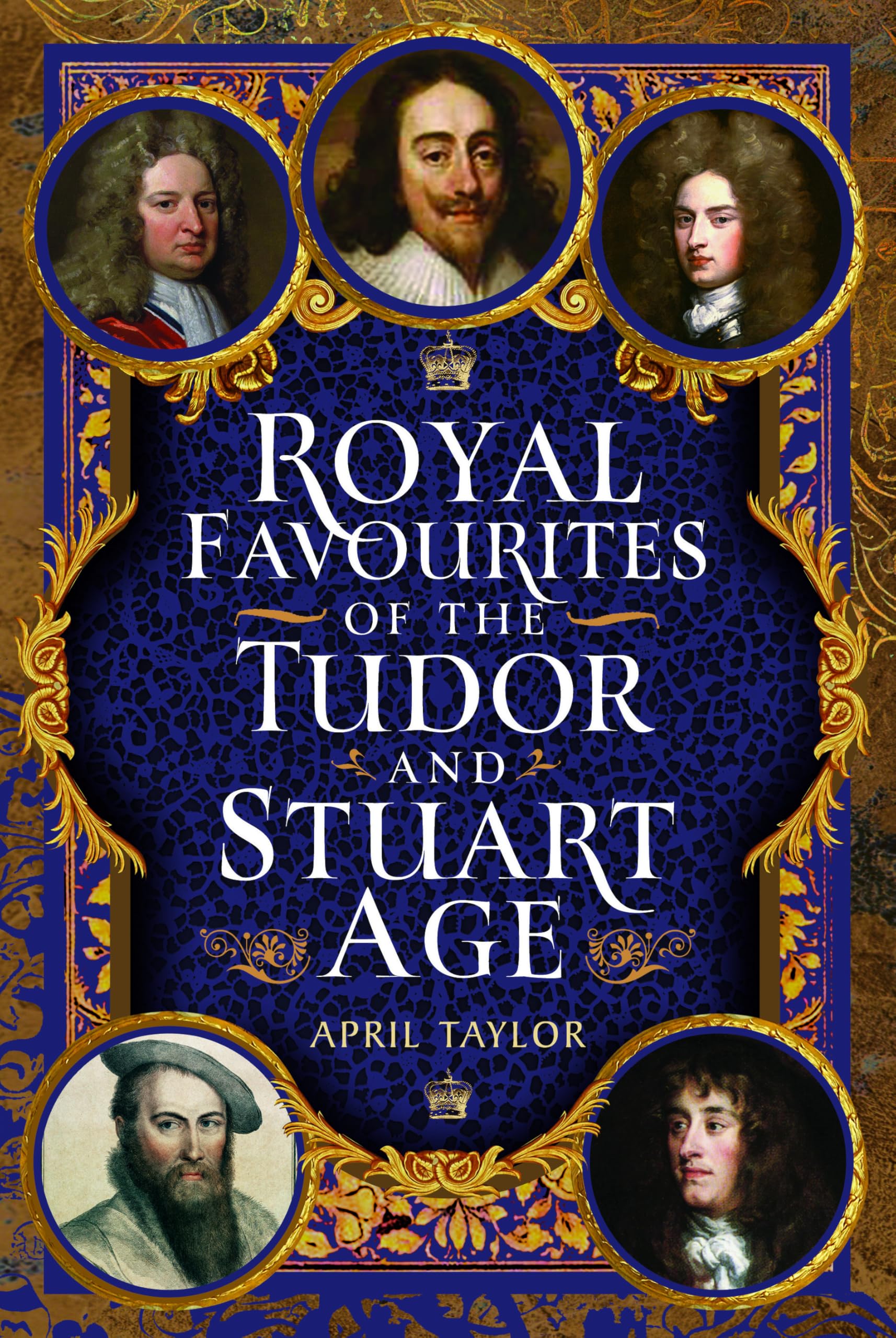



Barbra Streisand sang about people needing people. Our sixteenth and seventeenth century monarchs needed trusted friends more than most in such uncertain times. Among the people you will meet in this book is John Morton, so accomplished at gathering taxes for Henry VII; some pubs are named after him. Physician William Butts, trusted by Henry VIII, and sent to Hever when Anne Boleyn caught the sweating sickness. Barnaby Fitzpatrick, closest friend of Edward VI. Susan Clarencius, Mistress of the Robes to Mary I and her closest friend. Blanche Parry who rocked Elizabeth I’s cradle and stayed in her service until she died, causing Elizabeth ‘enormous sorrow’. Christopher Hatton, so devoted to Elizabeth, he never married. George Villiers, loved by James I ‘more than any other man’. Jane Whorwood, who did her utmost to help the imprisoned Charles I escape. Henry Jermyn, who became known as ‘the founder of the West End’. John Wilmot, an exceptionally clever man who ended life as a dissolute disgrace. Robert Harley, who built an incomparable collection of Saxon and Medieval texts now in the British Library. And not forgetting an accurate account of the life of Abigail Masham, devoted servant to Queen Anne. April Taylor was born in the historic county of Lincolnshire in the UK. Having caught the history bug from a young age, April has always been fascinated by the physical manifestation of times past in particularly the Tudor period. This interest deepened when she discovered one of the most important events of Henry VIII’s reign, the Lincolnshire Rebellion that led to the Pilgrimage of Grace in 1536, started eight miles from where April was born. April has always ensured her research is as meticulous as possible. During her study of the Tudors for her fictional Luke Ballard books, April was intrigued by frequent references to Henry VIII’s charisma. Choosing a career in librarianship, April honed her research skills but always leant towards the history of the area in which she lived. This led to numerous talks to schools and local groups, especially in Worcester, yet another place of historic importance in the UK. April Taylor now lives near the rugged coast of north-east England in close proximity to one of the priories that fell victim to Henry VIII’s Reformation. She frequently walks her golden retriever in local forests using that time to work through complicated plotlines. She sings in the medieval church and occupies her down-time dressmaking and cross-stitching.