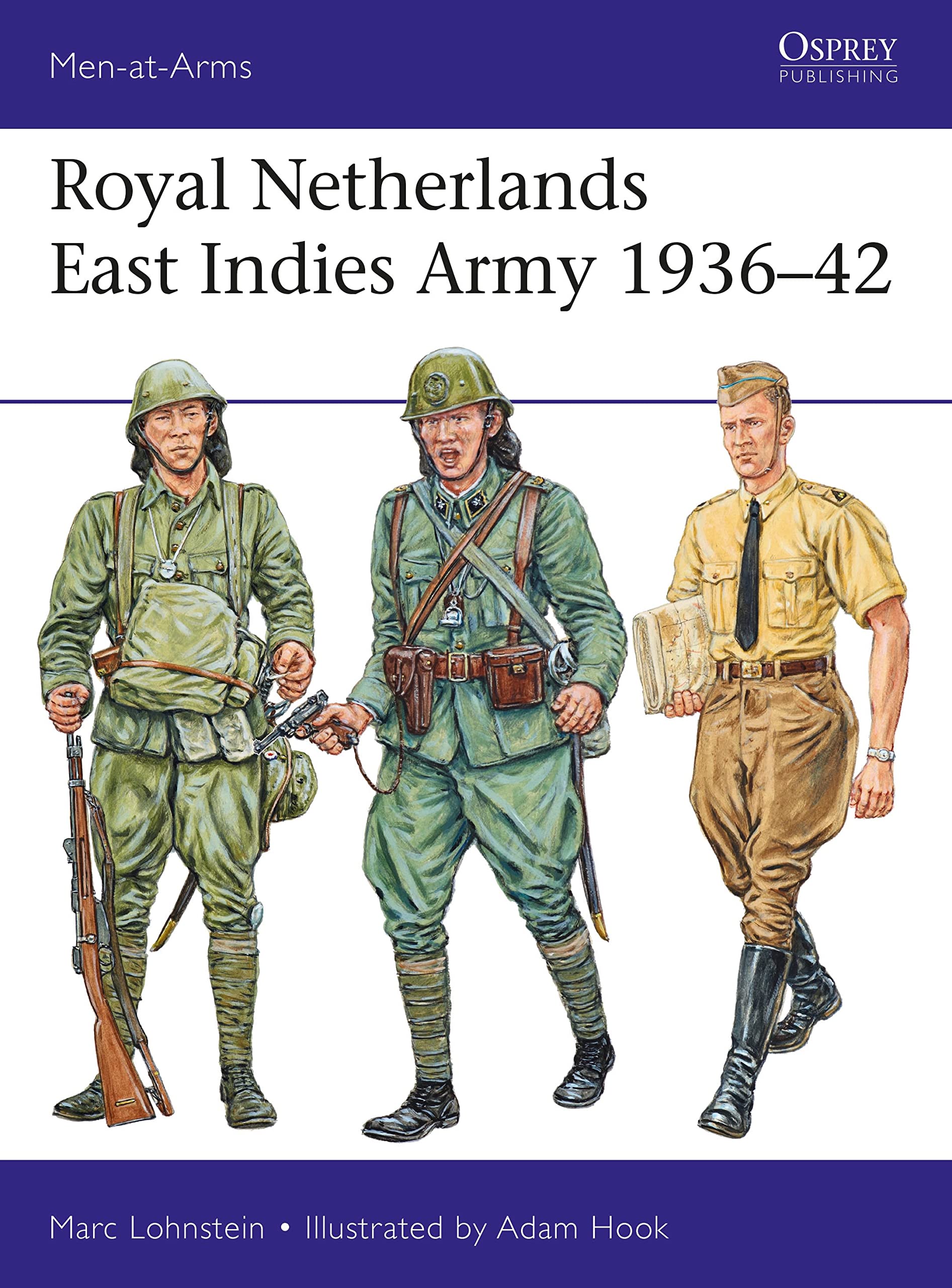



Until 1945, Indonesia was a Dutch colony known as the Netherlands East Indies. In 1930, the area had over 60 million inhabitants and was a major exporter of oil, rubber, tin and quinine. It was a particularly strong trading partner for Japan, providing some 13 percent of Japan's oil needs--second only after the United States. Following Germany's occupation of the Netherlands in May 1940, Japan decided to expand its influence in the Netherlands East Indies via diplomatic negotiations to acquire the necessary strategic goods of oil, rubber and tin. However, the negotiations did not provide Japan with the access it had hoped to gain. Up until the mid-1930s the colonial authorities considered the probability of military conflict between the major powers in Asia to be very low and that any military presence in the colony was primarily aimed at enforcing Dutch rule. This task was mainly the responsibility of the Royal Netherlands East Indies Army (KNIL). This force, designed primarily for colonial policing, underwent a series of cutbacks in the interwar years before the aggressive posture of Japan made this position increasingly unrealistic. The Japanese threat became acute with the seizure of the southern Chinese island of Hainan in February 1939 and the occupation of French Indochina by Japanese troops. Northern Indochina was occupied in September 1940 and Southern Indochina in July 1941. Japan thereby acquired bases from which the Netherlands East Indies was within reach of its naval and air forces. The East Indies Army had developed a modernization program with a time span of four to five years. This 1936 reinforcement plan focused on building up a strike air force, introducing tanks, and increasing the firepower of the infantry and artillery and this was put to the test at the end of 1941 with the declaration of hostilities. “Very little information about the KNIL just prior to, and during WWII has found its way into English language publications. However, this volume by Dutch author and historian Marc Lohnstein has tapped numerous Dutch language sources, including the vast resources of the Museum Bronbeek, to present the first concise record in English of the KNIL as it fought against the initial Japanese onslaught in the Far East. It provides a much needed resource to describe one of the often neglected Allied combatants of the opening phase of the Pacific War.” ― IPMS / USA MARC LOHNSTEIN holds an MA in History and his main areas of interests are the equipment, uniforms and tactics of the army and police organization in the former Dutch colonies in Indonesia and Surinam. He has published several studies on these subjects and various titles for Osprey including CAM 364: The Netherlands East Indies Campaign 1941–42: Japan's Quest for Oil and MAA 521 : Royal Netherlands East Indies Army 1936–42. He works as assistant curator at the Royal Home for Retired Military Personnel & Museum Bronbeek at Arnhem in the Netherlands. Adam Hook studied graphic design, and began his work as an illustrator in 1983. He specializes in detailed historical reconstructions, and has illustrated Osprey titles on subjects as diverse as the Aztecs, the Ancient Greeks, Roman battle tactics, 19th-century American subjects, the modern Chinese Army, and the history of fortification. His work features in exhibitions and publications throughout the world.