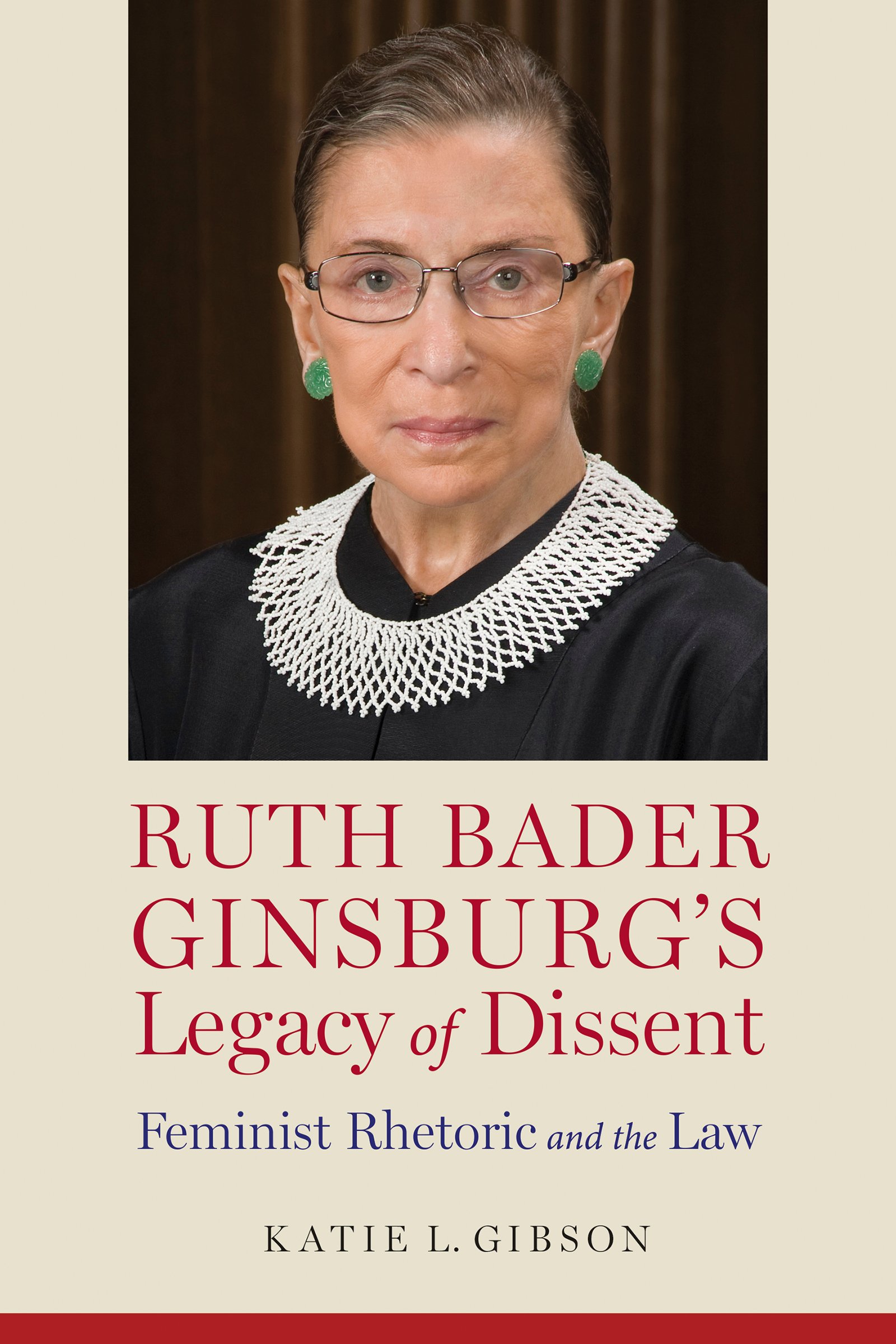
Ruth Bader Ginsburg’s Legacy of Dissent: Feminist Rhetoric and the Law (Rhetoric, Law, and the Humanities)
$44.95
by Katie L. Gibson



A rhetorical analysis of Justice Ruth Bader Ginsburg’s feminist jurisprudence. Ruth Bader Ginsburg’s lifelong effort to reshape the language of American law has had profound consequences: she has shifted the rhetorical boundaries of jurisprudence on a wide range of fundamental issues from equal protection to reproductive rights. Beginning in the early 1970s, Ginsburg led a consequential attack on sexist law in the United States. By directly confronting the patriarchal voice of the law, she pointedly challenged an entrenched genre of legal language that silenced the voices and experiences of American women and undermined their status as equal citizens. On the United States Supreme Court, Justice Ginsburg continues to challenge the traditional scripts of legal discourse to insist on a progressive vision of the Constitution and to demand a more inclusive and democratic body of law. This illuminating work examines Justice Ruth Bader Ginsburg’s contributions in reshaping the rhetoric of the law (specifically through the lens of watershed cases in women’s rights) and describes her rhetorical contributions―beginning with her work in the 1970s as a lawyer and an advocate for the ACLU’s Women’s Rights Project through her tenure as a Supreme Court justice. Katie L. Gibson examines Ginsburg’s rhetoric to argue that she has dramatically shifted the boundaries of legal language. Gibson draws from rhetorical theory, critical legal theory, and feminist theory to describe the law as a rhetorical genre, arguing that Ginsburg’s jurisprudence can appropriately be understood as a direct challenge to the traditional rhetoric of the law. Ruth Bader Ginsburg stands as an incredibly important figure in late twentieth- and early twenty-first-century feminism. While a growing number of admirers celebrate Justice Ginsburg’s voice of dissent today, Ginsburg’s rhetorical legacy reveals that she has long articulated a sharp and strategic voice of judicial dissent. This study contributes to a more complete understanding of her feminist legacy by detailing the unique contributions of her legal rhetoric. "The quality of the handsome cover of this book is a clue to the quality of this treatment of Justice Ginsburg's influence on American law. The focus is Ginsburg’s introduction of a feminist perspective on the way people understand the United States Constitution's provisions on equal protection. Gibson draws on theories of language to explain how Ginsburg, first as an advocate and then as a justice, showed Americans how to think differently about the meaning of sexual equality and protections from discrimination against women. The text is grounded in the old inequalities that kept women from the public sphere. It discusses cases such as Reed v. Reed with its requirement to justify sexual distinctions. Provocatively, it illuminates Ginsburg’s reframing of the abortion argument, beginning with Roe v. Wade , from privacy to equality. With more than a little enthusiasm for Ginsburg’s popularity as 'Notorious RBG,' the author incorporates popular culture into the world of constitutional law. She shows how the Supreme Court and the language by which Americans know the Constitution constitute American politics. And the bibliography is exceptional. Highly recommended." ― CHOICE Katie L. Gibson is an associate professor in the Department of Communication Studies at Colorado State University where she teaches undergraduate and graduate courses in rhetorical studies. Her scholarship investigates the politics of representation in legal discourses, political communication, and popular culture. Ruth Bader Ginsburg's Legacy of Dissent Feminist Rhetoric and the Law By Katie L. Gibson The University of Alabama Press Copyright © 2018 University of Alabama Press All rights reserved. ISBN: 978-0-8173-1978-6 Contents Introduction. The Patriarchal Voice of the Law: Generic Scripts and Bradwell v. Illinois, 1. Judicial Rhetoric and Women's Place: The Legal Precedent of Separate Spheres, 2. Advancing a Language of Feminist Jurisprudence: Reed v. Reed and Ruth Bader Ginsburg's Grandparent Brief, 3. Shifting the Boundaries of Equal Protection: Justice Ginsburg's Defense of Progressive Constitutionalism in United States v. Virginia, 4. Confronting the Boundaries of Abortion Jurisprudence: Justice Ginsburg's Equality Rationale in Gonzales v. Carhart, 5. Ruth Bader Ginsburg's Legacy of Dissent: Feminist Contributions and Democratic Promise, Notes, Bibliography, Index, CHAPTER 1 Judicial Rhetoric and Women's Place The Legal Precedent of Separate Spheres Nearly one hundred years would pass from the court's ruling in Bradwell v. Illinois before Ruth Bader Ginsburg would launch her challenge to the traditional voice of the law in Reed v. Reed. During that time, the patriarchal voice of the law and the logics of separate spheres would gain strength and build precedent. Three cases are especially notable for their role in the