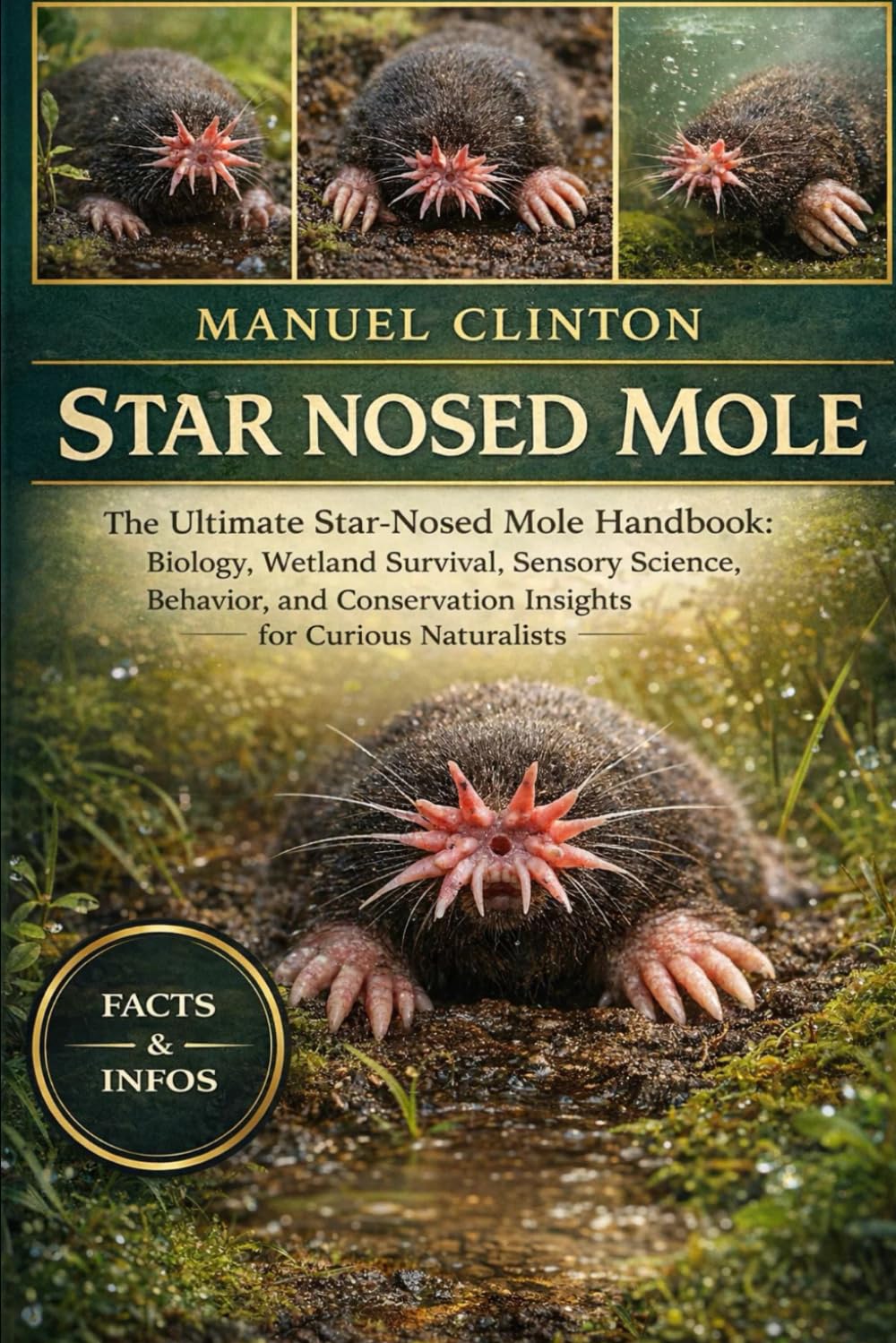
STAR NOSED MOLE: The Ultimate Star-Nosed Mole Handbook: Biology, Wetland Survival, Sensory Science, Behavior, and Conservation Insights for Curious
$12.99
by MANUEL CLINTON



Discover one of nature’s most extraordinary mammals through a complete, science-based exploration of the star-nosed mole. This book is a professional, educational, and deeply researched guide dedicated to Condylura cristata , a species that has astonished scientists for decades with its star-shaped nose, unmatched tactile sensitivity, and record-breaking hunting speed. Far more than a biological curiosity, the star-nosed mole is a key wetland specialist whose anatomy, behavior, and survival strategies reveal how evolution can produce highly efficient solutions to life in dark, water-saturated environments. Inside this comprehensive volume, readers are guided through every aspect of the star-nosed mole’s world. The book begins with taxonomy, evolutionary history, and physical anatomy, explaining how selective pressures shaped its skeletal structure, powerful digging limbs, dense fur, and—most famously—its sensory star packed with thousands of touch receptors known as Eimer’s organs. Detailed chapters explore how this sensory system works, how the brain processes tactile information at remarkable speed, and why the star-nosed mole is considered one of the fastest predators on Earth. The book then moves into habitat and behavior, examining wetland dependence, burrowing architecture, tunnel engineering, feeding biology, and semi-aquatic adaptations. Readers will learn how star-nosed moles hunt both underground and underwater, manage oxygen use in flooded tunnels, tolerate cold environments, and maintain high metabolic demands through constant foraging. Social behavior, communication through scent and vibration, breeding cycles, maternal care, and juvenile development are covered in depth, providing a complete picture of the species’ life history. Beyond individual biology, this book highlights the star-nosed mole’s critical role in wetland ecosystems. Chapters explain how its feeding behavior contributes to insect control, how tunneling improves soil aeration and nutrient cycling, and how the species supports ecological balance while serving as prey for larger animals. The book also examines predators, natural defense systems, and survival strategies shaped by life in marshes and flood-prone landscapes. Modern science and conservation are central themes throughout. Readers are introduced to the research methods used to study this elusive mammal, including field trapping, behavioral experiments, neural mapping, advanced imaging, and ethical wildlife research practices. The book addresses human impacts such as wetland destruction, pollution, land development, and climate change, explaining how altered flooding patterns and rising temperatures affect survival and reproduction. The final sections focus on conservation status and future protection strategies, emphasizing wetland preservation, habitat restoration, scientific monitoring, and conservation partnerships. The book concludes by exploring the star-nosed mole’s growing role in education, documentaries, neuroscience, robotics, sensory technology research, and public awareness—showing how studying this small mammal can inspire both scientific innovation and environmental responsibility. Written in clear, authoritative language, this book is ideal for wildlife enthusiasts, biology students, educators, conservationists, and readers fascinated by unusual animals and evolutionary science. It is both an in-depth reference and an engaging journey into the hidden world beneath wetlands—revealing why protecting habitats means protecting some of nature’s most remarkable evolutionary achievements.