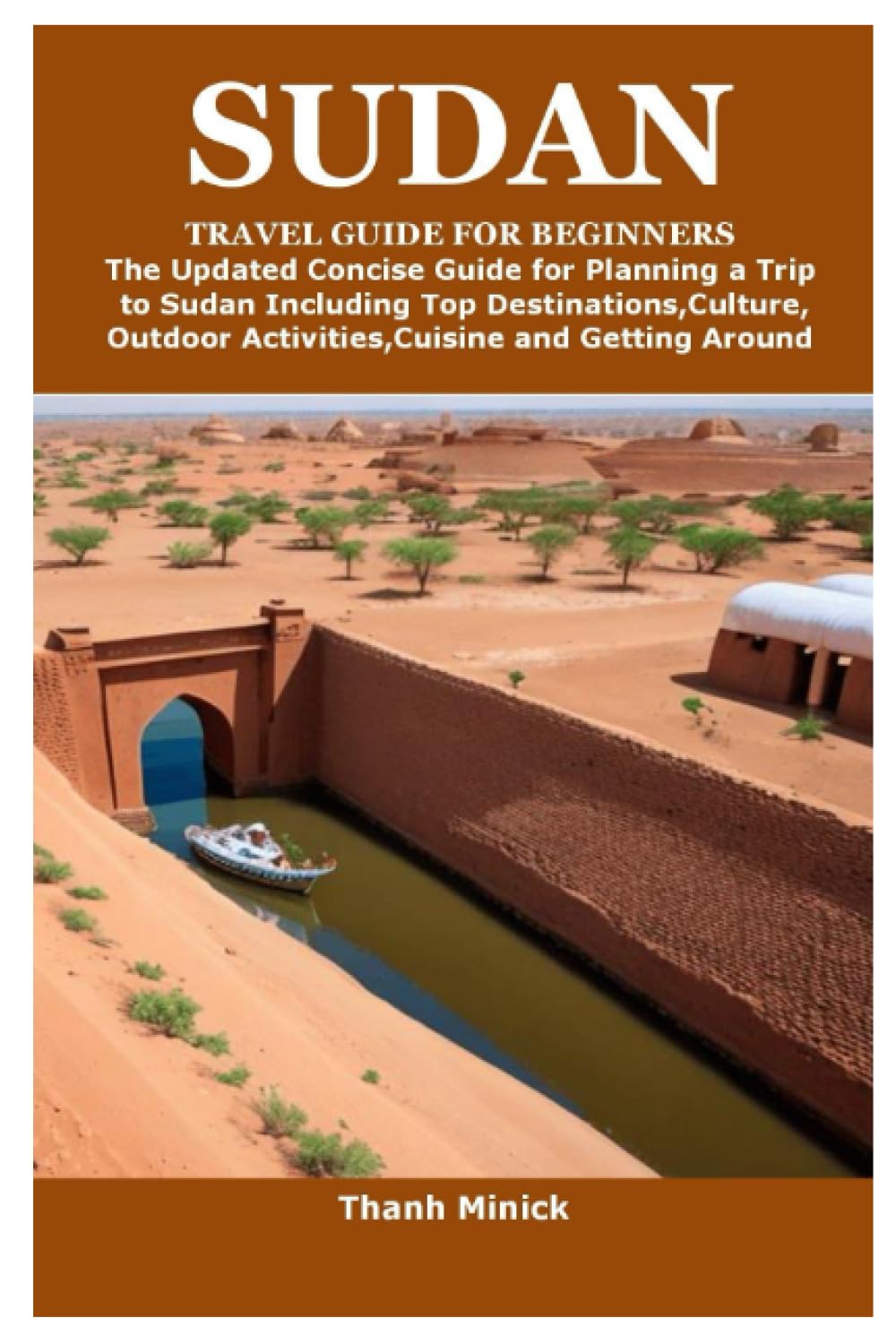
SUDAN TRAVEL GUIDE FOR BEGINNERS: The Updated Concise Guide for Planning a Trip to Sudan Including Top Destinations,Culture,Outdoor Activities,Cuisine
$7.99
by Thanh Minick



Sudan, a country characterized by a wide range of geographical features, a significant historical background, and a compelling cultural heritage, attracts tourists with its alluring charm. Located in the northeastern region of Africa, Sudan is a nation that harbors several narratives, eagerly awaiting exploration by audacious explorers. Sudan provides a distinctive and genuine travel experience, unparalleled by any other, ranging from the vibrant streets of its capital city, Khartoum, to the historical pyramids of Meroë. Situated among the Red Sea and the Sahara Desert, Sudan has a remarkable array of geological features, evoking a sense of wonder. The nation has a diverse array of natural marvels, including the lush Nile River Valley, which has served as a crucial resource for sustaining civilizations over an extensive period of time, as well as expansive golden sand dunes that extend beyond the limits of one's vision. The Nubian Desert's aesthetic appeal, characterized by its rugged rock formations and expansive sandy terrain, is an ideal setting for those in search of seclusion and contemplation. The rich historical history of Sudan, which can be traced back to ancient civilizations that thrived along the banks of the Nile, stands as a key motivation for visiting the country. The Pyramids of Meroë, situated around 200 kilometers north of Khartoum, serve as a tangible representation of the historical prominence of the Kingdom of Kush. The pyramids, which have been remarkably well-preserved for a period exceeding two millennia, provide valuable insights into a civilisation that exhibited comparable prominence to its renowned counterparts in Egypt. The National Museum in Khartoum, Sudan, is a repository of historical relics that provide valuable insights into the ancient history of the nation, making it a significant resource for anyone with a keen interest in history. The museum has an extensive assortment of Nubian artifacts, including pottery, jewelry, and regal sculptures that may be traced back to ancient times spanning many millennia. Moreover, the Royal City of Meroë, renowned for its ancient temples and regal necropolis, enhances the appeal of delving into Sudan's historical heritage. In addition to its rich historical heritage, Sudan enthralls tourists with its dynamic and multifaceted cultural milieu. The amiable demeanor and welcoming nature of the local populace have a lasting impact on tourists, instilling a sense of familiarity in a foreign territory. The culture of Sudan is characterized by a strong foundation in traditional practices, the importance placed on familial principles, and the reverence shown towards older generations. Travelers are often received with warm hospitality and extended invitations to participate in customary tea rituals, so affording them a look into the everyday routines of the indigenous population. It is essential to partake in the delectable cuisine of Sudan in order to fully immerse oneself in the exploration of the country. Sudanese cuisine has a distinctive amalgamation of tastes that is shaped by the culinary traditions of Africa, the Arab world, and the Middle East. Sudanese cuisine offers a diverse range of dishes that cater to both experimental palates and those seeking familiar tastes. For instance, Ful Medames, a classic morning meal, is characterized by its fragrant and hearty qualities. On the other hand, Mullah, a savory and spiced beef stew, provides a distinct culinary experience. Overall, Sudanese cuisine has the ability to captivate and satisfy a variety of taste preferences. Get your Copy Today by Scrolling Up and Clicking Buy Now to Get your Copy Now