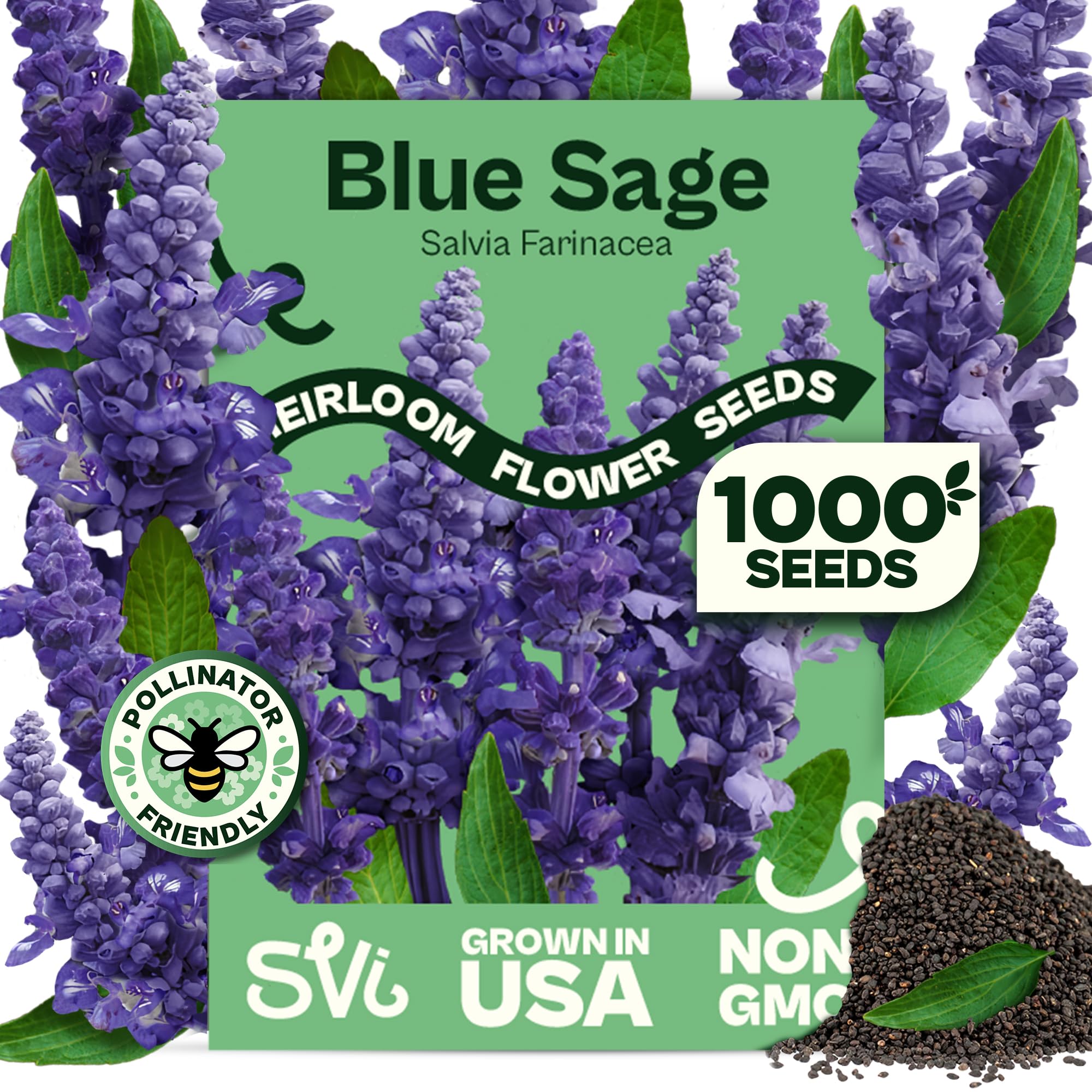



Heat & Drought Tolerant: Blue sage seeds grow into 18 inch perennial salvia spikes that thrive in full sun and rocky soils, ideal blue wildflower seeds for USDA zones 2-12 and pollinator garden seeds. Easy Germination: Salvia farinacea seeds are surface sown (since light is needed) in late fall; For spring, mix salvia seeds for planting with moist sand, store in the refrigerator for 30 days before planting. Keep the soil lightly moist germination (1-2 weeks), thin or space plants 12-18 inches apart. Wild Spikes & Color: blue sage salvia perennial tolerates heat and drought, bringing sage flowers for cutting; meadow sage seeds inspired wildflower borders, ideal cut flower seeds. Pollinators & Wildlife: Salvia plants attract bees and hummingbirds yet stay deer resistant; mix these sage plants and salvias into a pollinator seed mix for lively, low care wildflower seeds borders. Versatile Sage Heritage: Packet includes 1000 sage seeds for planting outdoors, blue salvia seeds perennial for borders, meadows and containers. These seed packets are designed for heirloom flower seeds collections. Blue Sage (Salvia farinacea), also called Mealycup Sage and Mealy Sage, brings spikes of sage blue flowers to beds and borders. These wildflowers from compact 18 inch stems, these blue sage salvia seeds create a natural meadow look that glows in late summer. A tough US native wildflower, this perennial salvia handles heat and drought while keeping its fresh, upright bloom display. Each packet provides 1000 blue sage flower seeds for generous drifts and pollinator paths. Direct sow salvia farinacea seeds in late fall, pressing them on the soil surface because the plant salvia needs light to germinate. For spring sowing, chill sage seed with moist sand, then scatter onto well drained soil at 65-75°F. Keep the surface lightly moist until seedlings appear in 1-2 weeks, then thin or space plants 12-18 inches apart. Once established, these hardy sage seeds settle into full sun, sandy or rocky soils and wide ranging climates, flourishing in USDA zones 2-12. Blue sage plantings tolerate dry spells yet respond to occasional deep watering with even more bloom. Deer resistant plants attract honeybees, butterflies and hummingbirds, turning wildflower seeds for planting into living pollinator garden designs and meadow sage seeds sweeps. Blue sage flowers work beautifully as cut flower seeds for fresh bouquets; harvest stems as blooms just open, strip lower leaves and place at once in water. Heirloom sage traditions also value this plant for culinary and medicinal uses, from herbal teas to soothing blends, reflected in phrases like hojas de salvia. Use these sage seeds and salvias seeds with other flower seeds for planting and seed packets to grow a non gmo seeds and heirloom seed collection, or mix perennial flower seeds into wildflower seed mix bulk plantings for lasting sky blue color.