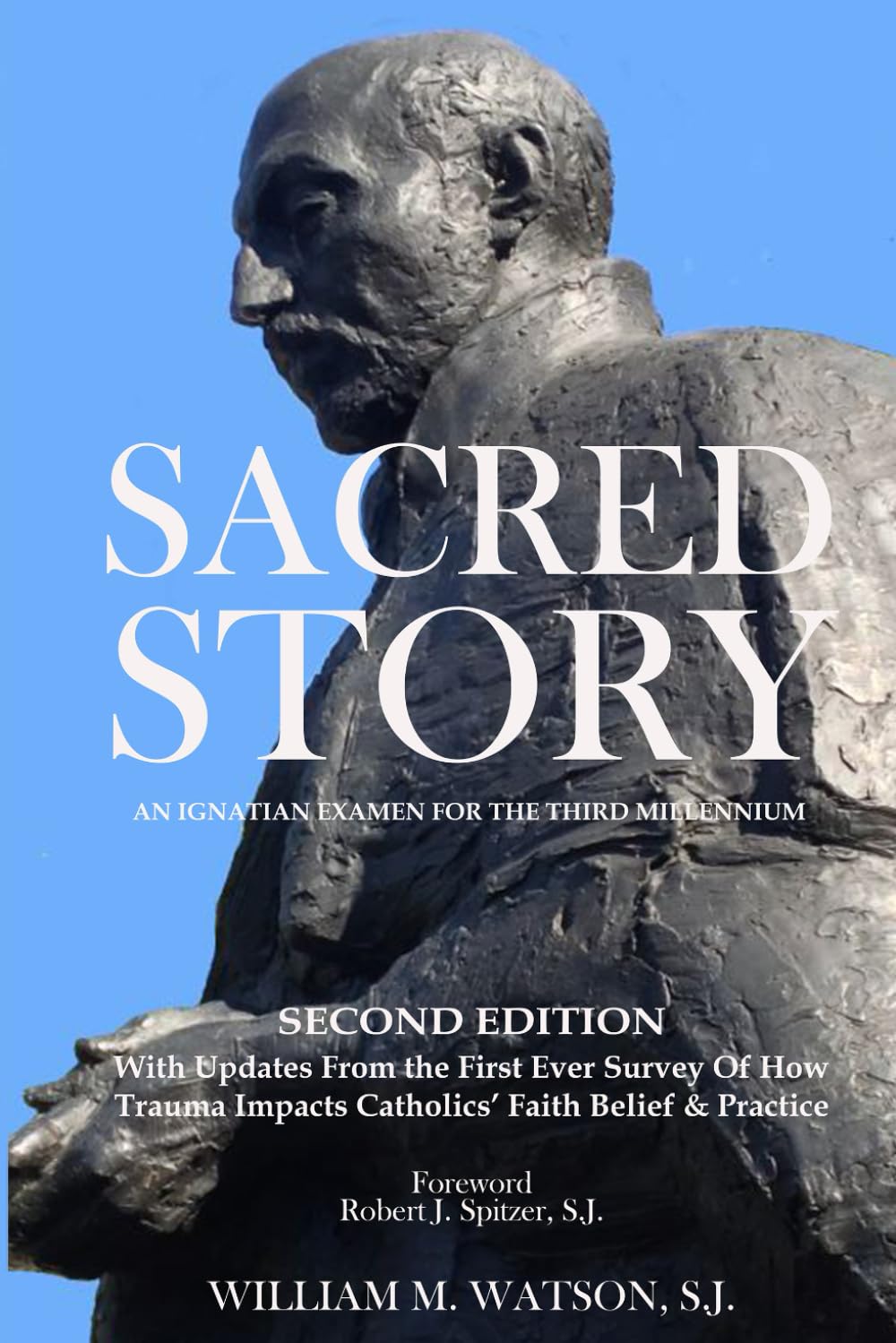
Sacred Story Second Edition: An Ignatian Examen for the Third Millennium
$17.95
by William M Watson S.J



Sacred Story is the first ever study of how the progressive conversion of Saint Ignatius Loyola was the source and inspiration for his dynamic examination of conscience and the structure and disciplines of the Spiritual Exercises. This Second Edition contains new insights from the first ever study of how trauma impacts Catholics', faith, belief, and practice. There is also a new forward by Robert J. Spitzer S.J., Ph.D. That full report can be found at our website: sacredstory.net Perhaps nowhere is the intersection of sinful trauma and faith more evident than in Ignatius’ time at Manresa, a period that is both deeply decisive and intensely challenging. Living as a beggar, he faced spiritual desolation so severe that he contemplated suicide, a struggle that the Report contextualizes as a common response to unresolved trauma. Modern psychology might describe Ignatius’ experiences as symptoms of emotional dysregulation or existential distress—natural outcomes of the early-life traumas and in their sinful manifestations as an adult. Yet, Ignatius’ response was not to succumb but to lean into his suffering, seeking God’s presence through prayer and discernment. In fact, the Church was graced with its most potent discernment tools as a result of God's grace working in St. Ignatius during harrowing and hallowing trials and tribulations. He said in his autobiography, that no one could seem to help him. So God responded and advanced Catholic-Christian methods of spiritual discernment that are unparalleled. The organic development of the Spiritual Exercises and its strategic Examen during this time can be seen as a form of divine guidance, a way to process his trauma and sinful past by aligning his will with God’s. The Report underscores how such practices as prayer, discernment, silence, and active faith engagement—can foster healing in trauma survivors, a truth Ignatius lived centuries before it was studied scientifically.